Centre for International Health, University of Bergen, Norway.
J Int AIDS Soc. 2010 Sep 14;13:36. doi: 10.1186/1758-2652-13-36.
More than 90% of children living with HIV have been infected through mother to child transmission. The aims of our present study were to: (1) assess the utilization of the prevention of mother to child transmission (PMTCT) services in five reproductive and child health clinics in Moshi, northern Tanzania, after the implementation of routine counselling and testing; (2) explore the level of knowledge the postnatal mothers had about PMTCT; and (3) assess the quality of the counselling given.
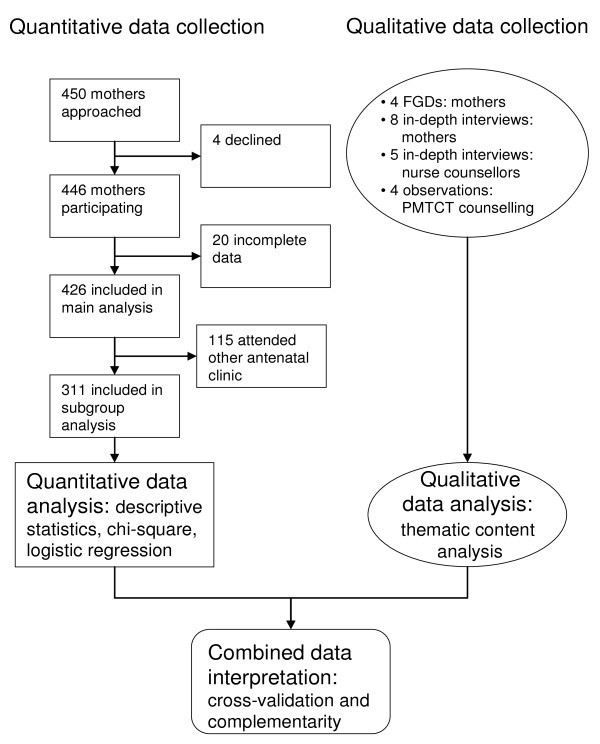
This study was conducted in 2007 and 2008 in rural and urban areas of Moshi in the Kilimanjaro region of Tanzania. Mixed methods were used. We interviewed 446 mothers when they brought their four-week-old infants to five reproductive and child health clinics for immunization. On average, the urban clinics included in the study had implemented the programme two years earlier than the rural clinics. We also conducted 13 in-depth interviews with mothers and nurses, four focus group discussions with mothers, and four observations of mothers receiving counselling.
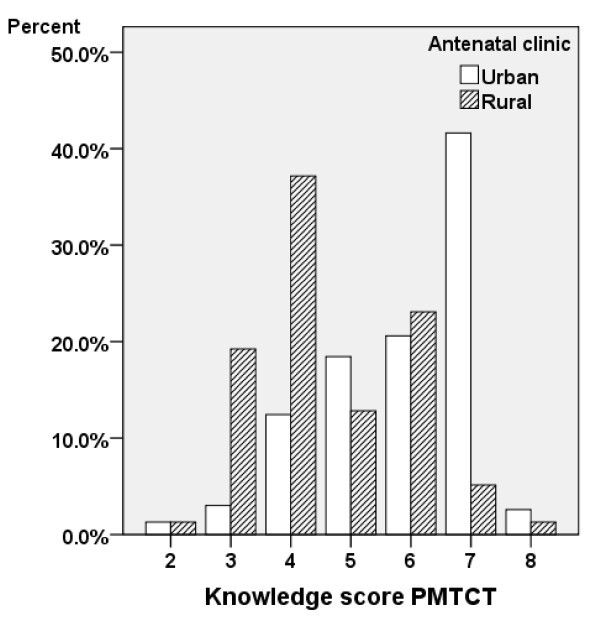
Nearly all mothers (98%) were offered HIV testing, and all who were offered accepted. However, the counselling was hasty with little time for clarifications. Mothers attending urban antenatal clinics tended to be more knowledgeable about PMTCT than the rural attendees. Compared with previous studies in the area, our study found that PMTCT knowledge had increased and the counsellors had greater confidence in their counselling.
Routine counselling and testing for HIV at the antenatal clinics was greatly accepted and included practically every mother in this time period. However, the counselling was suboptimal due to time and resource constraints. We interpret the higher level of PMTCT knowledge among the urban as opposed to the rural attendees as a result of differences in the start up of the PMTCT programme and, thus, programme maturation. After comparison with earlier studies conducted in this setting, we conclude that when the programme has had time to get established, both its acceptance and the understanding of the topics dealt with during the counselling increases.
超过 90%的感染 HIV 的儿童是通过母婴传播感染的。我们目前研究的目的是:(1)评估在坦桑尼亚北部莫希的五个生殖健康和儿童健康诊所实施常规咨询和检测后,预防母婴传播(PMTCT)服务的利用情况;(2)探讨产后母亲对 PMTCT 的了解程度;(3)评估咨询的质量。
本研究于 2007 年至 2008 年在坦桑尼亚的乞力马扎罗地区的农村和城市地区进行。采用混合方法。当 446 名母亲带着四周大的婴儿到五个生殖健康和儿童健康诊所进行免疫接种时,我们对她们进行了访谈。平均而言,参与研究的城市诊所比农村诊所早两年实施该方案。我们还对 13 名母亲和护士进行了深入访谈、4 次母亲焦点小组讨论和 4 次观察母亲接受咨询。
几乎所有母亲(98%)都接受了 HIV 检测,所有接受检测的母亲都接受了检测。然而,咨询仓促,几乎没有时间澄清。在城市产前诊所就诊的母亲往往比农村就诊的母亲对 PMTCT 有更多的了解。与该地区之前的研究相比,我们的研究发现 PMTCT 知识有所增加,咨询员对自己的咨询更有信心。
在产前诊所进行常规咨询和 HIV 检测得到了极大的接受,几乎在这段时间内包括了每一位母亲。然而,由于时间和资源的限制,咨询效果不佳。我们将城市母亲与农村母亲相比,PMTCT 知识水平较高的原因解释为 PMTCT 方案启动的差异,从而导致方案成熟度的差异。与之前在该地区进行的研究相比,我们得出的结论是,当该方案有时间建立起来时,接受程度和对咨询中涉及的主题的理解都会增加。