Research Service, 151, Veterans Affairs Greater Los Angeles Healthcare System, Los Angeles, California, USA.
PLoS Negl Trop Dis. 2010 Sep 7;4(9):e815. doi: 10.1371/journal.pntd.0000815.
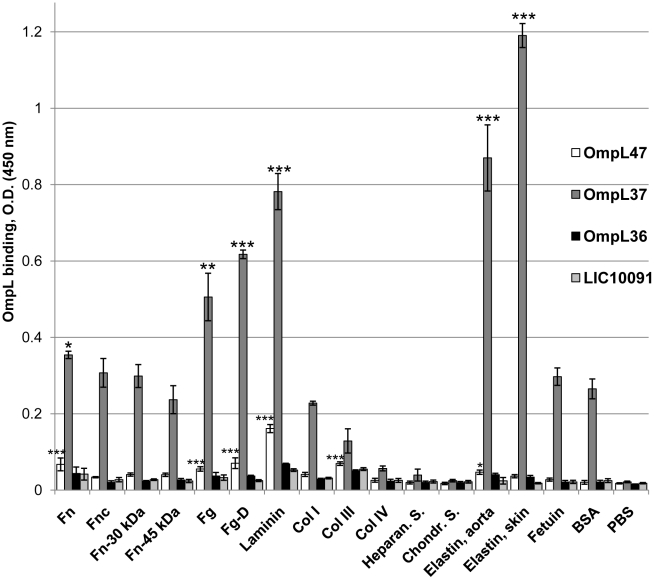
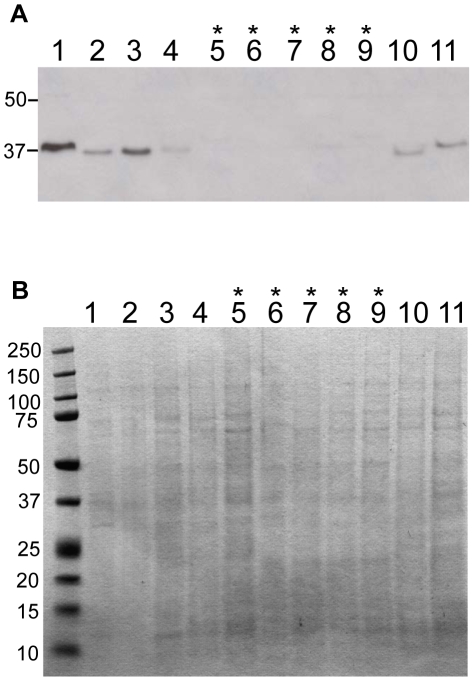
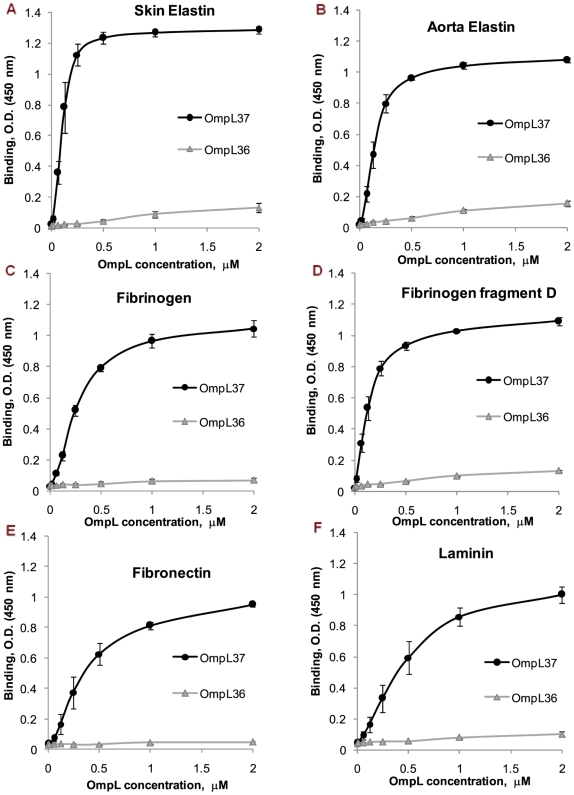
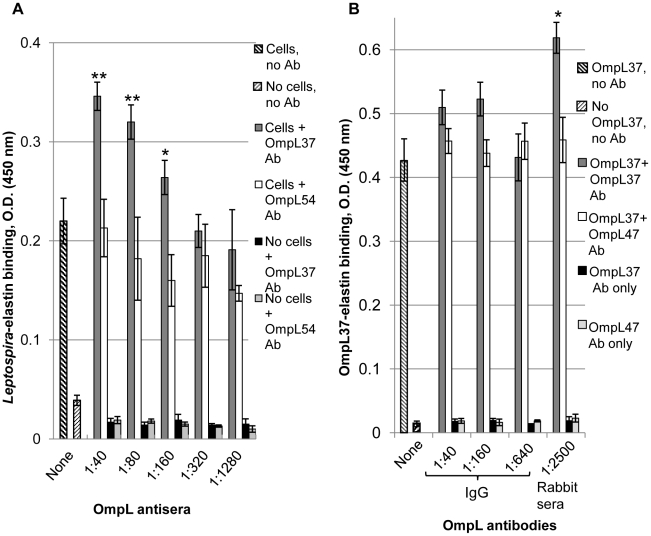
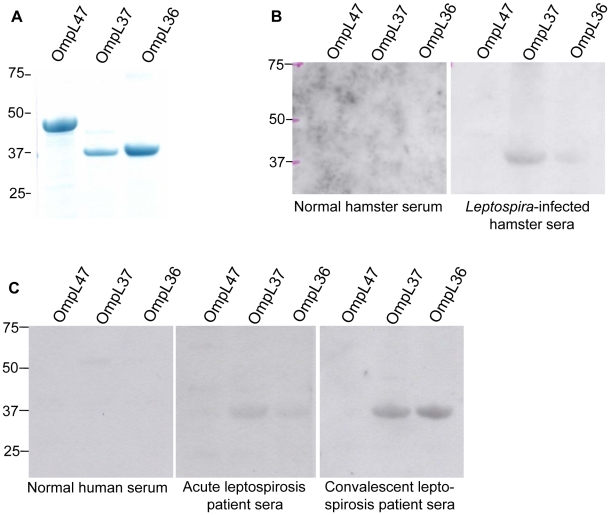
Pathogenic Leptospira spp. shed in the urine of reservoir hosts into freshwater can be transmitted to a susceptible host through skin abrasions or mucous membranes causing leptospirosis. The infection process involves the ability of leptospires to adhere to cell surface and extracellular matrix components, a crucial step for dissemination and colonization of host tissues. Therefore, the elucidation of novel mediators of host-pathogen interaction is important in the discovery of virulence factors involved in the pathogenesis of leptospirosis. In this study, we assess the functional roles of transmembrane outer membrane proteins OmpL36 (LIC13166), OmpL37 (LIC12263), and OmpL47 (LIC13050), which we recently identified on the leptospiral surface. We determine the capacity of these proteins to bind to host tissue components by enzyme-linked immunosorbent assay. OmpL37 binds elastin preferentially, exhibiting dose-dependent, saturating binding to human skin (K(d), 104±19 nM) and aortic elastin (K(d), 152±27 nM). It also binds fibrinogen (K(d), 244±15 nM), fibrinogen fragment D (K(d), 132±30 nM), plasma fibronectin (K(d), 359±68 nM), and murine laminin (K(d), 410±81 nM). The binding to human skin elastin by both recombinant OmpL37 and live Leptospira interrogans is specifically enhanced by rabbit antiserum for OmpL37, suggesting the involvement of OmpL37 in leptospiral binding to elastin and also the possibility that host-generated antibodies may promote rather than inhibit the adherence of leptospires to elastin-rich tissues. Further, we demonstrate that OmpL37 is recognized by acute and convalescent leptospirosis patient sera and also by Leptospira-infected hamster sera. Finally, OmpL37 protein is detected in pathogenic Leptospira serovars and not in saprophytic Leptospira. Thus, OmpL37 is a novel elastin-binding protein of pathogenic Leptospira that may be promoting attachment of Leptospira to host tissues.
病原体钩端螺旋体在储存宿主的尿液中排出后会进入淡水,然后通过皮肤擦伤或粘膜进入易感宿主,引起钩端螺旋体病。感染过程涉及钩端螺旋体附着在细胞表面和细胞外基质成分上的能力,这是宿主组织传播和定植的关键步骤。因此,阐明宿主-病原体相互作用的新介质对于发现与钩端螺旋体病发病机制相关的毒力因子至关重要。在这项研究中,我们评估了我们最近在钩端螺旋体表面鉴定的跨膜外膜蛋白 OmpL36(LIC13166)、OmpL37(LIC12263)和 OmpL47(LIC13050)的功能作用。我们通过酶联免疫吸附试验确定了这些蛋白与宿主组织成分结合的能力。OmpL37 优先结合弹性蛋白,与人皮肤(K(d),104±19 nM)和主动脉弹性蛋白(K(d),152±27 nM)呈剂量依赖性、饱和结合。它还结合纤维蛋白原(K(d),244±15 nM)、纤维蛋白原片段 D(K(d),132±30 nM)、血浆纤维连接蛋白(K(d),359±68 nM)和鼠层粘连蛋白(K(d),410±81 nM)。重组 OmpL37 和活的问号钩端螺旋体与兔抗 OmpL37 抗血清的结合均可特异性增强人皮肤弹性蛋白的结合,这表明 OmpL37 参与了钩端螺旋体与弹性蛋白的结合,并且还可能是宿主产生的抗体可以促进而不是抑制钩端螺旋体与富含弹性蛋白的组织的黏附。此外,我们证明 OmpL37 被急性和恢复期钩端螺旋体病患者血清以及感染钩端螺旋体的仓鼠血清识别。最后,OmpL37 蛋白在致病性钩端螺旋体血清型中检测到,而在腐生钩端螺旋体中未检测到。因此,OmpL37 是一种新型的致病性钩端螺旋体弹性蛋白结合蛋白,可能促进钩端螺旋体与宿主组织的附着。