Juvenile Diabetes Research Foundation/Wellcome Trust Diabetes and Inflammation Laboratory, Department of Medical Genetics, Cambridge Institute for Medical Research, University of Cambridge, Addenbrooke's Hospital, Cambridge, United Kingdom.
PLoS One. 2010 Sep 9;5(9):e12646. doi: 10.1371/journal.pone.0012646.
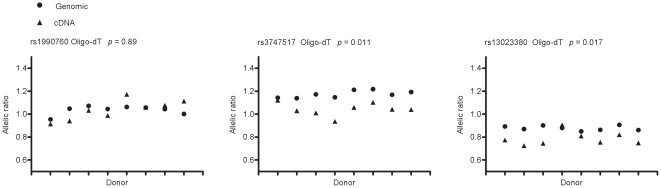
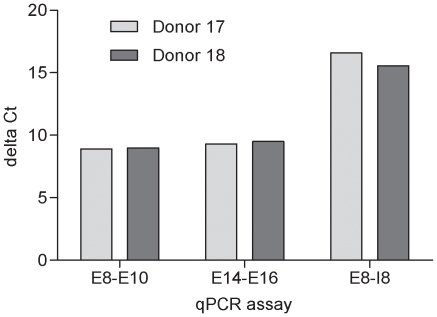
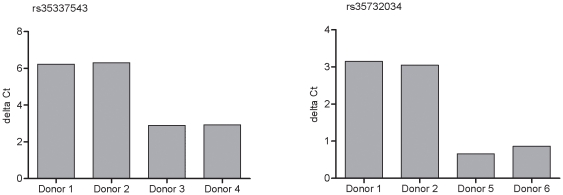
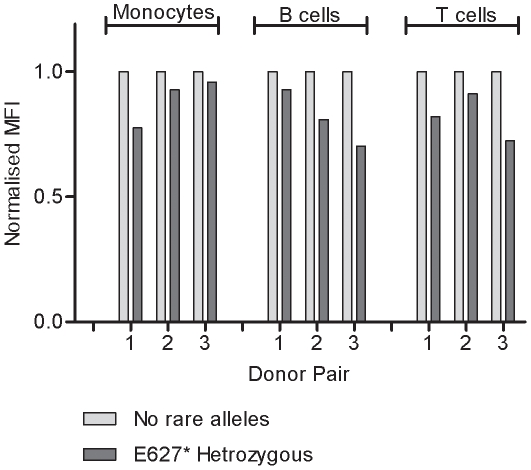
IFIH1 (interferon induced with helicase C domain 1), also known as MDA5 (melanoma differentiation-associated protein 5), is one of a family of intracellular proteins known to recognise viral RNA and mediate the innate immune response. IFIH1 is causal in type 1 diabetes based on the protective associations of four rare variants, where the derived alleles are predicted to reduce gene expression or function. Originally, however, T1D protection was mapped to the common IFIH1 nsSNP, rs1990760 or Thr946Ala. This common amino acid substitution does not cause a loss of function and evidence suggests the protective allele, Ala(946), may mark a haplotype with reduced expression of IFIH1 in line with the protection conferred by the four rare loss of function alleles. We have performed allele specific expression analysis that supports this hypothesis: the T1D protective haplotype correlates with reduced IFIH1 transcription in interferon-β stimulated peripheral blood mononuclear cells (overall p = 0.012). In addition, we have used multiflow cytometry analysis and quantitative PCR assays to prove reduced expression of IFIH1 in individuals heterozygous for three of the T1D-associated rare alleles: a premature stop codon, rs35744605 (Glu627X) and predicted splice variants, rs35337543 (IVS8+1) and rs35732034 (IVS14+1). We also show that the nsSNP, Ile923V, does not alter pre-mRNA levels of IFIH1. These results confirm and extend the new autoimmune disease pathway of reduced IFIH1 expression and protein function protecting from T1D.
IFIH1(干扰素诱导的螺旋酶 C 结构域 1),也称为 MDA5(黑色素瘤分化相关蛋白 5),是一组已知能识别病毒 RNA 并介导先天免疫反应的细胞内蛋白家族的成员。IFIH1 是 1 型糖尿病的病因,基于四个罕见变异的保护关联,衍生等位基因被预测会降低基因表达或功能。然而,最初 T1D 的保护被映射到常见的 IFIH1 nsSNP,rs1990760 或 Thr946Ala。这种常见的氨基酸替换不会导致功能丧失,并且有证据表明,保护等位基因 Ala(946) 可能标记了一个单倍型,该单倍型中 IFIH1 的表达降低,与四个罕见的功能丧失等位基因所赋予的保护一致。我们进行了等位基因特异性表达分析,支持了这一假设:T1D 保护性单倍型与干扰素-β刺激的外周血单核细胞中 IFIH1 转录减少相关(总体 p=0.012)。此外,我们还使用多流细胞术分析和定量 PCR 检测证实,三个与 T1D 相关的罕见等位基因杂合的个体中 IFIH1 的表达降低:一个提前终止密码子 rs35744605(Glu627X)和预测的剪接变异体 rs35337543(IVS8+1)和 rs35732034(IVS14+1)。我们还表明,nsSNP Ile923V 不会改变 IFIH1 的前体 mRNA 水平。这些结果证实并扩展了新的自身免疫疾病途径,即 IFIH1 表达和蛋白功能降低可预防 T1D。