Institute for Genome Sciences and Policy, Duke University, Durham, North Carolina, United States of America.
PLoS Genet. 2010 Sep 2;6(9):e1001093. doi: 10.1371/journal.pgen.1001093.
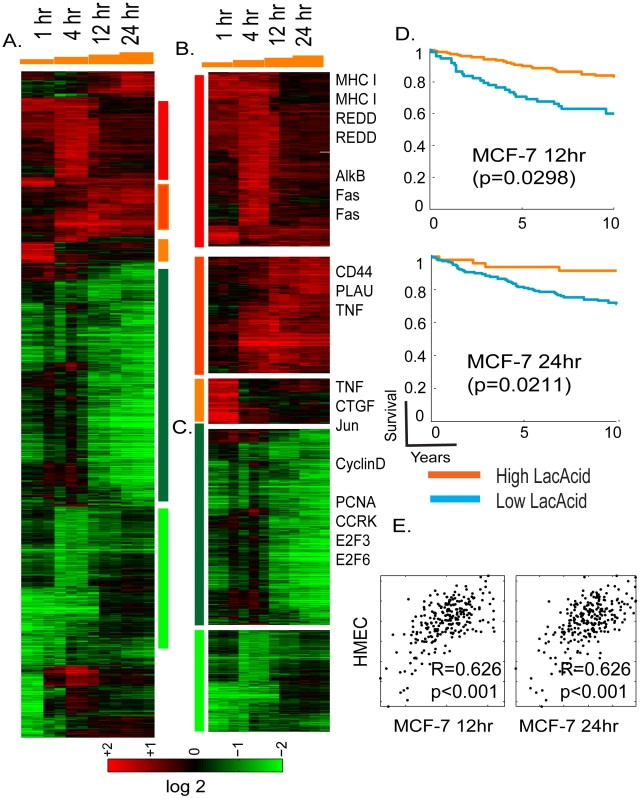
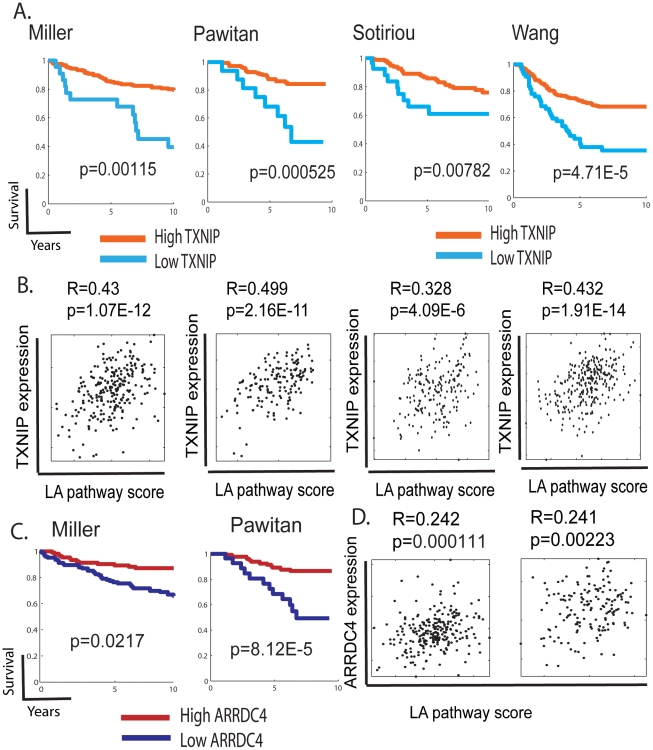
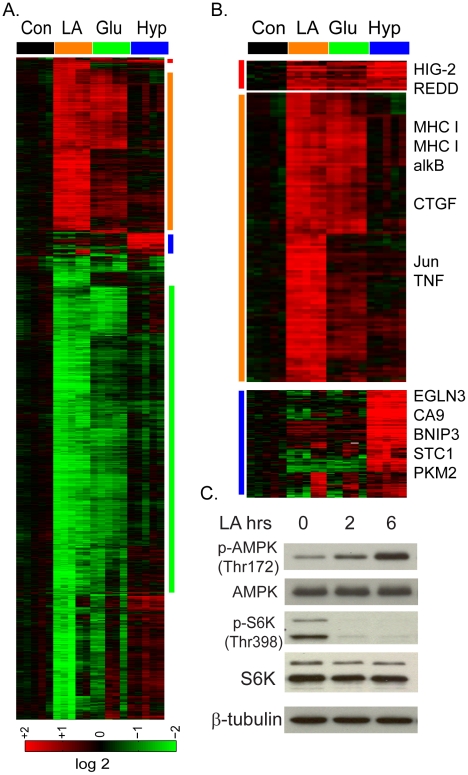
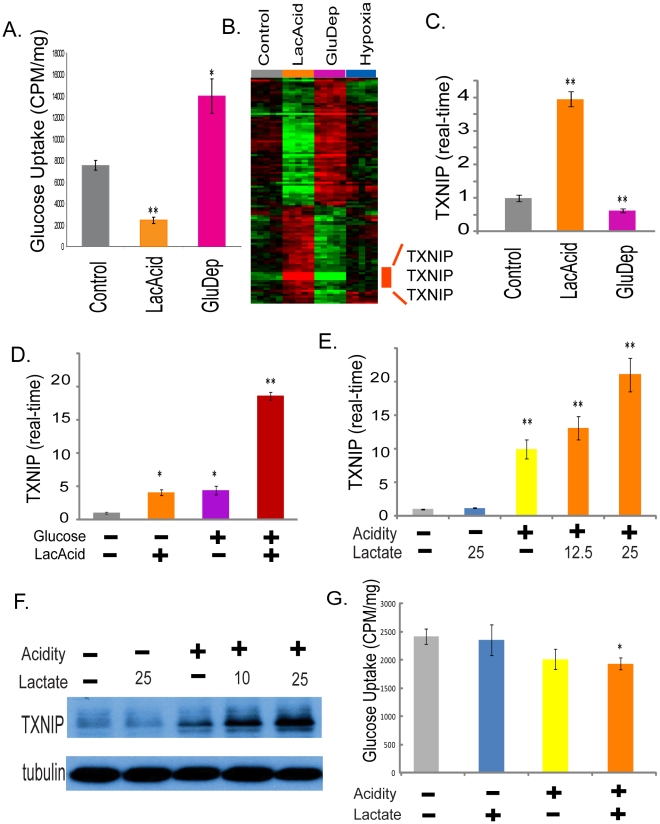
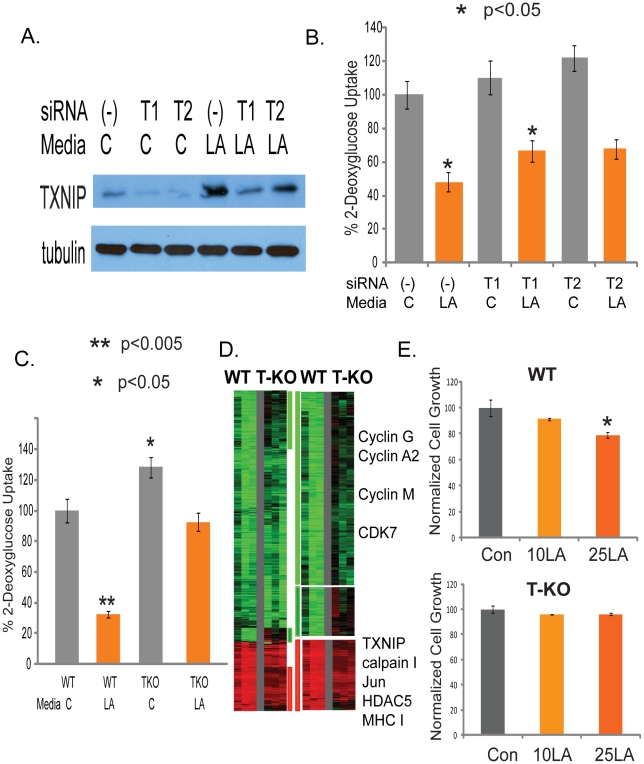
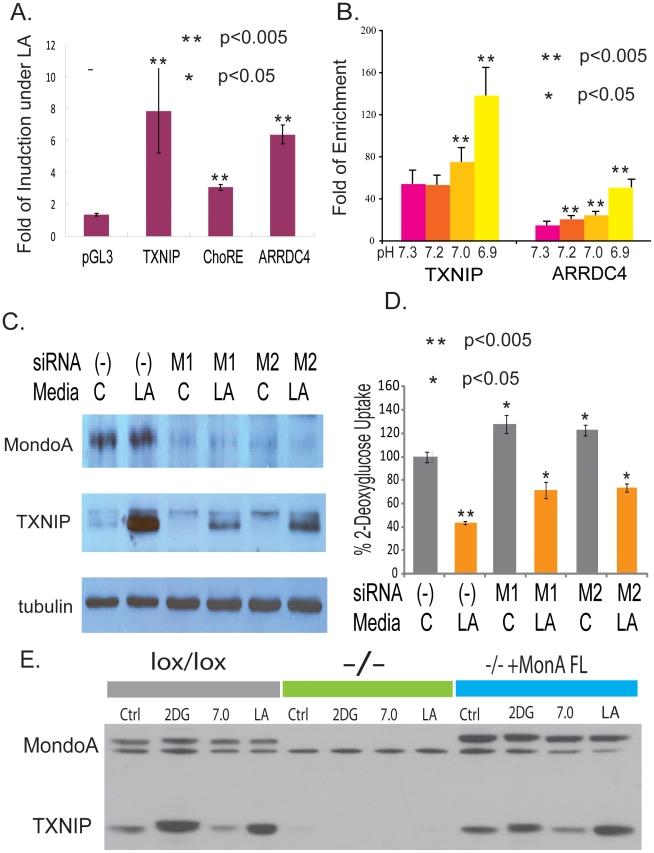
Although lactic acidosis is a prominent feature of solid tumors, we still have limited understanding of the mechanisms by which lactic acidosis influences metabolic phenotypes of cancer cells. We compared global transcriptional responses of breast cancer cells in response to three distinct tumor microenvironmental stresses: lactic acidosis, glucose deprivation, and hypoxia. We found that lactic acidosis and glucose deprivation trigger highly similar transcriptional responses, each inducing features of starvation response. In contrast to their comparable effects on gene expression, lactic acidosis and glucose deprivation have opposing effects on glucose uptake. This divergence of metabolic responses in the context of highly similar transcriptional responses allows the identification of a small subset of genes that are regulated in opposite directions by these two conditions. Among these selected genes, TXNIP and its paralogue ARRDC4 are both induced under lactic acidosis and repressed with glucose deprivation. This induction of TXNIP under lactic acidosis is caused by the activation of the glucose-sensing helix-loop-helix transcriptional complex MondoA:Mlx, which is usually triggered upon glucose exposure. Therefore, the upregulation of TXNIP significantly contributes to inhibition of tumor glycolytic phenotypes under lactic acidosis. Expression levels of TXNIP and ARRDC4 in human cancers are also highly correlated with predicted lactic acidosis pathway activities and associated with favorable clinical outcomes. Lactic acidosis triggers features of starvation response while activating the glucose-sensing MondoA-TXNIP pathways and contributing to the "anti-Warburg" metabolic effects and anti-tumor properties of cancer cells. These results stem from integrative analysis of transcriptome and metabolic response data under various tumor microenvironmental stresses and open new paths to explore how these stresses influence phenotypic and metabolic adaptations in human cancers.
尽管乳酸酸中毒是实体瘤的一个显著特征,但我们对乳酸酸中毒影响癌细胞代谢表型的机制仍知之甚少。我们比较了乳腺癌细胞对三种不同肿瘤微环境应激的全局转录反应:乳酸酸中毒、葡萄糖剥夺和缺氧。我们发现,乳酸酸中毒和葡萄糖剥夺触发了高度相似的转录反应,每种反应都诱导了饥饿反应的特征。与它们对基因表达的类似影响相比,乳酸酸中毒和葡萄糖剥夺对葡萄糖摄取有相反的影响。在高度相似的转录反应背景下,这种代谢反应的分歧允许鉴定一小部分基因,这些基因受这两种条件的相反调节。在这些选定的基因中,TXNIP 和其同源物 ARRDC4 在乳酸酸中毒下均被诱导,而在葡萄糖剥夺下被抑制。乳酸酸中毒下 TXNIP 的诱导是由葡萄糖感应螺旋环螺旋转录复合物 MondoA:Mlx 的激活引起的,该复合物通常在葡萄糖暴露时被触发。因此,TXNIP 的上调显著有助于抑制乳酸酸中毒下肿瘤糖酵解表型。TXNIP 和 ARRDC4 在人类癌症中的表达水平也与预测的乳酸酸中毒途径活性高度相关,并与有利的临床结果相关。乳酸酸中毒在激活葡萄糖感应 MondoA-TXNIP 途径的同时引发饥饿反应特征,并有助于癌细胞的“反沃伯格”代谢效应和抗肿瘤特性。这些结果源于各种肿瘤微环境应激下转录组和代谢反应数据的综合分析,并为探索这些应激如何影响人类癌症的表型和代谢适应性开辟了新的途径。