NovImmune SA, Ch des Aulx 14 and Fasteris SA, 1228 Plan-les-Ouates, Switzerland.
Nucleic Acids Res. 2010 Nov;38(21):e193. doi: 10.1093/nar/gkq789. Epub 2010 Sep 15.
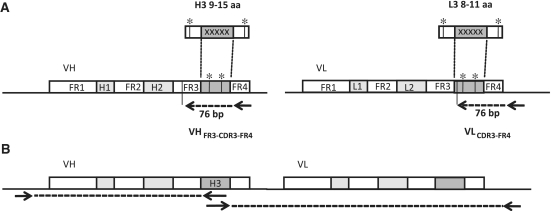
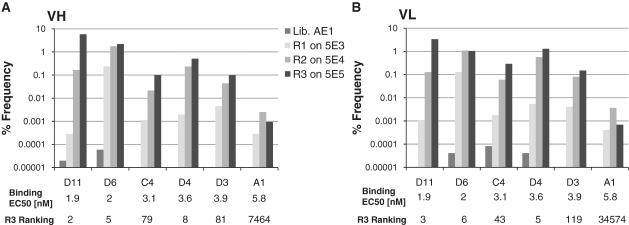
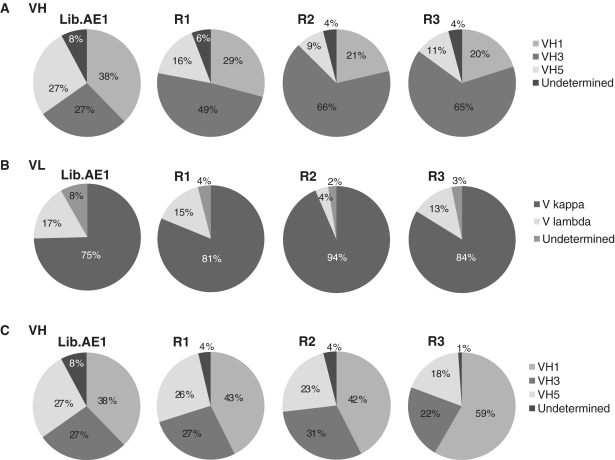
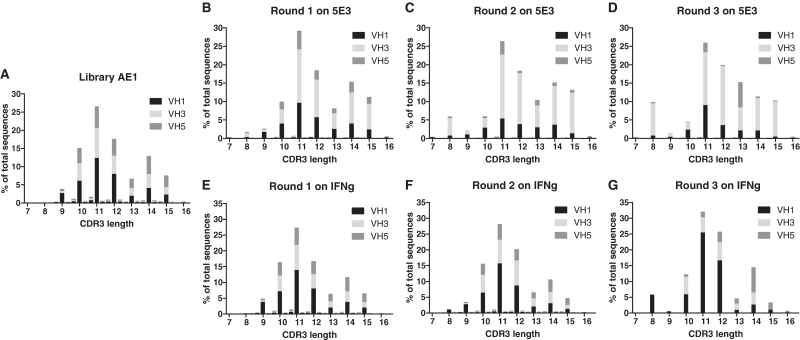
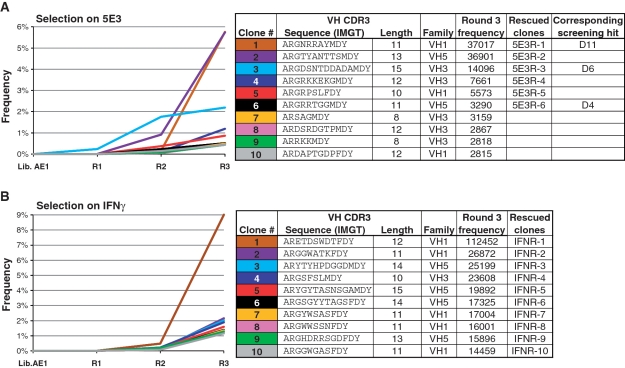
In recent years, unprecedented DNA sequencing capacity provided by next generation sequencing (NGS) has revolutionized genomic research. Combining the Illumina sequencing platform and a scFv library designed to confine diversity to both CDR3, >1.9 × 10(7) sequences have been generated. This approach allowed for in depth analysis of the library's diversity, provided sequence information on virtually all scFv during selection for binding to two targets and a global view of these enrichment processes. Using the most frequent heavy chain CDR3 sequences, primers were designed to rescue scFv from the third selection round. Identification, based on sequence frequency, retrieved the most potent scFv and valuable candidates that were missed using classical in vitro screening. Thus, by combining NGS with display technologies, laborious and time consuming upfront screening can be by-passed or complemented and valuable insights into the selection process can be obtained to improve library design and understanding of antibody repertoires.
近年来,下一代测序(NGS)提供的前所未有的 DNA 测序能力彻底改变了基因组研究。我们结合 Illumina 测序平台和一个 scFv 文库,将多样性限制在 CDR3 上,生成了超过 1.9×10(7)个序列。这种方法允许深入分析文库的多样性,提供了在选择与两个靶标结合时几乎所有 scFv 的序列信息,并提供了这些富集过程的全局视图。使用最频繁的重链 CDR3 序列,设计了引物从第三轮选择中回收 scFv。基于序列频率的鉴定,检索到了最有效的 scFv 和有价值的候选者,这些候选者是使用经典的体外筛选方法错过的。因此,通过将 NGS 与展示技术相结合,可以绕过或补充繁琐且耗时的前期筛选,并深入了解选择过程,以改进文库设计和理解抗体库。