Institute of Immunology, Center for Pathophysiology, Infectiology and Immunology, Medical University of Vienna, Vienna, Austria.
J Immunol Methods. 2010 Oct 31;362(1-2):131-41. doi: 10.1016/j.jim.2010.09.020. Epub 2010 Sep 19.
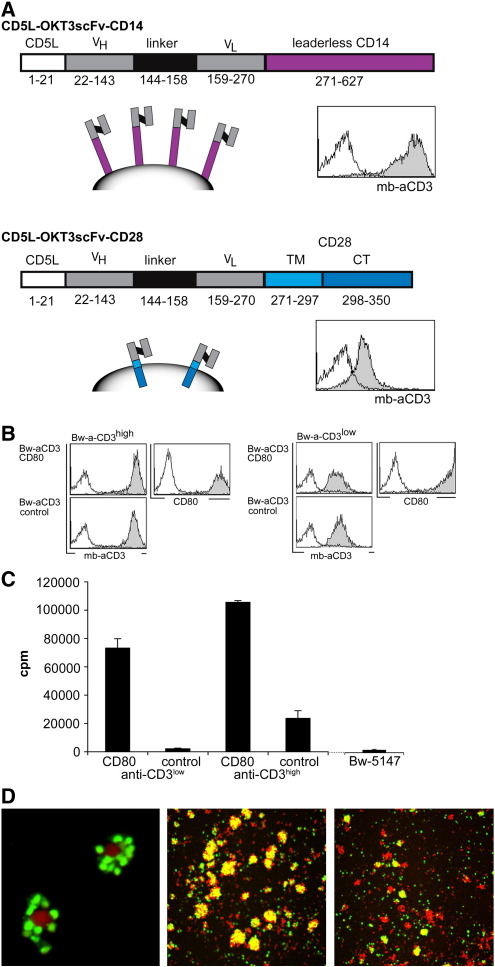
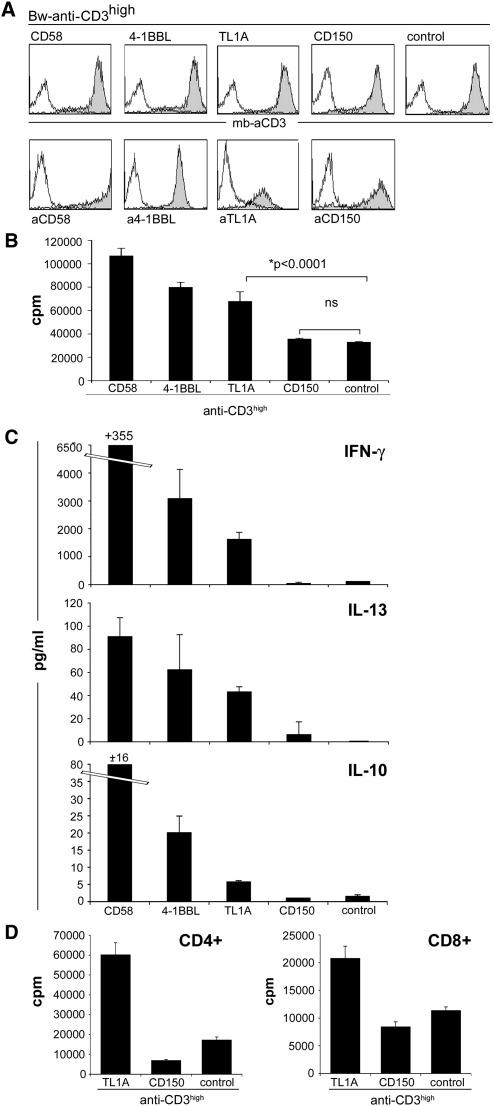
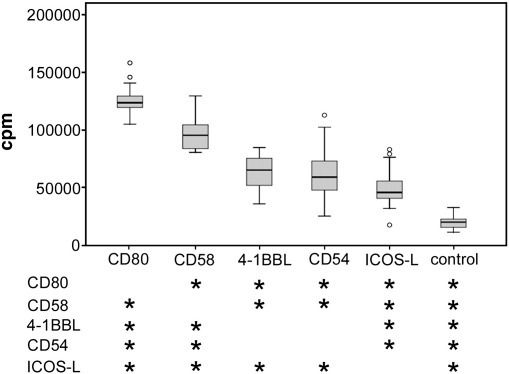
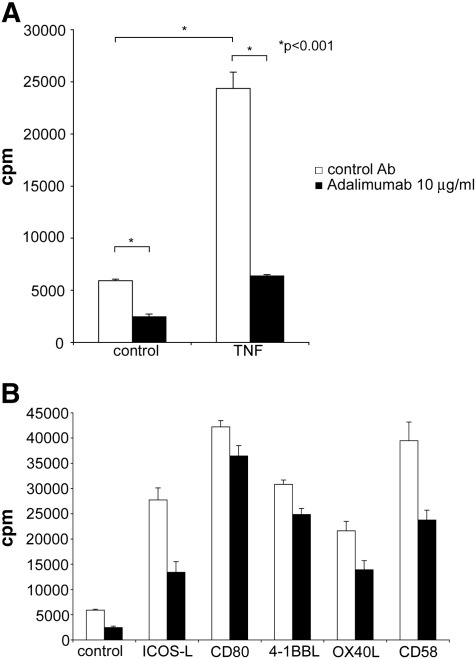
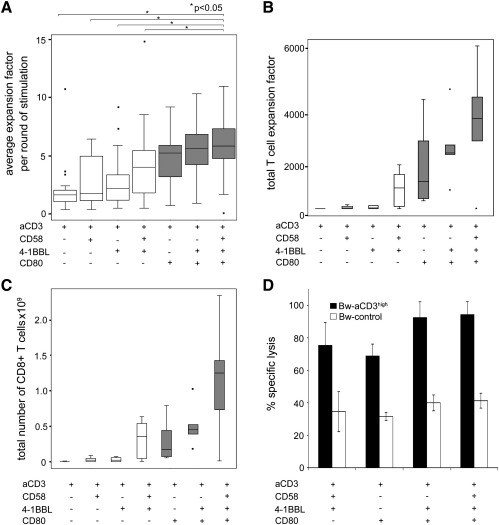
It is well established that full activation of T cells requires the interaction of the TCR complex with the peptide-MHC complex (Signal 1) and additional signals (Signal 2). These second signals are generated by the interaction of costimulatory ligands expressed on antigen presenting cells with activating receptors on T cells. In addition, T cell responses are negatively regulated by inhibitory costimulatory pathways. Since professional antigen presenting cells (APC) harbour a plethora of stimulating and inhibitory surface molecules, the contribution of individual costimulatory molecules is difficult to assess on these cells. We have developed a system of stimulator cells that can give signal 1 to human T cells via a membrane bound anti-CD3 antibody fragment. By expressing human costimulatory ligands on these cells, their role in T cell activation processes can readily be analyzed. We demonstrate that T cell stimulator cells are excellent tools to study various aspects of human T cell costimulation, including the effects of immunomodulatory drugs or how costimulatory signals contribute to the in vitro expansion of T cells. T cell stimulator cells are especially suited for the functional evaluation of ligands that are implicated in costimulatory processes. In this study we have evaluated the role of the CD2 family member CD150 (SLAM) and the TNF family member TL1A (TNFSF15) in the activation of human T cells. Whereas our results do not point to a significant role of CD150 in T cell activation we found TL1A to potently costimulate human T cells. Taken together our results demonstrate that T cell stimulator cells are excellent tools to study various aspects of costimulatory processes.
已充分证实,T 细胞的完全激活需要 TCR 复合物与肽-MHC 复合物(信号 1)相互作用,以及其他信号(信号 2)。这些第二信号是由抗原呈递细胞上表达的共刺激配体与 T 细胞上的激活受体相互作用产生的。此外,T 细胞反应受到抑制性共刺激途径的负调控。由于专业抗原呈递细胞(APC)拥有大量的刺激和抑制性表面分子,因此很难评估单个共刺激分子在这些细胞上的贡献。我们开发了一种刺激细胞系统,该系统可以通过膜结合的抗 CD3 抗体片段向人类 T 细胞提供信号 1。通过在这些细胞上表达人类共刺激配体,可以很容易地分析它们在 T 细胞激活过程中的作用。我们证明 T 细胞刺激细胞是研究人类 T 细胞共刺激各个方面的出色工具,包括免疫调节药物的作用或共刺激信号如何有助于 T 细胞的体外扩增。T 细胞刺激细胞特别适合用于功能评估涉及共刺激过程的配体。在这项研究中,我们评估了 CD2 家族成员 CD150(SLAM)和 TNF 家族成员 TL1A(TNFSF15)在人类 T 细胞激活中的作用。虽然我们的结果表明 CD150 在 T 细胞激活中没有显著作用,但我们发现 TL1A 能够强烈地共刺激人类 T 细胞。总之,我们的结果表明 T 细胞刺激细胞是研究共刺激过程各个方面的出色工具。