Gonzalez-Perez Oscar, Quiñones-Hinojosa Alfredo, Garcia-Verdugo Jose Manuel
Neuroscience Laboratory, Psychology School, University of Colima, Colima, Mexico 28040.
J Stem Cells. 2010;5(1):23-31.
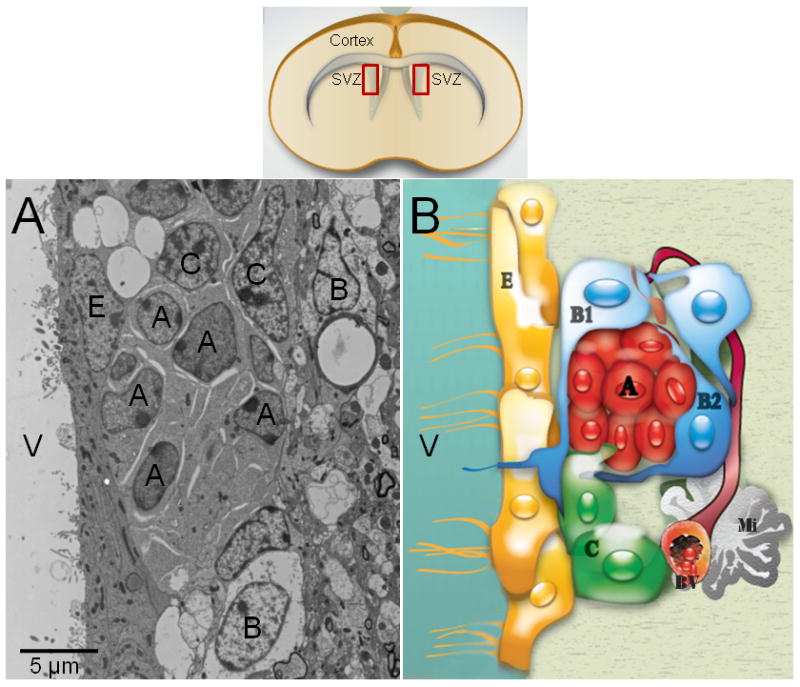
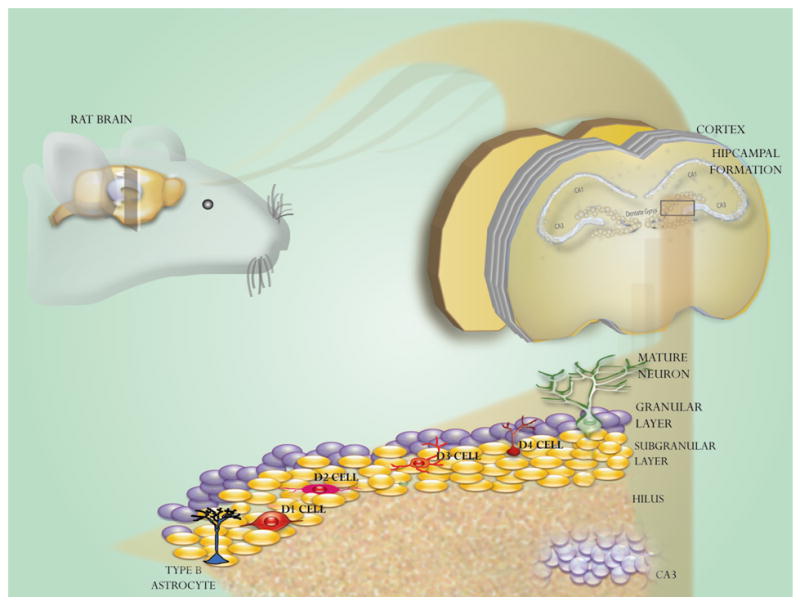
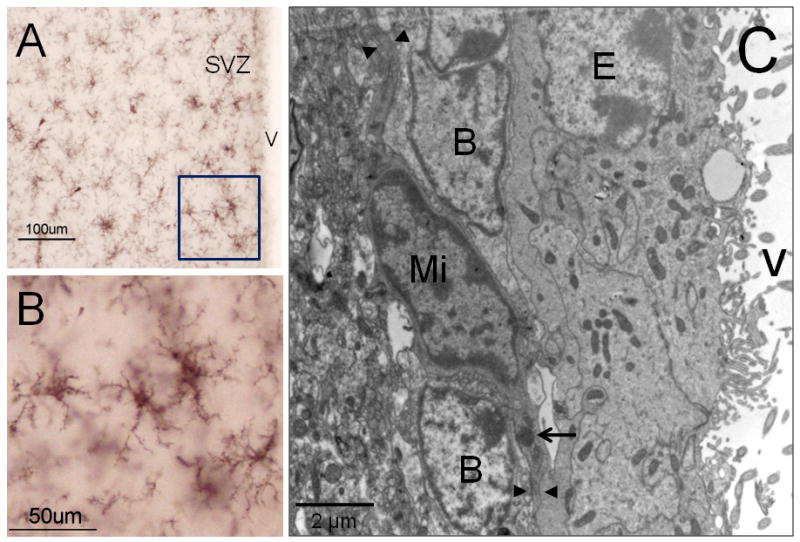
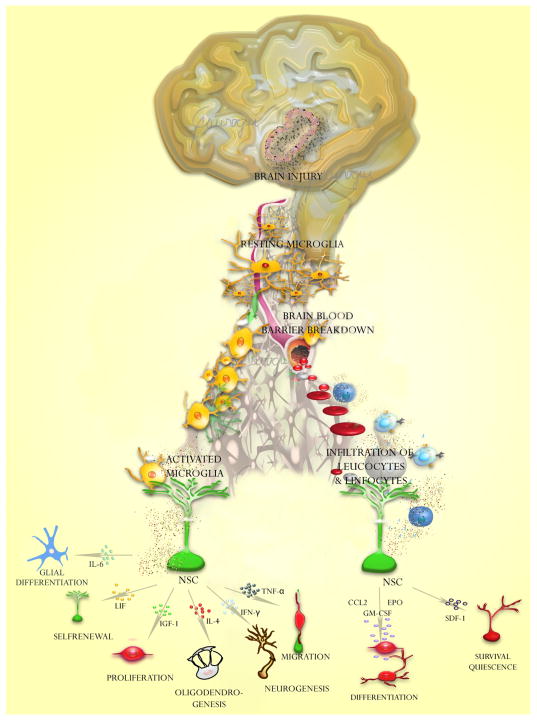
Adult neurogenesis occurs only in discrete regions of adult central nervous system: the subventricular zone and the subgranular zone. These areas are populated by adult neural stem cells (aNSC) that are regulated by a number of molecules and signaling pathways, which control their cell fate choices, survival and proliferation rates. For a long time, it was believed that the immune system did not exert any control on neural proliferative niches. However, it has been observed that many pathological and inflammatory conditions significantly affect NSC niches. Even more, increasing evidence indicates that chemokines and cytokines play an important role in regulating proliferation, cell fate choices, migration and survival of NSCs under physiological conditions. Hence, the immune system is emerging is an important regulator of neurogenic niches in the adult brain, which may have clinical relevance in several brain diseases.
脑室下区和颗粒下区。这些区域存在成体神经干细胞(aNSC),它们受多种分子和信号通路调控,这些分子和信号通路控制着它们的细胞命运选择、存活率和增殖率。长期以来,人们认为免疫系统对神经增殖微环境没有任何调控作用。然而,已经观察到许多病理和炎症状况会显著影响神经干细胞微环境。甚至更有越来越多的证据表明,趋化因子和细胞因子在生理条件下对神经干细胞的增殖、细胞命运选择、迁移和存活起着重要作用。因此,免疫系统正在成为成年大脑神经发生微环境的重要调节因子,这可能在几种脑部疾病中具有临床意义。