Leibniz Institute for Zoo and Wildlife Research, Alfred-Kowalke-Str. 17, Berlin 10315, Germany.
Nat Commun. 2010 Sep 21;1(6):78. doi: 10.1038/ncomms1079.
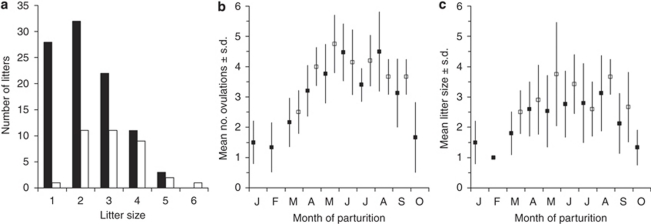
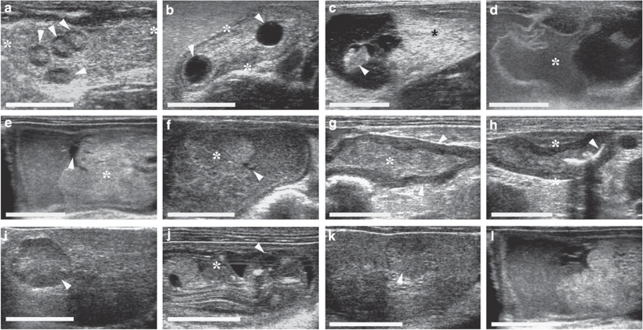
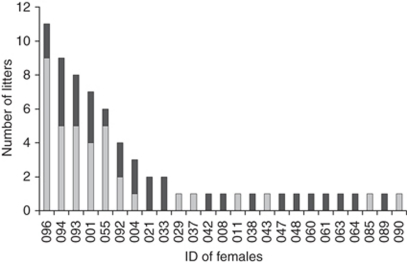
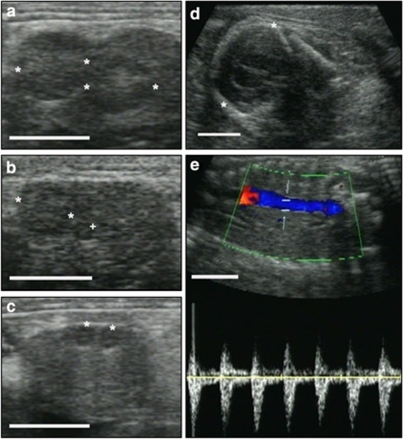
The concept of superfetation, a second conception during pregnancy, has been controversial for a long time. In this paper we use an experimental approach to demonstrate that female European brown hares (Lepus europaeus) frequently develop a second pregnancy while already pregnant and thereby increase their reproductive success. After a new, successful copulation, we confirmed additional ovulations before parturition in living, late-pregnant females by detecting a second set of fresh corpora lutea using high-resolution ultrasonography. The presence of early embryonic stages in the oviduct, demonstrated by oviduct flushing, next to fully developed fetuses in the uterus is best explained by passage of semen through the late-pregnant uterus; this was confirmed by paternity analysis using microsatellite profiling. Subsequent implantation occurred after parturition. This superfetation, categorized as superconception, significantly increased litter size and permitted females to produce up to 35.4% more offspring per breeding season. It is therefore most likely an evolutionary adaptation.
超胎现象(即在妊娠期间再次受孕的现象)的概念长期以来一直存在争议。本文通过实验方法证明,雌性欧洲野兔(Lepus europaeus)在已经怀孕的情况下经常会再次怀孕,从而提高了它们的繁殖成功率。通过对活体、晚期妊娠雌性进行高分辨率超声检查,发现第二套新鲜黄体,确认再次成功交配后,在分娩前有额外的排卵。通过输卵管冲洗,在子宫内发现完全发育的胎儿旁边有早期胚胎阶段,这最好解释为精液通过晚期妊娠子宫的传递;这通过微卫星分析进行的亲子关系分析得到了证实。随后在分娩后发生了植入。这种超胎现象被归类为超孕,显著增加了窝仔数,使雌性在每个繁殖季节多产 35.4%的后代。因此,这很可能是一种进化适应。