Laboratory of Molecular Pharmacology, Istituto di Ricerche Farmacologiche Mario Negri, Milan, Italy.
Mol Cancer. 2010 Sep 24;9:259. doi: 10.1186/1476-4598-9-259.
Drug resistance is one of the major obstacles limiting the activity of anticancer agents. Activation of DNA repair mechanism often accounts for increase resistance to cancer chemotherapy.
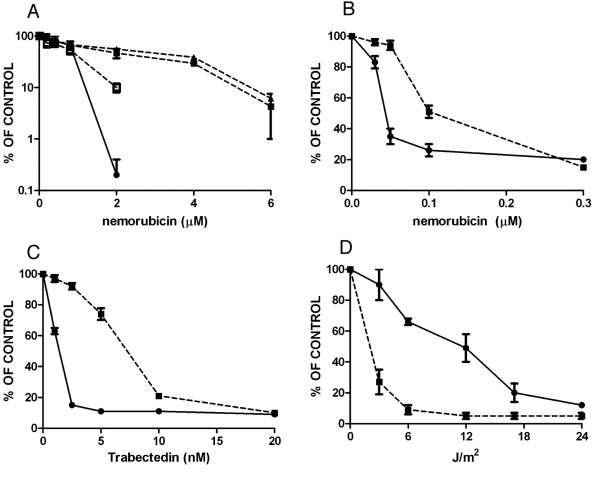
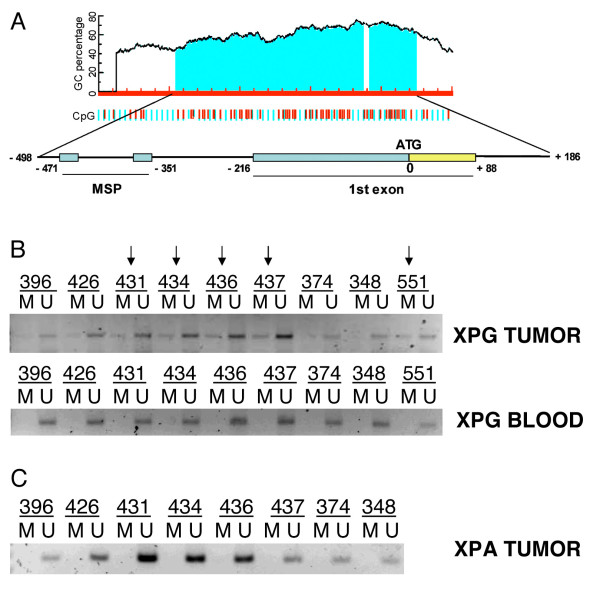
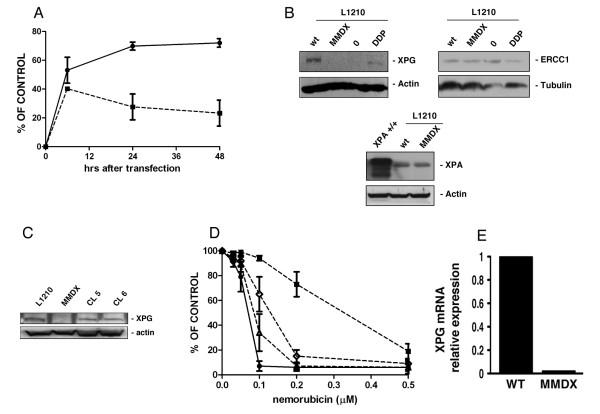
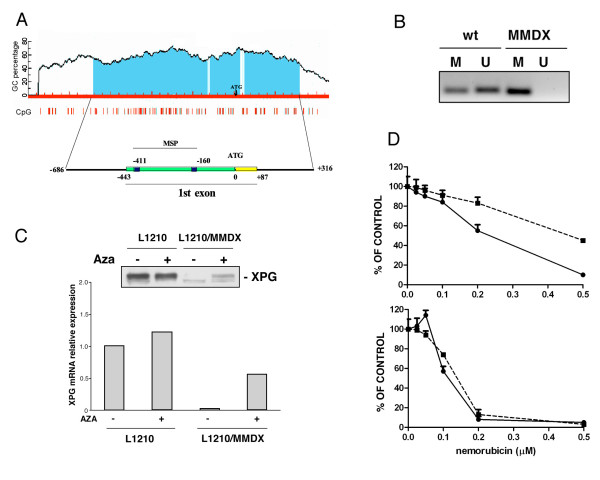
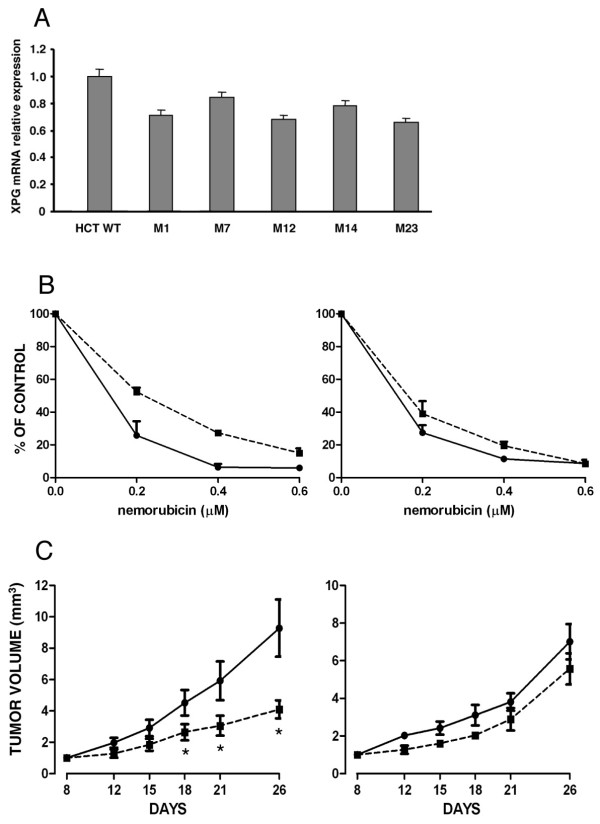
We present evidence that nemorubicin, a doxorubicin derivative currently in clinical evaluation, acts through a mechanism of action different from classical anthracyclines, requiring an intact nucleotide excision repair (NER) system to exert its activity. Cells made resistant to nemorubicin show increased sensitivity to UV damage. We have analysed the mechanism of resistance and discovered a previously unknown mechanism resulting from methylation-dependent silencing of the XPG gene. Restoration of NER activity through XPG gene transfer or treatment with demethylating agents restored sensitivity to nemorubicin. Furthermore, we found that a significant proportion of ovarian tumors present methylation of the XPG promoter.
Methylation of a NER gene, as described here, is a completely new mechanism of drug resistance and this is the first evidence that XPG gene expression can be influenced by an epigenetic mechanism. The reported methylation of XPG gene could be an important determinant of the response to platinum based therapy. In addition, the mechanism of resistance reported opens up the possibility of reverting the resistant phenotype using combinations with demethylating agents, molecules already employed in the clinical setting.
耐药性是限制抗癌药物活性的主要障碍之一。DNA 修复机制的激活常常导致癌症化疗耐药性增加。
我们提出了这样的证据,即正在临床评估中的柔红霉素衍生物米托蒽醌通过一种与经典蒽环类药物不同的作用机制发挥作用,需要完整的核苷酸切除修复(NER)系统来发挥其活性。对米托蒽醌产生耐药性的细胞对 UV 损伤更加敏感。我们分析了耐药机制,发现了一种以前未知的机制,它源于 XPG 基因的甲基化依赖性沉默。通过 XPG 基因转移或用去甲基化剂治疗恢复 NER 活性,可恢复对米托蒽醌的敏感性。此外,我们发现相当一部分卵巢肿瘤存在 XPG 启动子的甲基化。
如本文所述,NER 基因的甲基化是一种全新的耐药机制,这是第一个证明 XPG 基因表达可以受到表观遗传机制影响的证据。报道的 XPG 基因甲基化可能是对铂类治疗反应的一个重要决定因素。此外,所报道的耐药机制为使用与去甲基化剂联合来逆转耐药表型提供了可能性,这些药物已经在临床环境中使用。