Suppr超能文献

组蛋白乙酰转移酶介导的 FOXP3 乙酰化和 Treg 功能的调节。

Histone acetyltransferase mediated regulation of FOXP3 acetylation and Treg function.

机构信息

Department of Pathology and Laboratory Medicine, University of Pennsylvania, Philadelphia, PA 19104, USA.

出版信息

Curr Opin Immunol. 2010 Oct;22(5):583-91. doi: 10.1016/j.coi.2010.08.013. Epub 2010 Sep 24.

Abstract

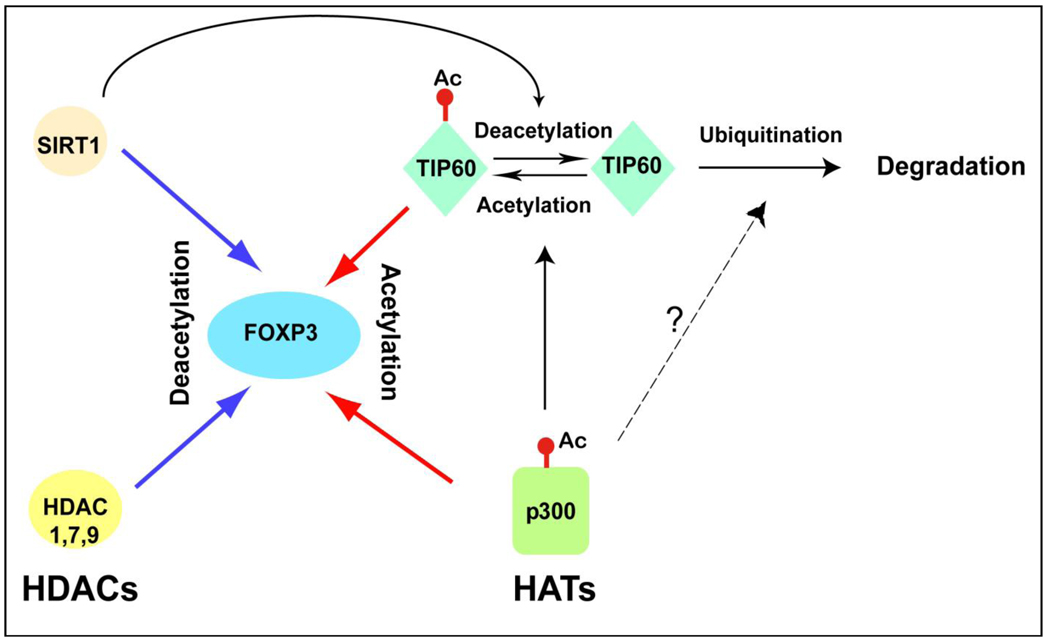
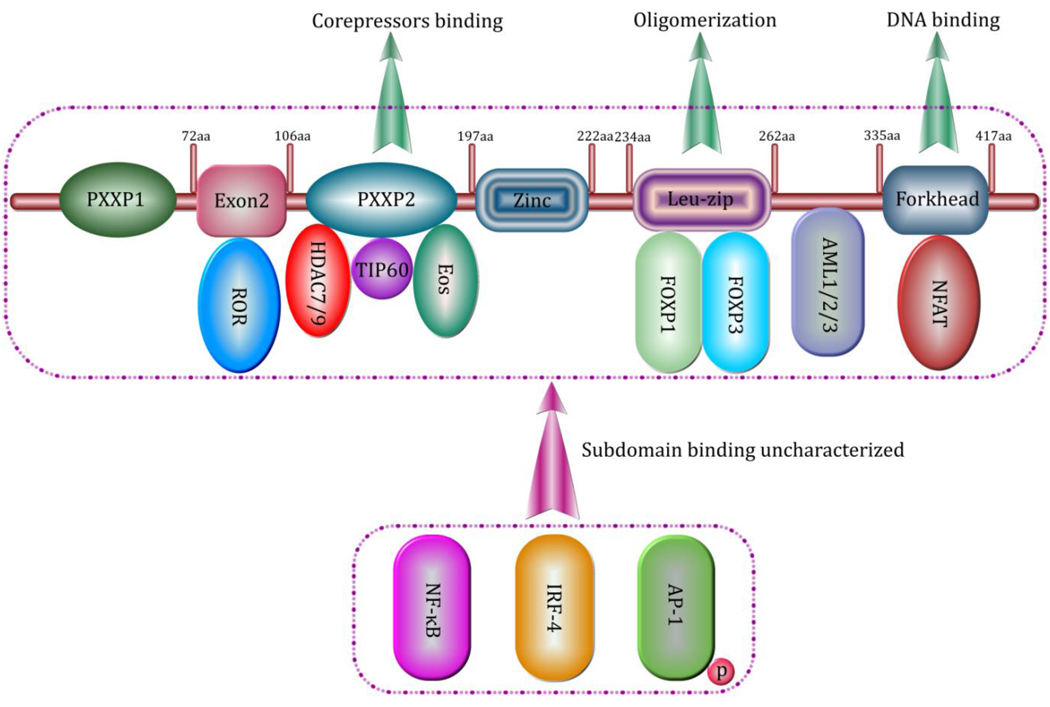
Regulatory T cells (Tregs) are required for the maintenance of immune homeostasis as first clearly described by Herman Waldmann's laboratory. Dysfunction of Treg cells also leads to fatal autoimmunity in humans and mice. Conversely, the activation of different classes of Tregs operative systemically and within the cancer microenvironment can suppress host anti-tumor immune responses and promote tumor progression. Therefore, the development of new therapeutic approaches to regulate the activity of Treg cells may have considerable clinical potential. FOXP3 is the key transcriptional regulator of Treg development and function. The activity of FOXP3 is regulated by acetylation, a process catalyzed by distinct types of histone/protein acetyltransferases (HATs) that regulate the functions of many transcription factors, independently of FOXP3, as well as non-histone proteins, in addition to their effects on chromatin accessibility. Interactions between FOXP3 and these enzymes determine the suppressive function of FOXP3. Clearly, small molecules targeting these enzymes are candidates for the regulation of Treg function in vaccines and tumor therapies.

摘要

调节性 T 细胞(Tregs)对于维持免疫稳态是必需的,这首先由赫尔曼·沃尔德曼(Herman Waldmann)的实验室明确描述。Treg 细胞的功能障碍也会导致人类和小鼠的致命自身免疫。相反,在全身和肿瘤微环境中发挥作用的不同类别的 Tregs 的激活可以抑制宿主抗肿瘤免疫反应并促进肿瘤进展。因此,开发新的治疗方法来调节 Treg 细胞的活性可能具有相当大的临床潜力。FOXP3 是 Treg 发育和功能的关键转录调节因子。FOXP3 的活性受乙酰化调节,该过程由不同类型的组蛋白/蛋白乙酰转移酶(HATs)催化,这些酶独立于 FOXP3 调节许多转录因子的功能,以及除了它们对染色质可及性的影响之外,还调节非组蛋白蛋白的功能。FOXP3 与这些酶之间的相互作用决定了 FOXP3 的抑制功能。显然,针对这些酶的小分子是调节疫苗和肿瘤治疗中 Treg 功能的候选药物。
相似文献

1
Histone acetyltransferase mediated regulation of FOXP3 acetylation and Treg function.
Curr Opin Immunol. 2010 Oct;22(5):583-91. doi: 10.1016/j.coi.2010.08.013. Epub 2010 Sep 24.
2
4
Loss of epigenetic modification driven by the Foxp3 transcription factor leads to regulatory T cell insufficiency.
Immunity. 2012 May 25;36(5):717-30. doi: 10.1016/j.immuni.2012.03.020. Epub 2012 May 10.
5
Immune regulation by histone deacetylases: a focus on the alteration of FOXP3 activity.
Immunol Cell Biol. 2012 Jan;90(1):95-100. doi: 10.1038/icb.2011.101. Epub 2011 Nov 29.
6
Histone/protein deacetylases control Foxp3 expression and the heat shock response of T-regulatory cells.
Curr Opin Immunol. 2011 Oct;23(5):670-8. doi: 10.1016/j.coi.2011.07.002. Epub 2011 Jul 26.
7
Foxp3 Post-translational Modifications and Treg Suppressive Activity.
Front Immunol. 2019 Oct 18;10:2486. doi: 10.3389/fimmu.2019.02486. eCollection 2019.
8
FOXP3+ regulatory T cell development and function require histone/protein deacetylase 3.
J Clin Invest. 2015 Mar 2;125(3):1111-23. doi: 10.1172/JCI77088. Epub 2015 Feb 2.
9
T-regulatory cells require Sin3a for stable expression of Foxp3.
Front Immunol. 2024 Aug 2;15:1444937. doi: 10.3389/fimmu.2024.1444937. eCollection 2024.
10
Lysosome-dependent p300/FOXP3 degradation and limits Treg cell functions and enhances targeted therapy against cancers.
Exp Mol Pathol. 2013 Aug;95(1):38-45. doi: 10.1016/j.yexmp.2013.04.003. Epub 2013 May 2.

引用本文的文献

1
Histone deacetylase inhibitors: targeting epigenetic regulation in the treatment of acute leukemia.
Ther Adv Hematol. 2024 Oct 16;15:20406207241283277. doi: 10.1177/20406207241283277. eCollection 2024.
2
Role of Histone Deacetylase 6 and Histone Deacetylase 6 Inhibition in Colorectal Cancer.
Pharmaceutics. 2023 Dec 29;16(1):54. doi: 10.3390/pharmaceutics16010054.
5
Epigenetic regulation in the tumor microenvironment: molecular mechanisms and therapeutic targets.
Signal Transduct Target Ther. 2023 May 22;8(1):210. doi: 10.1038/s41392-023-01480-x.
7
Inhibition of FOXP3 by stapled alpha-helical peptides dampens regulatory T cell function.
Proc Natl Acad Sci U S A. 2022 Oct 18;119(42):e2209044119. doi: 10.1073/pnas.2209044119. Epub 2022 Oct 13.
8
Nuclear Coregulatory Complexes in Tregs as Targets to Promote Anticancer Immune Responses.
Front Immunol. 2022 Jun 20;13:909816. doi: 10.3389/fimmu.2022.909816. eCollection 2022.

本文引用的文献

2
FOXP3+ regulatory T cells in the human immune system.
Nat Rev Immunol. 2010 Jul;10(7):490-500. doi: 10.1038/nri2785. Epub 2010 Jun 18.
3
SIRT1 regulates autoacetylation and histone acetyltransferase activity of TIP60.
J Biol Chem. 2010 Apr 9;285(15):11458-64. doi: 10.1074/jbc.M109.087585. Epub 2010 Jan 25.
4
Regulation of Treg functionality by acetylation-mediated Foxp3 protein stabilization.
Blood. 2010 Feb 4;115(5):965-74. doi: 10.1182/blood-2009-02-207118. Epub 2009 Dec 7.
5
Sirt1 physically interacts with Tip60 and negatively regulates Tip60-mediated acetylation of H2AX.
Biochem Biophys Res Commun. 2009 Dec 25;390(4):1355-60. doi: 10.1016/j.bbrc.2009.10.156. Epub 2009 Nov 4.
6
Inhibition of HDAC9 increases T regulatory cell function and prevents colitis in mice.
Gastroenterology. 2010 Feb;138(2):583-94. doi: 10.1053/j.gastro.2009.10.037. Epub 2009 Oct 29.
7
Immunomodulatory effects of deacetylase inhibitors: therapeutic targeting of FOXP3+ regulatory T cells.
Nat Rev Drug Discov. 2009 Dec;8(12):969-81. doi: 10.1038/nrd3031. Epub 2009 Oct 26.
8
Deacetylase inhibition increases regulatory T cell function and decreases incidence and severity of collagen-induced arthritis.
Exp Mol Pathol. 2009 Oct;87(2):99-104. doi: 10.1016/j.yexmp.2009.06.003. Epub 2009 Jul 3.
9
Structural aspects of the FOXP3 regulatory complex as an immunopharmacological target.
Int Immunopharmacol. 2009 May;9(5):518-20. doi: 10.1016/j.intimp.2009.01.018. Epub 2009 Jan 29.
10
The SIRT2 deacetylase regulates autoacetylation of p300.
Mol Cell. 2008 Nov 7;32(3):449-55. doi: 10.1016/j.molcel.2008.09.018.

文献AI研究员

20分钟写一篇综述,助力文献阅读效率提升50倍。

立即体验

用中文搜PubMed

大模型驱动的PubMed中文搜索引擎

马上搜索

文档翻译

学术文献翻译模型,支持多种主流文档格式。

立即体验