Hwang Kun, You Sun Hye
Department of Plastic Surgery, Inha University College of Medicine, Incheon, Korea.
Indian J Plast Surg. 2010 Jan;43(1):42-8. doi: 10.4103/0970-0358.63959.
The medical records of these patients were reviewed and analysed to determine the clinical characteristics and treatment of facial bone fractures.
This is a retrospective study of 2,094 patients with facial bone fractures from various accidents that were treated at the Inha University Hospital from 1996 to 2007.
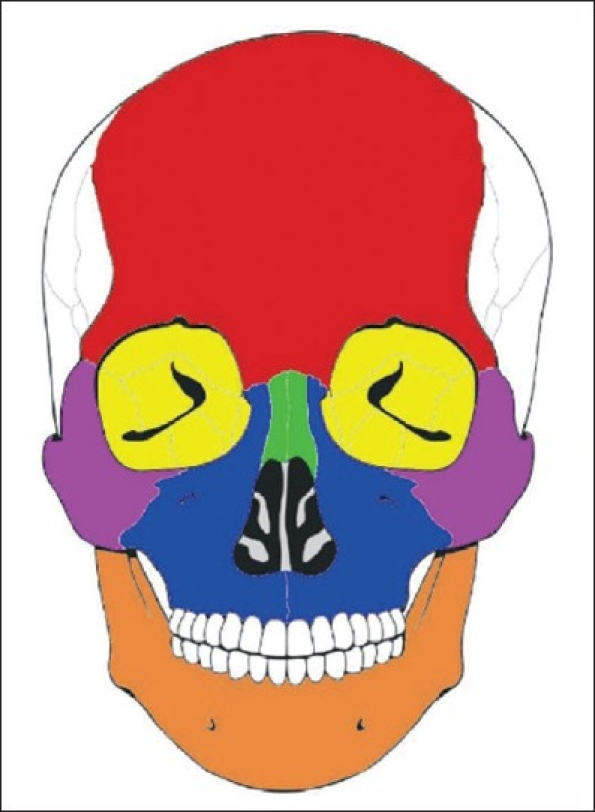
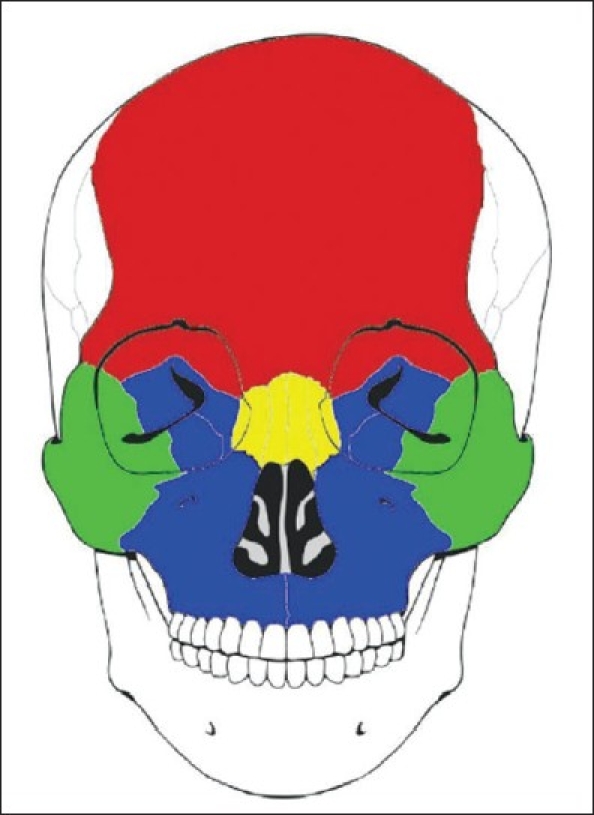
The most common age group was the third decade of life (29%). Males were more common than females (3.98:1). The most common aetiology was violent assault or nonviolent traumatic injury (49.4%). The most common isolated fracture site was the nasal bone (37.7%), followed by the mandible (30%), orbital bones (7.6%), zygoma (5.7%), maxilla (1.3%) and the frontal bone (0.3%). The largest group with complex fractures included the inferior region of the orbital floor and zygomaticomaxilla (14%). Closed reduction was performed in 46.3% of the cases while 39.7% of the cases required open reduction. For open reductions, the most commonly used soft-tissue approach was the intraoral approach (32.3%). The complication rate was 6.4% and the most common complication was hypoesthesia (68.4%) followed by diplopia (25.6%).
Long-term collection of epidemiological data regarding facial fractures and concomitant injuries is important for the evaluation of existing preventive measures and useful in the development of new methods of injury prevention and treatment.
回顾并分析这些患者的病历,以确定面部骨折的临床特征及治疗方法。
这是一项对1996年至2007年在仁荷大学医院接受治疗的2094例因各种事故导致面部骨折患者的回顾性研究。
最常见的年龄组为第三个十年(29%)。男性比女性更常见(3.98:1)。最常见的病因是暴力袭击或非暴力创伤性损伤(49.4%)。最常见的单一骨折部位是鼻骨(37.7%),其次是下颌骨(30%)、眶骨(7.6%)、颧骨(5.7%)、上颌骨(1.3%)和额骨(0.3%)。复杂骨折患者中人数最多的一组包括眶底下部和颧上颌区域(14%)。46.3%的病例进行了闭合复位,而39.7%的病例需要切开复位。对于切开复位,最常用的软组织入路是口内入路(32.3%)。并发症发生率为6.4%,最常见的并发症是感觉减退(68.4%),其次是复视(25.6%)。
长期收集有关面部骨折及伴随损伤的流行病学数据,对于评估现有的预防措施很重要,并且有助于开发新的损伤预防和治疗方法。