Section of Molecular and Computational Biology, Department of Biological Sciences, University of Southern California, Los Angeles, California 90089, USA.
BMC Genomics. 2010 Oct 6;11:541. doi: 10.1186/1471-2164-11-541.
Drosophila melanogaster females show changes in behavior and physiology after mating that are thought to maximize the number of progeny resulting from the most recent copulation. Sperm and seminal fluid proteins induce post-mating changes in females, however, very little is known about the resulting gene expression changes in female head and central nervous system tissues that contribute to the post-mating response.
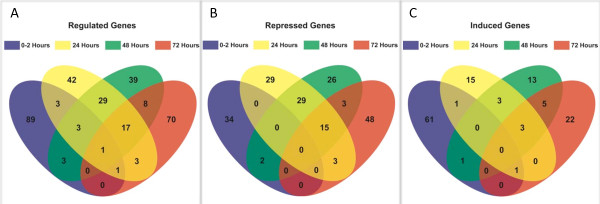
We determined the temporal gene expression changes in female head tissues 0-2, 24, 48 and 72 hours after mating. Females from each time point had a unique post-mating gene expression response, with 72 hours post-mating having the largest number of genes with significant changes in expression. At most time points, genes expressed in the head fat body that encode products involved in metabolism showed a marked change in expression. Additional analysis of gene expression changes in dissected brain tissues 24 hours post-mating revealed changes in transcript abundance of many genes, notably, the reduced transcript abundance of genes that encode ion channels.
Substantial changes occur in the regulation of many genes in female head tissues after mating, which might underlie aspects of the female post-mating response. These results provide new insights into the physiological and metabolic changes that accompany changes in female behaviors.
黑腹果蝇雌蝇在交配后表现出行为和生理上的变化,这些变化被认为可以最大限度地增加最近一次交配产生的后代数量。精子和精液蛋白诱导雌蝇交配后的变化,但对于导致交配后反应的雌性头部和中枢神经系统组织中产生的基因表达变化,我们知之甚少。
我们确定了交配后 0-2、24、48 和 72 小时雌蝇头部组织的时间基因表达变化。每个时间点的雌蝇都有独特的交配后基因表达反应,72 小时后交配的雌蝇有最多数量的基因表达显著变化。在大多数时间点,头部脂肪体中表达的编码代谢相关产物的基因表达发生明显变化。对交配后 24 小时解剖脑组织的基因表达变化进行的进一步分析显示,许多基因的转录丰度发生变化,特别是编码离子通道的基因的转录丰度降低。
交配后,雌性头部组织中许多基因的调控发生了显著变化,这可能是雌性交配后反应的某些方面的基础。这些结果为伴随雌性行为变化的生理和代谢变化提供了新的见解。