Mineral Metabolism Group, Nutritional Sciences Division, King's College London, London SE1 9NH, UK.
BMC Genomics. 2010 Oct 8;11:548. doi: 10.1186/1471-2164-11-548.
Zinc deficiency is detrimental to organisms, highlighting its role as an essential micronutrient contributing to numerous biological processes. To investigate the underlying molecular events invoked by zinc depletion we performed a temporal analysis of transcriptome changes observed within the zebrafish gill. This tissue represents a model system for studying ion absorption across polarised epithelial cells as it provides a major pathway for fish to acquire zinc directly from water whilst sharing a conserved zinc transporting system with mammals.
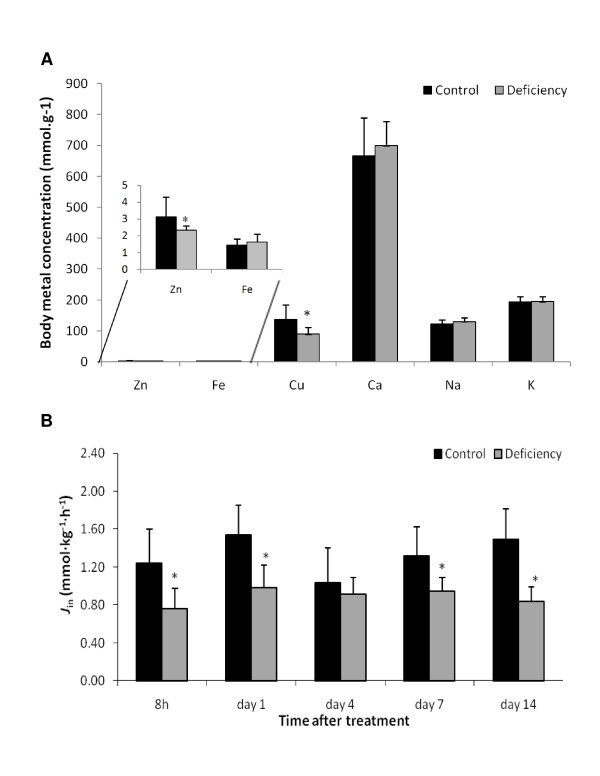
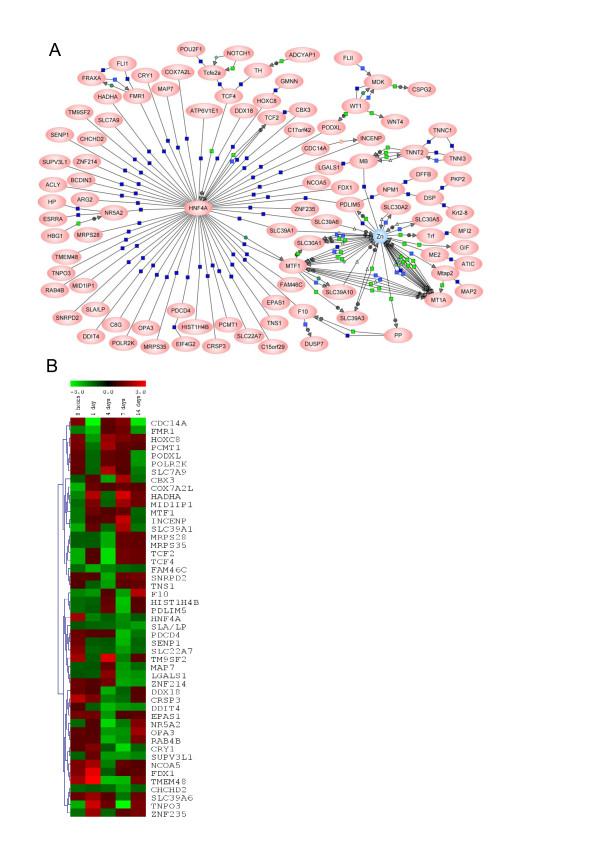
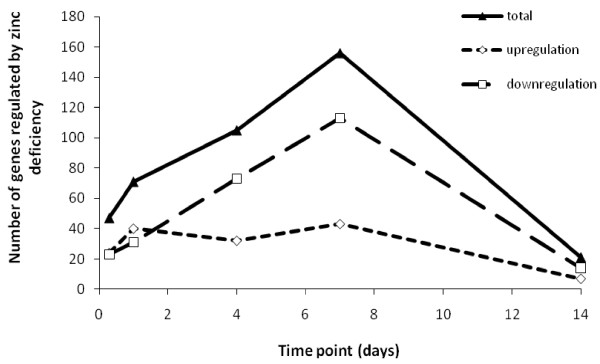
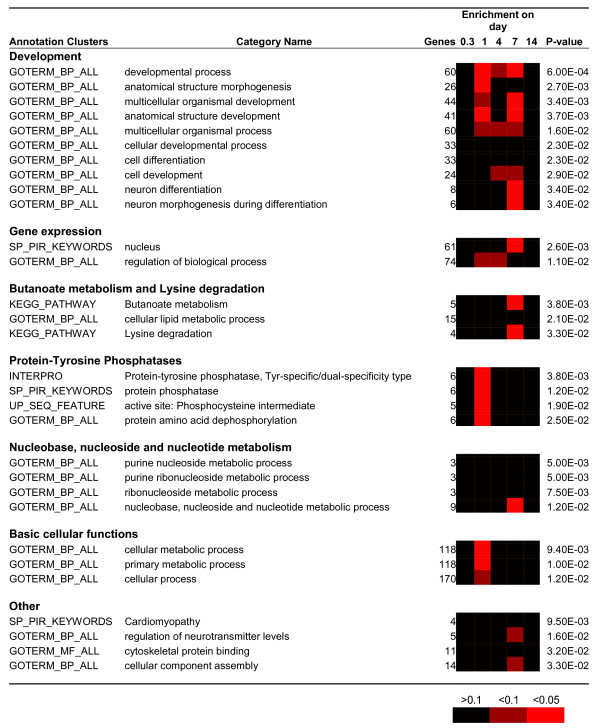
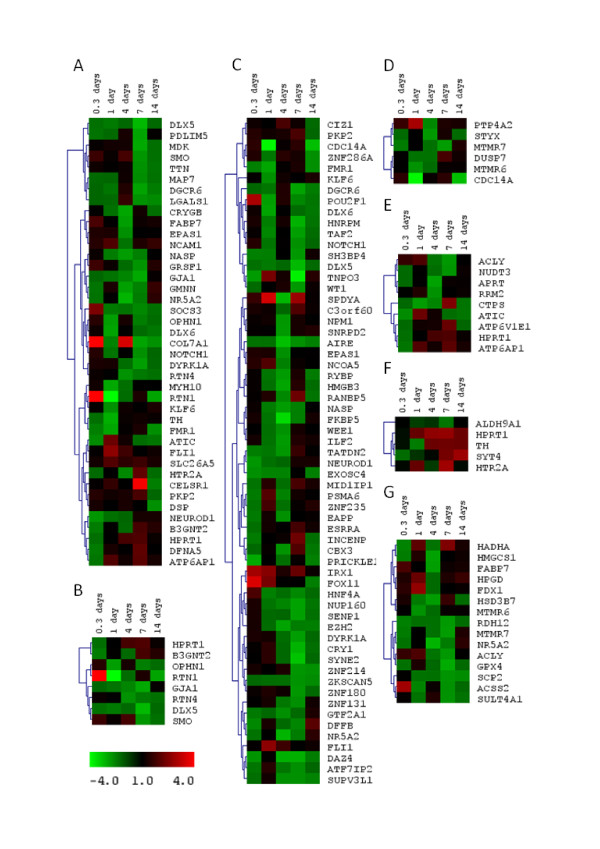
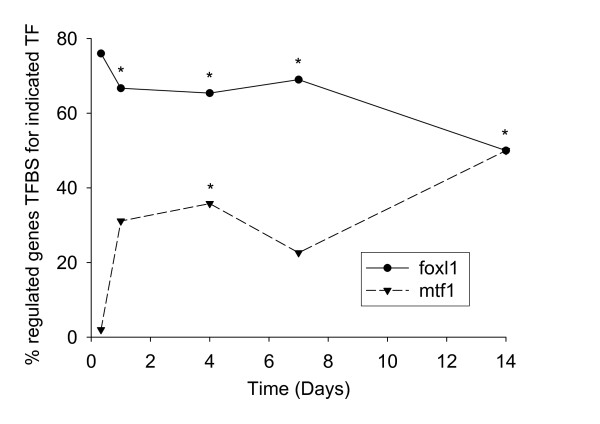
Zebrafish were treated with either zinc-depleted (water = 2.61 μg L-1; diet = 26 mg kg-1) or zinc-adequate (water = 16.3 μg L-1; diet = 233 mg kg-1) conditions for two weeks. Gill samples were collected at five time points and transcriptome changes analysed in quintuplicate using a 16K oligonucleotide array. Of the genes represented the expression of a total of 333 transcripts showed differential regulation by zinc depletion (having a fold-change greater than 1.8 and an adjusted P-value less than 0.1, controlling for a 10% False Discovery Rate). Down-regulation was dominant at most time points and distinct sets of genes were regulated at different stages. Annotation enrichment analysis revealed that 'Developmental Process' was the most significantly overrepresented Biological Process GO term (P = 0.0006), involving 26% of all regulated genes. There was also significant bias for annotations relating to development, cell cycle, cell differentiation, gene regulation, butanoate metabolism, lysine degradation, protein tyrosin phosphatases, nucleobase, nucleoside and nucleotide metabolism, and cellular metabolic processes. Within these groupings genes associated with diabetes, bone/cartilage development, and ionocyte proliferation were especially notable. Network analysis of the temporal expression profile indicated that transcription factors foxl1, wt1, nr5a1, nr6a1, and especially, hnf4a may be key coordinators of the homeostatic response to zinc depletion.
The study revealed the complex regulatory pathways that allow the organism to subtly respond to the low-zinc condition. Many of the processes affected reflected a fundamental restructuring of the gill epithelium through reactivation of developmental programs leading to stem cell differentiation. The specific regulation of genes known to be involved in development of diabetes provides new molecular links between zinc deficiency and this disease. The present study demonstrates the importance of including the time-dimension in microarray studies.
锌缺乏对生物体有害,突出了它作为一种必需微量营养素的作用,有助于许多生物过程。为了研究锌耗竭引起的潜在分子事件,我们对斑马鱼鳃中的转录组变化进行了时间分析。作为研究极性上皮细胞中离子吸收的模型系统,该组织为鱼类直接从水中获取锌提供了主要途径,同时与哺乳动物共享保守的锌转运系统。
用缺锌(水= 2.61μg L-1;饮食= 26mg kg-1)或锌充足(水= 16.3μg L-1;饮食= 233mg kg-1)条件处理斑马鱼两周。在五个时间点采集鳃样本,并使用 16K 寡核苷酸阵列对五份样本的转录组变化进行重复分析。在所代表的基因中,共有 333 个转录物的表达受到锌耗竭的差异调节(具有大于 1.8 的倍数变化和小于 0.1 的调整 P 值,控制假发现率为 10%)。大多数时间点以下调为主,不同阶段调节的基因不同。注释富集分析显示,“发育过程”是最显著的生物学过程 GO 术语(P=0.0006),涉及所有调节基因的 26%。与发育、细胞周期、细胞分化、基因调控、丁酸盐代谢、赖氨酸降解、蛋白酪氨酸磷酸酶、核苷碱基、核苷和核苷酸代谢以及细胞代谢过程相关的注释也存在显著偏差。在这些分组中,与糖尿病、骨/软骨发育和离子细胞增殖相关的基因尤为突出。对时间表达谱的网络分析表明,转录因子 foxl1、wt1、nr5a1、nr6a1,特别是 hnf4a,可能是锌耗竭时体内稳态反应的关键协调因子。
该研究揭示了允许生物体对低锌条件进行微妙反应的复杂调控途径。受影响的许多过程反映了通过重新激活发育程序导致干细胞分化对鳃上皮的基本重构。已知参与糖尿病发生的基因的特定调节为锌缺乏与这种疾病之间提供了新的分子联系。本研究表明在微阵列研究中纳入时间维度的重要性。