Kang Xinqin, Zhong Wei, Liu Jie, Song Zhenyuan, McClain Craig J, Kang Y James, Zhou Zhanxiang
Department of Medicine, University of Louisville School of Medicine, Louisville, KY 40292, USA.
Hepatology. 2009 Oct;50(4):1241-50. doi: 10.1002/hep.23090.
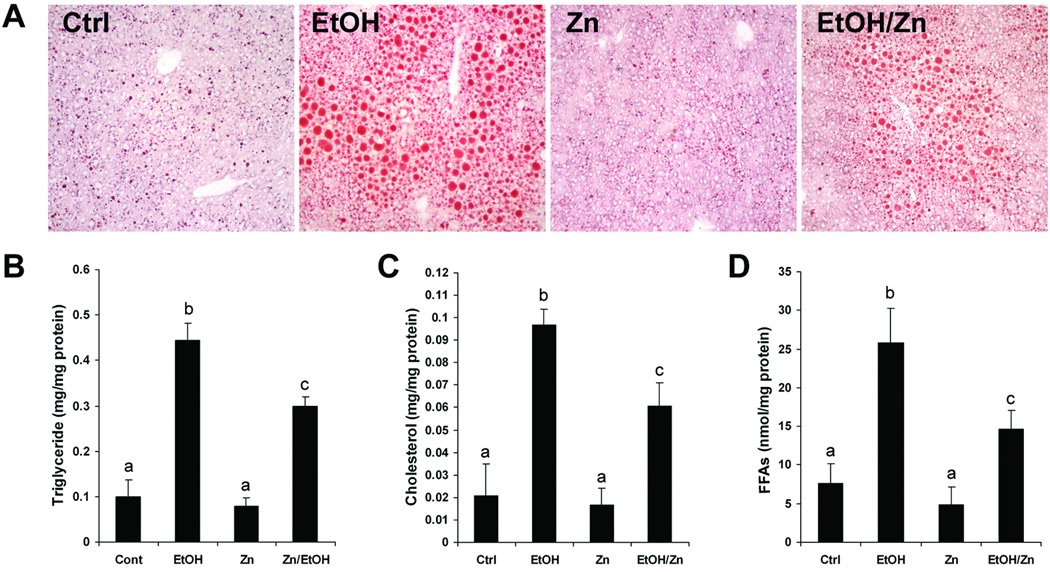
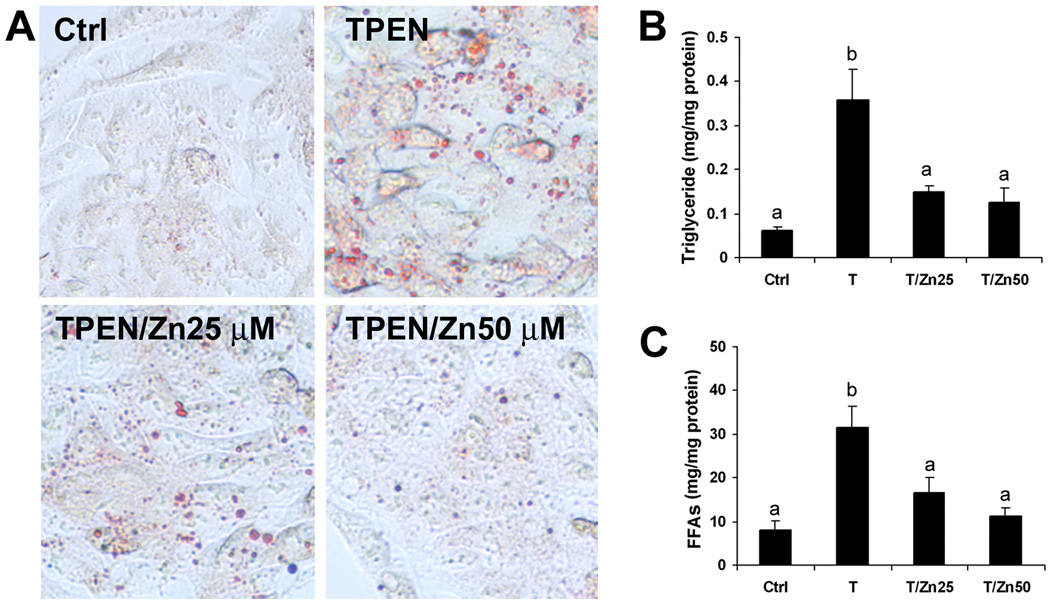
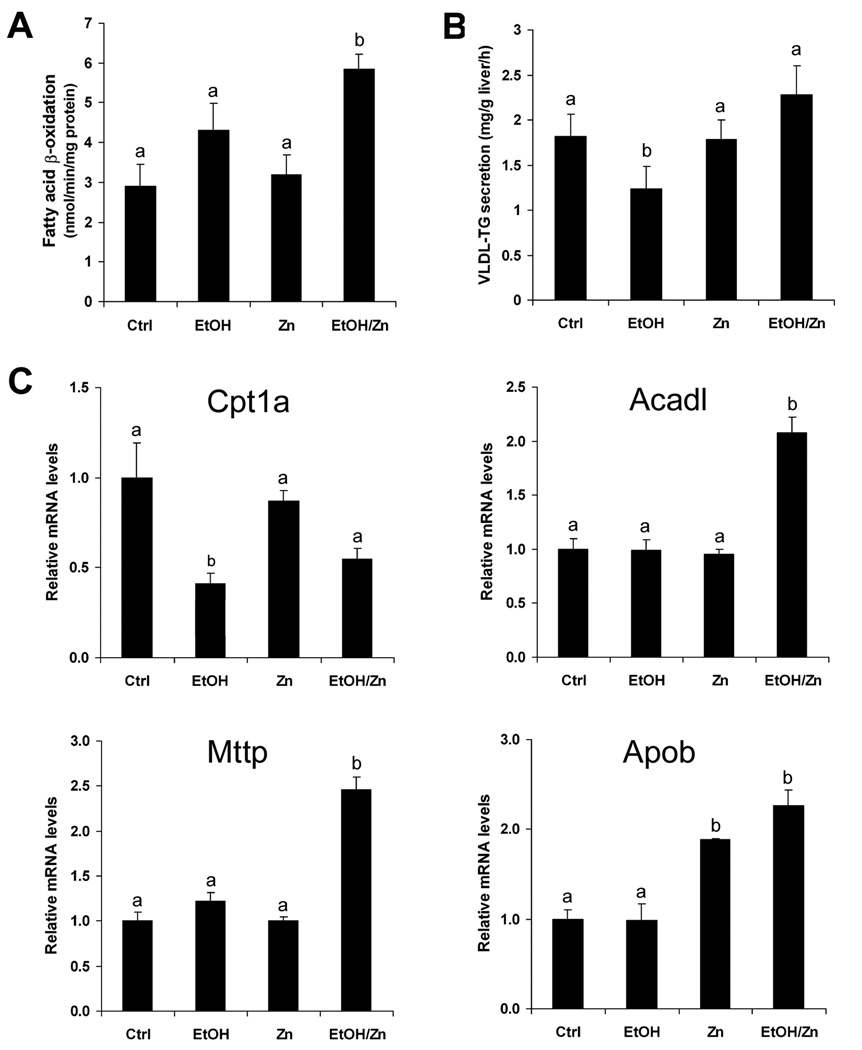
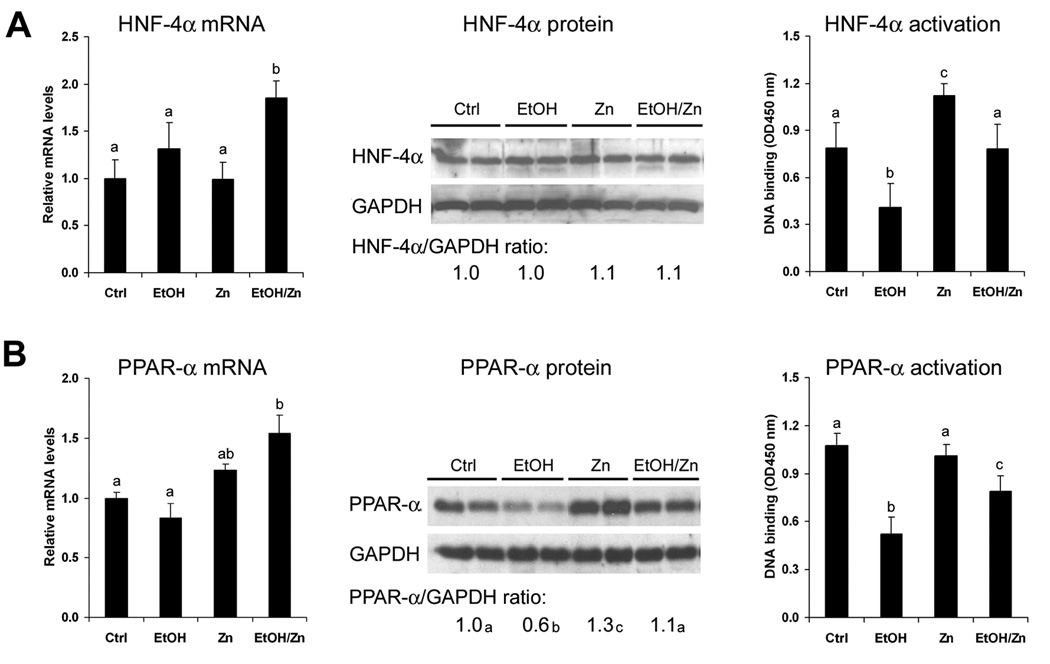
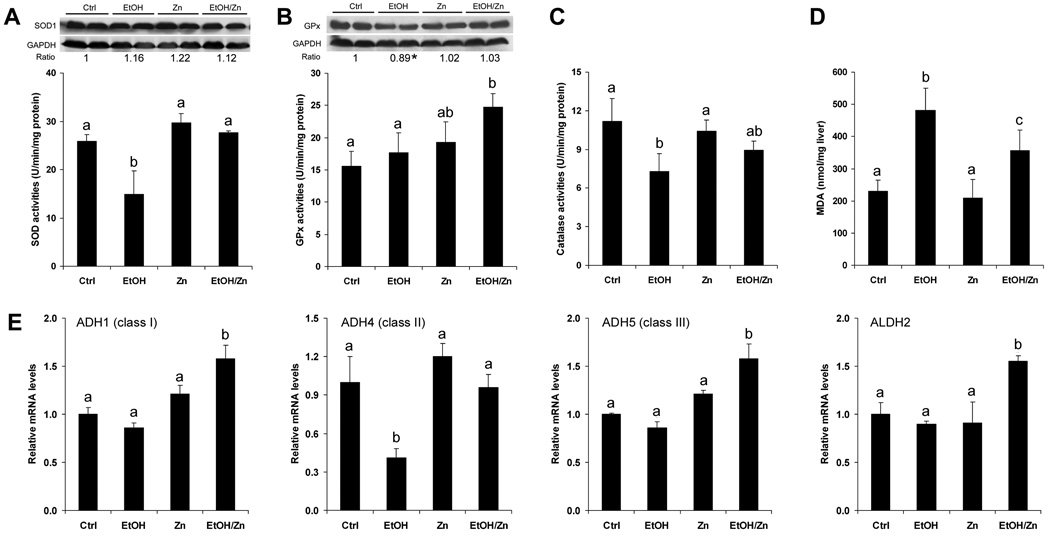
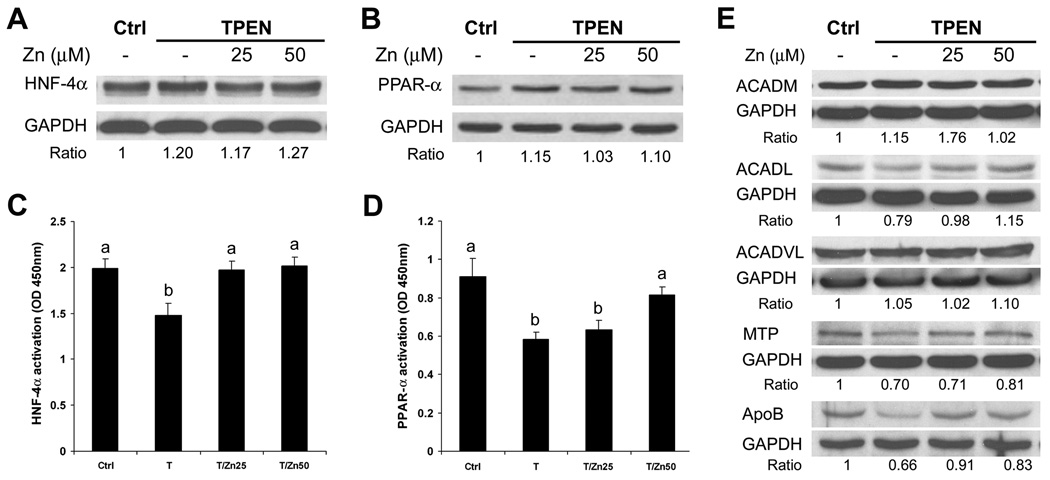
Alcoholic steatosis is a fundamental metabolic disorder in the progression of alcoholic liver disease. Zinc deficiency is one of the most consistently observed biochemical/nutritional manifestations of alcoholic liver disease. The purpose of this study is to determine whether dietary zinc supplementation to mice previously exposed to alcohol could reverse alcoholic steatosis. Male 129S mice were pair-fed an alcohol or isocaloric maltose dextrin liquid diet for 16 weeks with or without dietary zinc supplementation for the last 4 weeks. Zinc supplementation significantly attenuated alcohol-mediated increases in hepatic triglyceride, cholesterol, and free fatty acids in association with accelerated hepatic fatty acid oxidation and very low density lipoproteins (VLDL) secretion. Hepatic genes related to fatty acid oxidation and VLDL secretion were up-regulated by zinc supplementation, which was accompanied by restoring activity of hepatocyte nuclear factor-4alpha (HNF-4alpha) and peroxisome proliferators activated receptor-alpha (PPAR-alpha). Zinc supplementation enhanced alcohol metabolism and attenuated oxidative stress and liver injury. Zinc supplementation also normalized alcohol-mediated increases in plasma triglycerides and partially reversed decrease in gonadal adipose depot mass. Studies in HepG2 cells showed that zinc deprivation significantly suppressed the DNA-binding activities of HNF-4alpha and PPAR-alpha, and reduced HNF-4alpha and PPAR-alpha target proteins. Consequently, zinc deprivation caused cellular accumulation of lipid droplets, triglycerides and free fatty acids in the HepG2 cells.
Zinc supplementation reverses alcoholic steatosis, and reactivation of HNF-4alpha and PPAR-alpha by increasing zinc availability and inhibiting oxidative stress are potential mechanisms underlying these beneficial effects of zinc on hepatic lipid homeostasis.
酒精性脂肪变性是酒精性肝病进展过程中的一种基本代谢紊乱。锌缺乏是酒精性肝病最常观察到的生化/营养表现之一。本研究的目的是确定对先前接触酒精的小鼠进行膳食锌补充是否能逆转酒精性脂肪变性。将雄性129S小鼠成对喂养酒精或等热量麦芽糖糊精液体饮食16周,在最后4周有或没有膳食锌补充。补充锌显著减轻了酒精介导的肝脏甘油三酯、胆固醇和游离脂肪酸的增加,同时加速了肝脏脂肪酸氧化和极低密度脂蛋白(VLDL)分泌。补充锌上调了与脂肪酸氧化和VLDL分泌相关的肝脏基因,同时恢复了肝细胞核因子-4α(HNF-4α)和过氧化物酶体增殖物激活受体-α(PPAR-α)的活性。补充锌增强了酒精代谢,减轻了氧化应激和肝损伤。补充锌还使酒精介导的血浆甘油三酯增加正常化,并部分逆转了性腺脂肪储存量的减少。在HepG2细胞中的研究表明,锌缺乏显著抑制了HNF-4α和PPAR-α的DNA结合活性,并降低了HNF-4α和PPAR-α靶蛋白。因此,锌缺乏导致HepG2细胞中脂滴、甘油三酯和游离脂肪酸的细胞内积累。
补充锌可逆转酒精性脂肪变性,通过增加锌的可用性和抑制氧化应激来重新激活HNF-4α和PPAR-α是锌对肝脏脂质稳态产生这些有益作用的潜在机制。