Department of Biochemistry and Molecular Biology, New Jersey Medical School, University of Medicine and Dentistry of New Jersey, Newark, NJ 07103, USA.
J Immunol. 2010 Nov 15;185(10):6003-12. doi: 10.4049/jimmunol.1000482. Epub 2010 Oct 8.
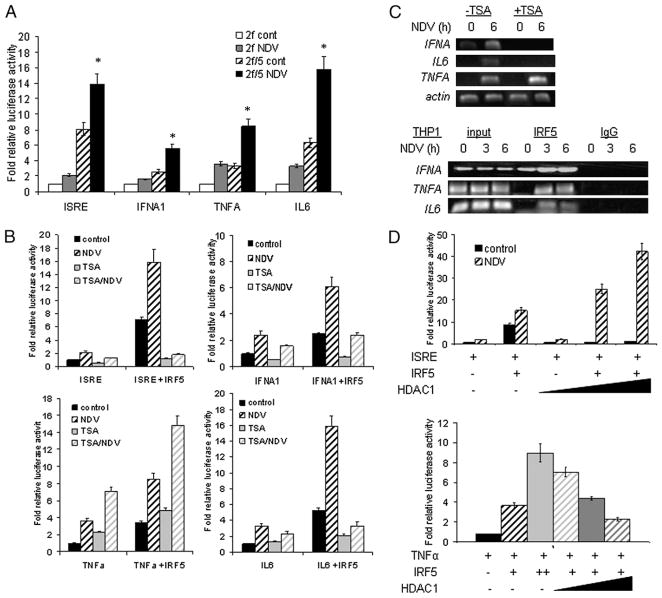
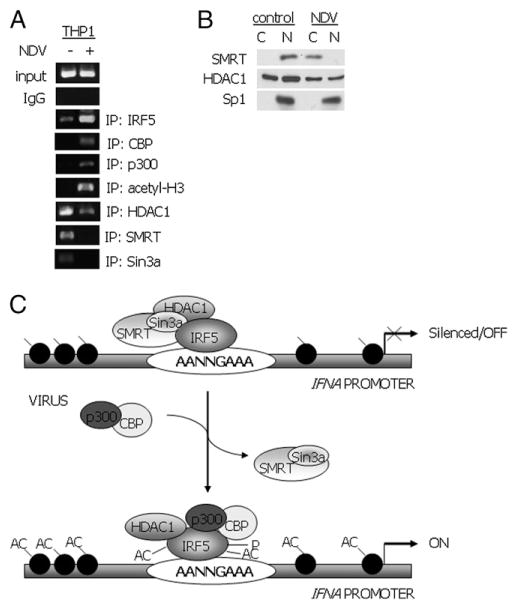
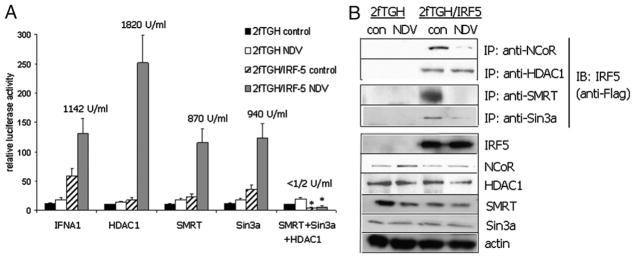
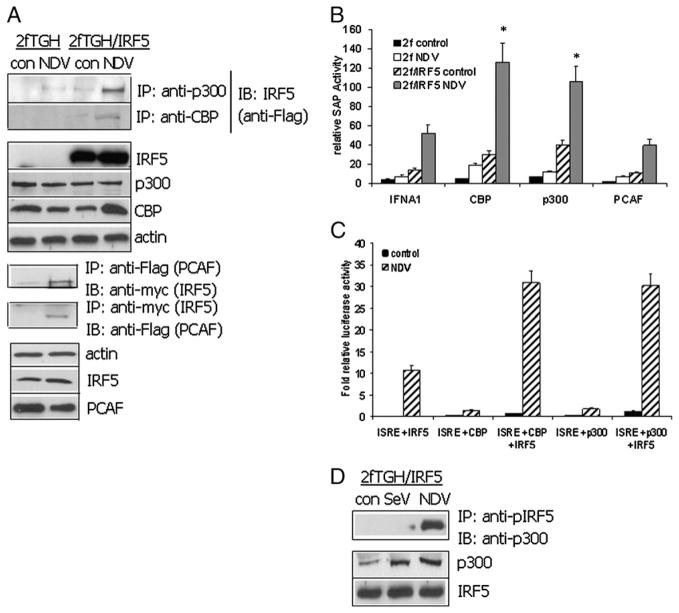
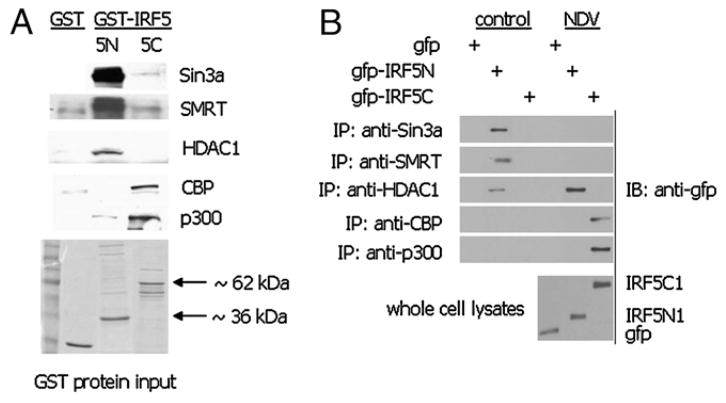
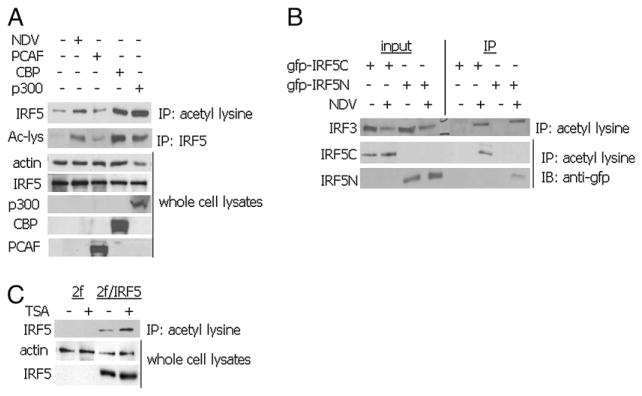
Recent evidence indicates a new role for histone deacetylases (HDACs) in the activation of genes governing the host immune response. Virus, along with other pathogenic stimuli, triggers an antiviral defense mechanism through the induction of IFN, IFN-stimulated genes, and other proinflammatory cytokines. Many of these genes have been shown to be regulated by transcription factors of the IFN regulatory factor (IRF) family. Recent studies from IRF5 knockout mice have confirmed a critical role for IRF5 in virus-induced type I IFN expression and proinflammatory cytokines IL-6, IL-12, and TNF-α; yet, little is known of the molecular mechanism of IRF5-mediated proinflammatory cytokine expression. In this study, we show that both HDACs and histone acetyltransferases (HATs) associate with IRF5, leading to alterations in its transactivation ability. Using the HDAC inhibitor trichostatin A, we demonstrate that ISRE, IFNA, and IL6 promoters require HDAC activity for transactivation and transcription, whereas TNFα does not. Mapping the interaction of corepressor proteins (HDAC1, silencing mediator of retinoid and thyroid receptor/nuclear corepressor of retinoid receptor, and Sin3a) and HATs to IRF5 revealed distinct differences, including the dependence of IRF5 phosphorylation on HAT association resulting in IRF5 acetylation. Data presented in this study support a mechanism whereby virus triggers the dynamic conversion of an IRF5-mediated silencing complex to that of an activating complex on promoters of target genes. These data provide the first evidence, to our knowledge, of a tightly controlled transcriptional mechanism whereby IRF5 regulates proinflammatory cytokine expression in conjunction with HATs and HDACs.
最近的证据表明组蛋白去乙酰化酶 (HDACs) 在激活宿主免疫反应的基因方面具有新的作用。病毒与其他致病刺激物一起,通过诱导 IFN、IFN 刺激基因和其他促炎细胞因子触发抗病毒防御机制。许多这些基因已被证明受 IFN 调节因子 (IRF) 家族的转录因子调节。IRF5 敲除小鼠的最近研究证实了 IRF5 在病毒诱导的 I 型 IFN 表达和促炎细胞因子 IL-6、IL-12 和 TNF-α中的关键作用;然而,IRF5 介导的促炎细胞因子表达的分子机制知之甚少。在这项研究中,我们表明 HDACs 和组蛋白乙酰转移酶 (HATs) 都与 IRF5 结合,导致其转录激活能力发生变化。使用 HDAC 抑制剂 Trichostatin A,我们证明 ISRE、IFNA 和 IL6 启动子需要 HDAC 活性进行转录激活和转录,而 TNFα 则不需要。核心抑制蛋白 (HDAC1、视黄醇和甲状腺受体沉默介质/核受体抑制蛋白的核受体、Sin3a) 和 HATs 与 IRF5 的相互作用的映射揭示了明显的差异,包括 IRF5 磷酸化对 HAT 结合的依赖性,导致 IRF5 乙酰化。本研究提供的数据支持一种机制,即病毒触发 IRF5 介导的沉默复合物到靶基因启动子上的激活复合物的动态转换。这些数据提供了第一个证据,据我们所知,IRF5 通过与 HATs 和 HDACs 一起调节促炎细胞因子表达的一种严格控制的转录机制。