Department of Pathology, Metabolic Diseases Institute, University of Cincinnati College of Medicine, Cincinnati, OH 45237, USA.
Int J Obes (Lond). 2011 Jun;35(6):877-81. doi: 10.1038/ijo.2010.215. Epub 2010 Oct 12.
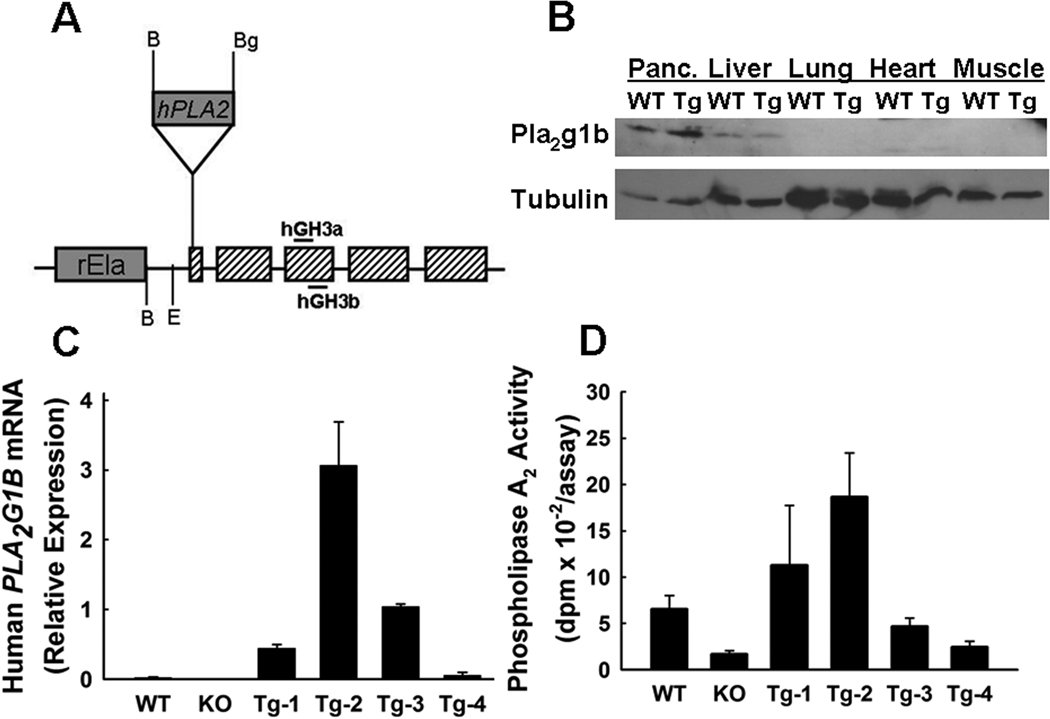
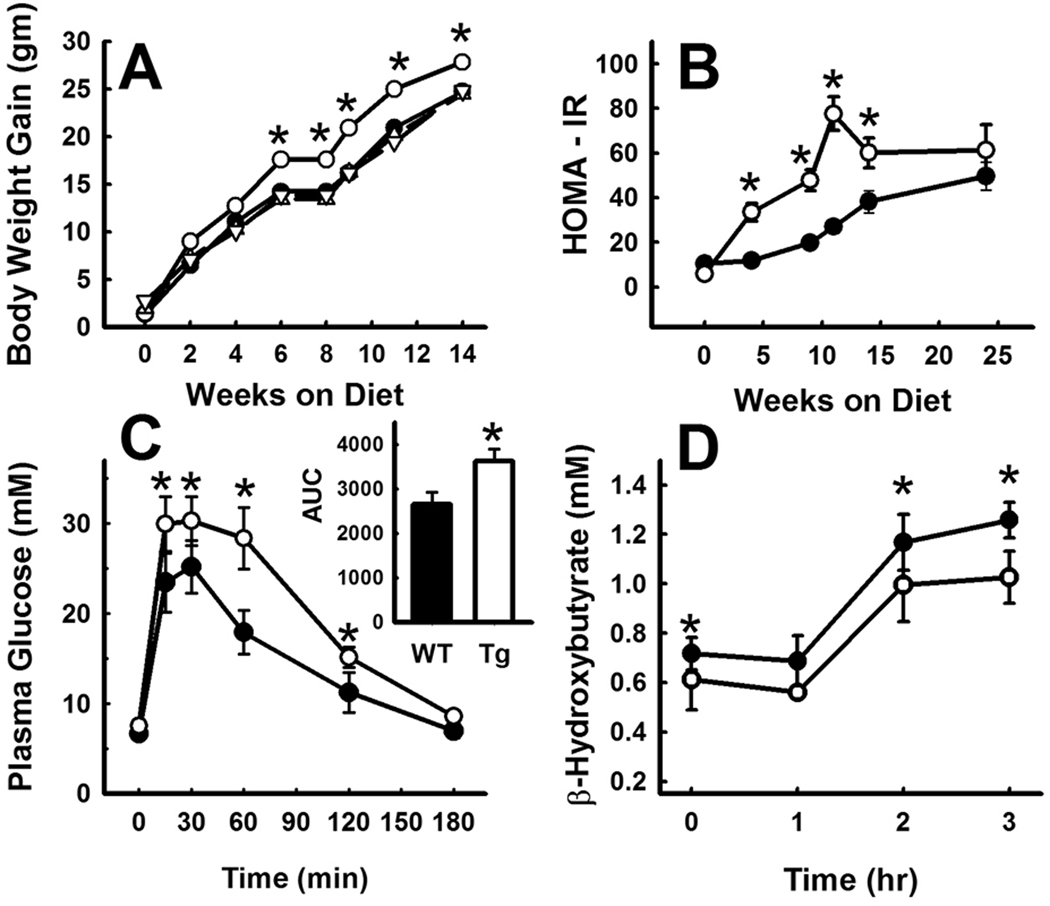
Genome-wide association studies have identified significant association between polymorphisms of the Group 1B phospholipase A(2) (PLA2G1B) gene and central obesity in humans. Previous studies have shown that Pla2g1b inactivation decreases post-prandial lysophospholipid absorption, and as a consequence increases hepatic fatty acid oxidation and protects against diet-induced obesity and glucose intolerance in mice. The present study showed that transgenic mice with pancreatic acinar cell-specific overexpression of the human PLA2G1B gene gained significantly more weight and displayed elevated insulin resistance characteristics, such as impaired glucose tolerance, compared with wild-type (WT) mice, when challenged with a high-fat/carbohydrate diet. Pre- and post-prandial plasma β-hydroxybutyrate levels were also lower, indicative of decreased hepatic fatty acid oxidation, in the hypercaloric diet-fed PLA2G1B transgenic mice. These, along with earlier observations of Pla2g1b-null mice, document that Pla2g1b expression level is an important determinant of susceptibility to diet-induced obesity and diabetes, suggesting that the relationship between PLA2G1B polymorphisms and obesity may be due to differences in PLA2G1B expression levels between these individuals. The ability of pancreas-specific overexpression of PLA2G1B to promote obesity and glucose intolerance suggests that target phospholipase activity in the digestive tract with non-absorbable inhibitors should be considered as a therapeutic option for metabolic disease therapy.
全基因组关联研究已经确定了 Group 1B 磷脂酶 A(2)(PLA2G1B)基因多态性与人类中心性肥胖之间的显著关联。先前的研究表明,Pla2g1b 失活会减少餐后溶血磷脂的吸收,从而增加肝脏脂肪酸氧化,并预防小鼠的饮食诱导肥胖和葡萄糖不耐受。本研究表明,与野生型(WT)小鼠相比,胰腺腺泡细胞特异性过表达人 PLA2G1B 基因的转基因小鼠在高脂肪/碳水化合物饮食的挑战下体重明显增加,并表现出更高的胰岛素抵抗特征,如葡萄糖耐量受损。与 WT 小鼠相比,高脂饮食喂养的 PLA2G1B 转基因小鼠的餐前和餐后血浆β-羟基丁酸水平也较低,表明肝脏脂肪酸氧化减少。这些结果以及早期对 Pla2g1b 基因敲除小鼠的观察结果表明,Pla2g1b 的表达水平是易患饮食诱导肥胖和糖尿病的重要决定因素,提示 PLA2G1B 多态性与肥胖之间的关系可能是由于这些个体之间 PLA2G1B 表达水平的差异所致。胰腺特异性过表达 PLA2G1B 促进肥胖和葡萄糖不耐受的能力表明,应考虑使用非吸收性抑制剂靶向消化道中的磷脂酶活性,作为代谢性疾病治疗的一种治疗选择。