Hollie Norris I, Konaniah Eddy S, Goodin Colleen, Hui David Y
Department of Pathology and Laboratory Medicine, University of Cincinnati College of Medicine, Cincinnati, OH 45237, USA.
Department of Pathology and Laboratory Medicine, University of Cincinnati College of Medicine, Cincinnati, OH 45237, USA.
Atherosclerosis. 2014 Jun;234(2):377-80. doi: 10.1016/j.atherosclerosis.2014.03.027. Epub 2014 Apr 1.
Previous studies have shown that inactivation of the group 1B phospholipase A2 (Pla2g1b) suppresses diet-induced obesity, hyperglycemia, insulin resistance, and hyperlipidemia in C57BL/6 mice. A possible influence of Pla2g1b inactivation on atherosclerosis has not been addressed previously. The current study utilized LDL receptor-deficient (Ldlr(-/-)) mice with plasma lipid levels and distribution similar to hyperlipidemic human subjects as a preclinical animal model to test the effectiveness of Pla2g1b inactivation on atherosclerosis.
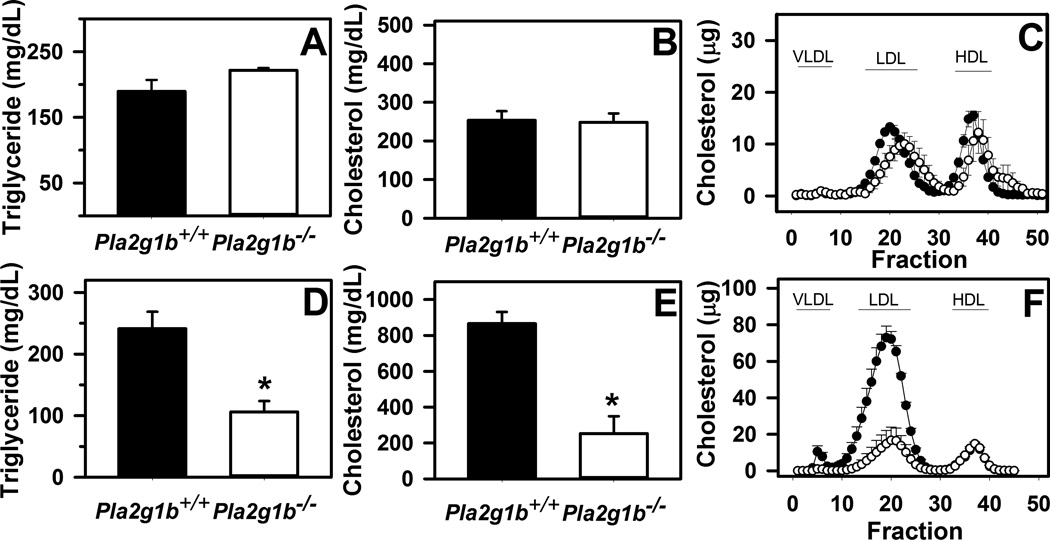
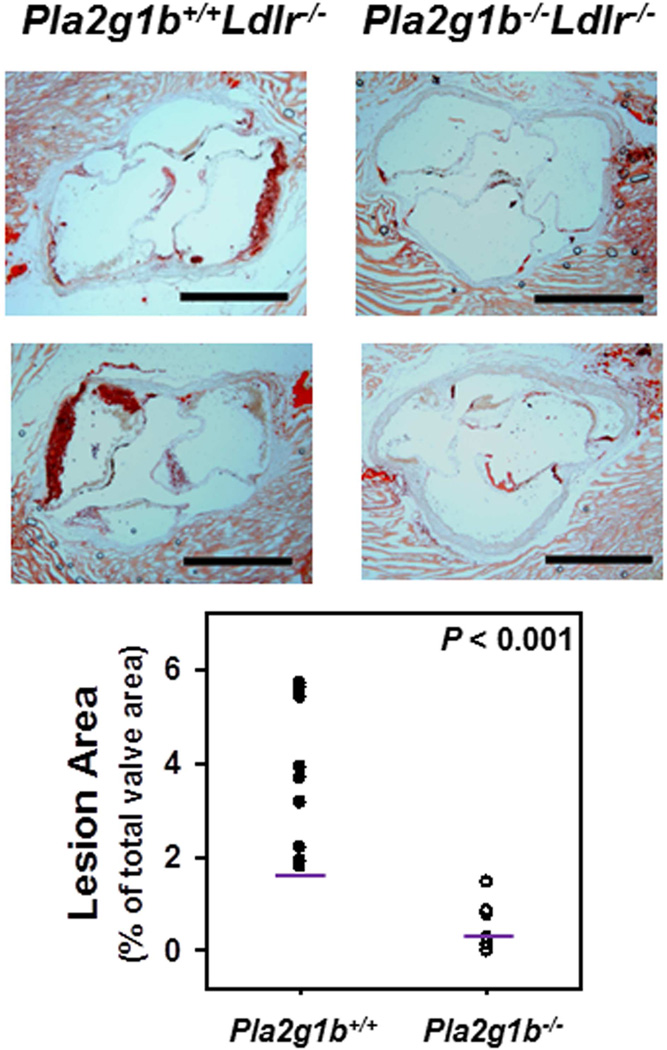
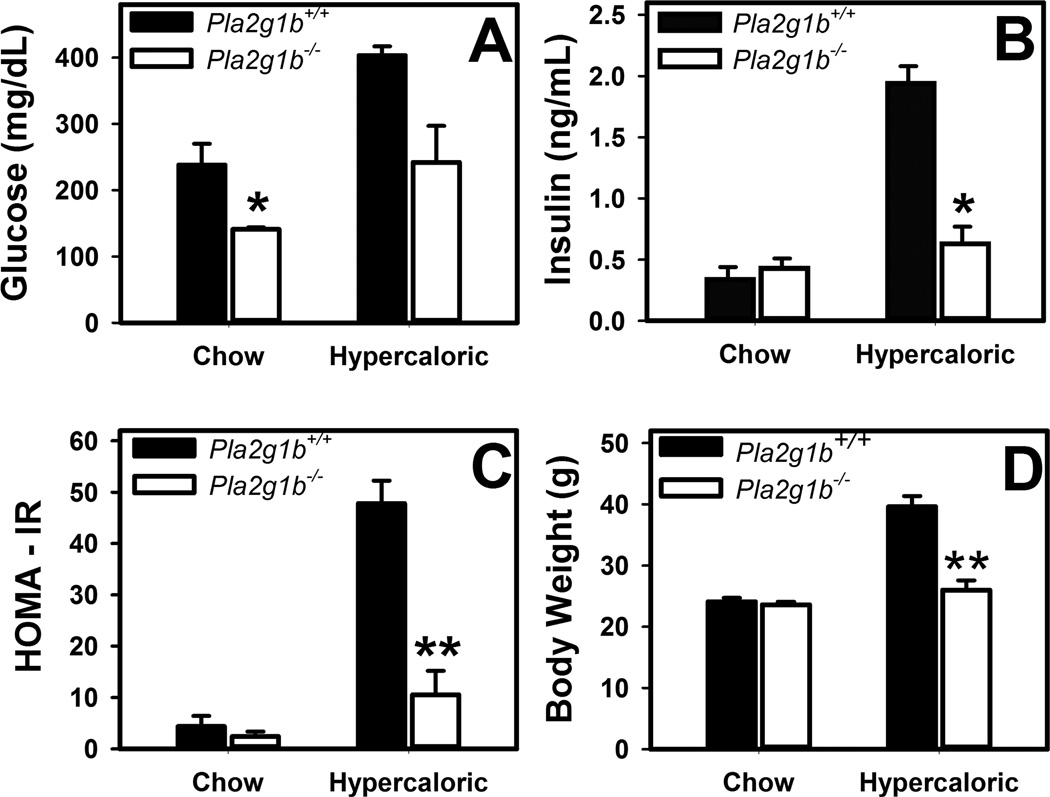
The Pla2g1b(+/+)Ldlr(-/-) and Pla2g1b(-/-)Ldlr(-/-) mice were fed a low fat chow diet or a hypercaloric diet with 58.5 kcal% fat and 25 kcal% sucrose for 10 weeks. Minimal differences were observed between Pla2g1b(+/+)Ldlr(-/-) and Pla2g1b(-/-)Ldlr(-/-) mice when the animals were maintained on the low fat chow diet. However, when the animals were maintained on the hypercaloric diet, the Pla2g1(+/+)Ldlr(-/-) mice showed the expected body weight gain but the Pla2g1b(-/-)Ldlr(-/-) mice were resistant to diet-induced body weight gain. The Pla2g1b(-/-)Ldlr(-/-) mice also displayed lower fasting glucose, insulin, and plasma lipid levels compared to the Pla2g1b(+/+)Ldlr(-/-) mice, which displayed robust hyperglycemia, hyperinsulinemia, and hyperlipidemia in response to the hypercaloric diet. Importantly, atherosclerotic lesions in the aortic roots were also reduced 7-fold in the Pla2g1b(-/-)Ldlr(-/-) mice.
The effectiveness of Pla2g1b inactivation to suppress diet-induced body weight gain and reduce diabetes and atherosclerosis in LDL receptor-deficient mice suggests that pharmacological inhibition of Pla2g1b may be a viable strategy to decrease diet-induced obesity and the risk of diabetes and atherosclerosis in humans.
先前的研究表明,1B组磷脂酶A2(Pla2g1b)失活可抑制C57BL/6小鼠的饮食诱导性肥胖、高血糖、胰岛素抵抗和高脂血症。Pla2g1b失活对动脉粥样硬化的潜在影响此前尚未得到探讨。本研究利用血浆脂质水平和分布与高脂血症人类受试者相似的低密度脂蛋白受体缺陷(Ldlr(-/-))小鼠作为临床前动物模型,以测试Pla2g1b失活对动脉粥样硬化的作用效果。
将Pla2g1b(+/+)Ldlr(-/-)和Pla2g1b(-/-)Ldlr(-/-)小鼠分别喂食低脂普通饲料或含58.5 kcal%脂肪和25 kcal%蔗糖的高热量饲料,持续10周。当动物维持低脂普通饮食时,Pla2g1b(+/+)Ldlr(-/-)和Pla2g1b(-/-)Ldlr(-/-)小鼠之间观察到的差异极小。然而,当动物维持高热量饮食时,Pla2g1(+/+)Ldlr(-/-)小鼠出现了预期的体重增加,但Pla2g1b(-/-)Ldlr(-/-)小鼠对饮食诱导的体重增加具有抗性。与Pla2g1b(+/+)Ldlr(-/-)小鼠相比,Pla2g1b(-/-)Ldlr(-/-)小鼠的空腹血糖、胰岛素和血浆脂质水平也较低,Pla2g1b(+/+)Ldlr(-/-)小鼠在高热量饮食后出现了明显的高血糖、高胰岛素血症和高脂血症。重要的是,Pla2g1b(-/-)Ldlr(-/-)小鼠主动脉根部的动脉粥样硬化病变也减少了7倍。
Pla2g1b失活在抑制低密度脂蛋白受体缺陷小鼠饮食诱导的体重增加以及减轻糖尿病和动脉粥样硬化方面的有效性表明,对Pla2g1b进行药理学抑制可能是降低人类饮食诱导性肥胖以及糖尿病和动脉粥样硬化风险的可行策略。