Howard Hughes Medical Institute, Laboratory of Genetically Encoded Small Molecules, The Rockefeller University, 1230 York Avenue, New York, New York 10065, United States.
J Am Chem Soc. 2010 Nov 10;132(44):15661-70. doi: 10.1021/ja105825a.
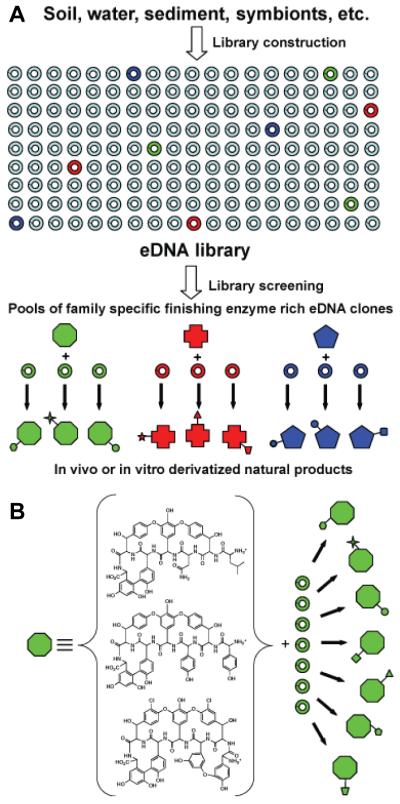
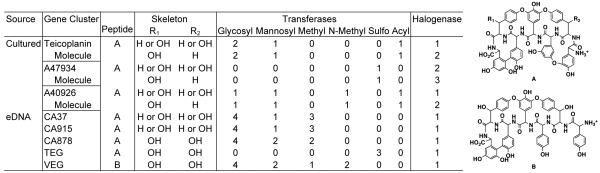
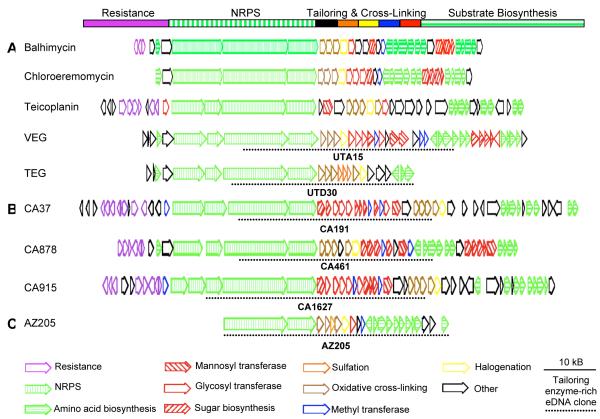
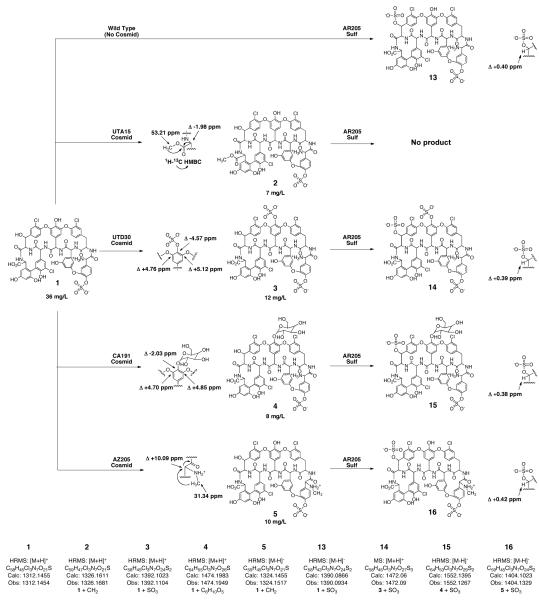
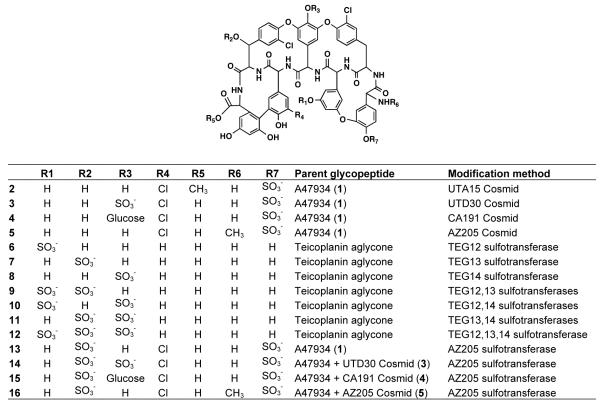
A detailed bioinformatics analysis of six glycopeptide biosynthetic gene clusters isolated from soil environmental DNA (eDNA) megalibraries indicates that a subset of these gene clusters contains collections of tailoring enzymes that are predicted to result in the production of new glycopeptide congeners. In particular, sulfotransferases appear in eDNA-derived gene clusters at a much higher frequency than would be predicted from the characterization of glycopeptides from cultured Actinomycetes . Enzymes found on tailoring-enzyme-rich eDNA clones associated with these six gene clusters were used to produce a series of new sulfated glycopeptide derivatives in both in vitro and in vivo derivatization studies. The derivatization of known natural products with eDNA-derived tailoring enzymes is likely to be a broadly applicable strategy for generating libraries of new natural product variants.
从土壤环境 DNA(eDNA)宏文库中分离出的 6 个糖肽生物合成基因簇的详细生物信息学分析表明,这些基因簇中的一部分包含了一系列预测会产生新型糖肽同系物的修饰酶。特别是,磺基转移酶在 eDNA 衍生的基因簇中的出现频率远远高于从培养的放线菌糖肽的特征中预测的频率。与这 6 个基因簇相关的富含修饰酶的 eDNA 克隆上发现的酶被用于在体外和体内衍生化研究中产生一系列新型硫酸化糖肽衍生物。用 eDNA 衍生的修饰酶对已知天然产物进行衍生化可能是生成新型天然产物变体文库的一种广泛适用的策略。