Univ Paris-sud 11, CNRS-UMR 8126 and Institut de Cancérologie Gustave Roussy, 39 rue Camille Desmoulins, Villejuif, France.
Virol J. 2010 Oct 15;7:271. doi: 10.1186/1743-422X-7-271.
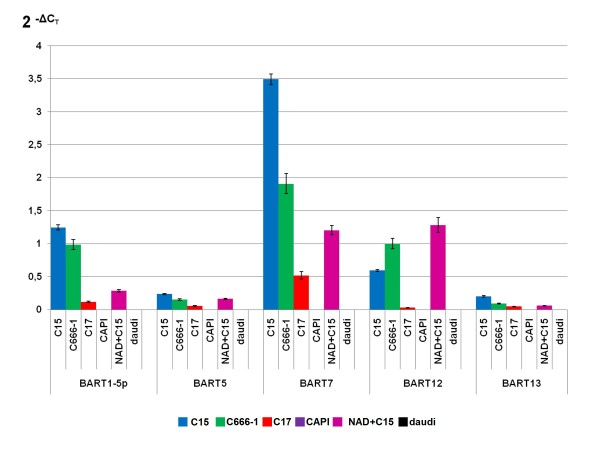
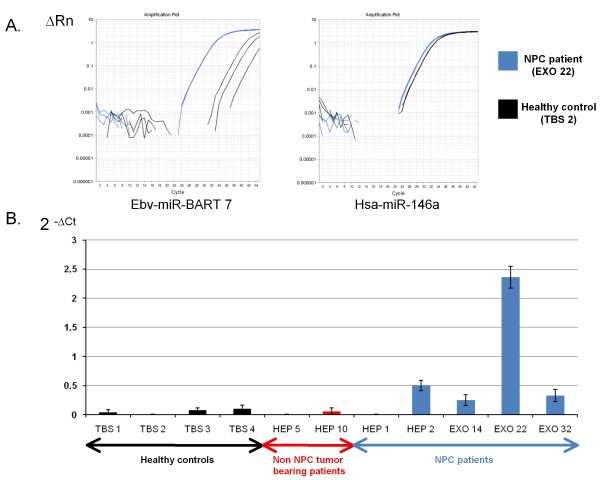
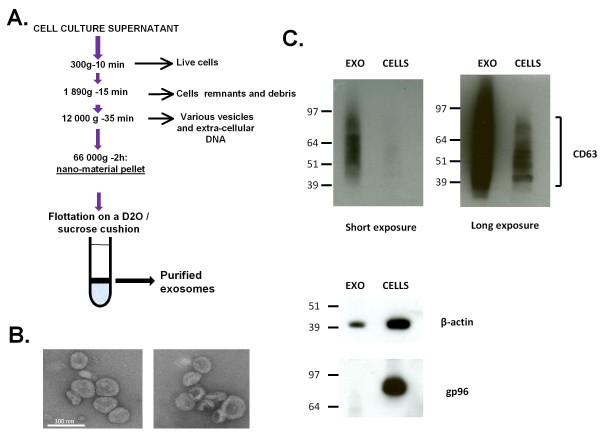
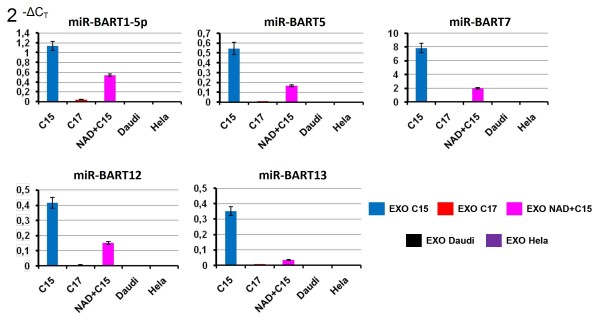
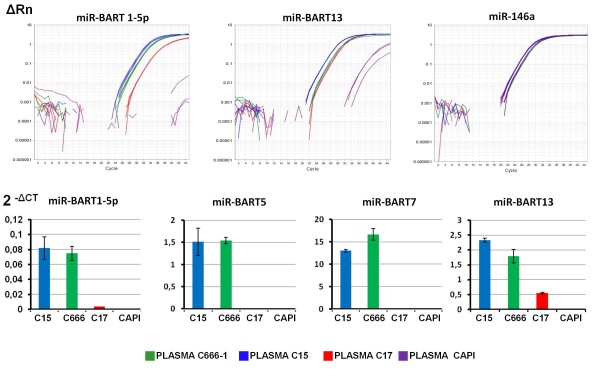
Nasopharyngeal carcinoma (NPC) is a human epithelial malignancy consistently associated with the Epstein-Barr virus. The viral genome is contained in the nuclei of all malignant cells with abundant transcription of a family of viral microRNAs called BART miRNAs. MicroRNAs are well known intra-cellular regulatory elements of gene expression. In addition, they are often exported in the extra-cellular space and sometimes transferred in recipient cells distinct from the producer cells. Extra-cellular transport of the microRNAs is facilitated by various processes including association with protective proteins and packaging in secreted nanovesicles called exosomes. Presence of microRNAS produced by malignant cells has been reported in the blood and saliva of tumor-bearing patients, especially patients diagnosed with glioblastoma or ovarian carcinoma. In this context, it was decided to investigate extra-cellular release of BART miRNAs by NPC cells and their possible detection in the blood of NPC patients. To address this question, we investigated by quantitative RT-PCR the status of 5 microRNAs from the BART family in exosomes released by NPC cells in vitro as well as in plasma samples from NPC xenografted nude mice and NPC patients.
We report that the BART miRNAs are released in the extra-cellular space by NPC cells being associated, at least to a large extent, with secreted exosomes. They are detected with a good selectivity in plasma samples from NPC xenografted nude mice as well as NPC patients.
Viral BART miRNAs are secreted by NPC cells in vitro and in vivo. They have enough stability to diffuse from the tumor site to the peripheral blood. This study provides a basis to explore their potential as a source of novel tumor biomarkers and their possible role in communications between malignant and non-malignant cells.
鼻咽癌(NPC)是一种与人上皮恶性肿瘤持续相关的 Epstein-Barr 病毒。病毒基因组包含在所有恶性细胞的核内,具有丰富的病毒 microRNA 家族转录,称为 BART miRNAs。microRNAs 是细胞内基因表达的已知调节因子。此外,它们经常在细胞外空间中被输出,有时在与产生细胞不同的受体细胞中被转移。microRNAs 的细胞外运输通过各种过程来促进,包括与保护性蛋白的关联以及封装在称为外泌体的分泌纳米囊泡中。已经在患有肿瘤的患者的血液和唾液中报道了恶性细胞产生的 microRNAs 的存在,特别是诊断为胶质母细胞瘤或卵巢癌的患者。在这种情况下,决定研究 NPC 细胞的 BART miRNAs 的细胞外释放及其在 NPC 患者血液中的可能检测。为了解决这个问题,我们通过定量 RT-PCR 研究了 NPC 细胞体外释放的 5 种 BART 家族 microRNAs 的状态,以及 NPC 异种移植裸鼠和 NPC 患者的血浆样本中的状态。
我们报告说,BART miRNAs 通过 NPC 细胞被释放到细胞外空间中,至少在很大程度上与分泌的外泌体相关。它们在 NPC 异种移植裸鼠以及 NPC 患者的血浆样本中被很好地选择性检测到。
BART miRNAs 在 NPC 细胞体外和体内被分泌。它们具有足够的稳定性,能够从肿瘤部位扩散到外周血液。本研究为探索它们作为新型肿瘤标志物来源的潜力及其在恶性和非恶性细胞之间通讯中的可能作用提供了基础。