AUT University, Health & Rehabilitation Research Institute, Auckland, New Zealand.
J Foot Ankle Res. 2010 Oct 19;3:24. doi: 10.1186/1757-1146-3-24.
Footwear has been accepted as a therapeutic intervention for the foot affected by rheumatoid arthritis (RA). Evidence relating to the objective assessment of footwear in patients with RA is limited. The aims of this study were to identify current footwear styles, footwear characteristics, and factors that influence footwear choice experienced by patients with RA.
Eighty patients with RA were recruited from rheumatology clinics during the summer months. Clinical characteristics, global function, and foot impairment and disability measures were recorded. Current footwear, footwear characteristics and the factors associated with choice of footwear were identified. Suitability of footwear was recorded using pre-determined criteria for assessing footwear type, based on a previous study of foot pain.
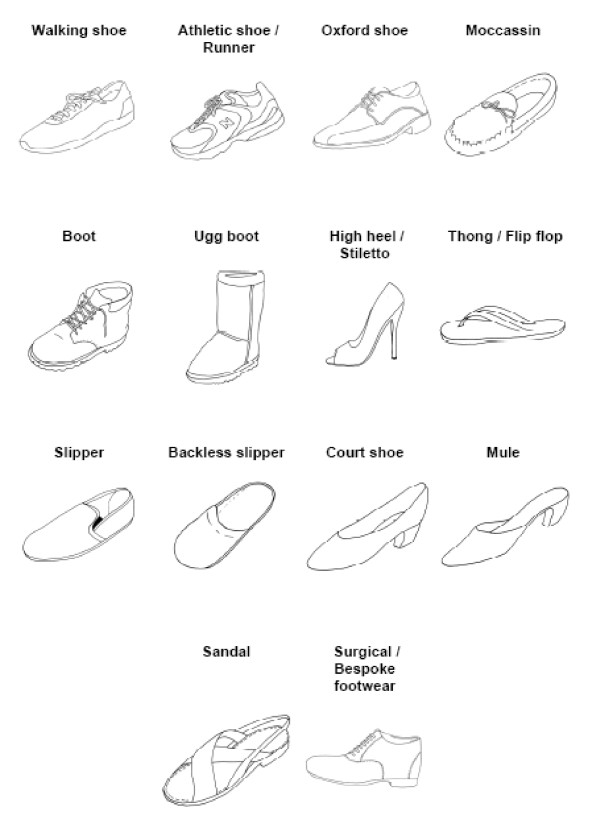
The patients had longstanding RA with moderate-to severe disability and impairment. The foot and ankle assessment demonstrated a low-arch profile with both forefoot and rearfoot structural deformities. Over 50% of shoes worn by patients were open-type footwear. More than 70% of patients' footwear was defined as being poor. Poor footwear characteristics such as heel rigidity and sole hardness were observed. Patients reported comfort (17%) and fit (14%) as important factors in choosing their own footwear. Only five percent (5%) of patients wore therapeutic footwear.
The majority of patients with RA wear footwear that has been previously described as poor. Future work needs to aim to define and justify the specific features of footwear that may be of benefit to foot health for people with RA.
鞋子已被视为类风湿关节炎(RA)患者足部的一种治疗干预措施。关于 RA 患者鞋子的客观评估证据有限。本研究的目的是确定 RA 患者目前的鞋类款式、鞋子特征以及影响鞋子选择的因素。
在夏季,从风湿病诊所招募了 80 名 RA 患者。记录了临床特征、整体功能以及足部损伤和残疾的评估。确定了当前的鞋子、鞋子特征以及与鞋子选择相关的因素。根据先前对足部疼痛的研究,使用评估鞋子类型的预定标准来记录鞋子的适用性。
患者患有长期 RA,伴有中重度残疾和损伤。足踝评估显示低足弓,前足和后足均存在结构性畸形。超过 50%的患者穿的是敞口鞋。超过 70%的患者的鞋子被定义为较差。观察到较差的鞋子特征,如鞋跟硬度和鞋底硬度。患者表示舒适度(17%)和合适度(14%)是他们选择自己鞋子的重要因素。只有 5%的患者穿治疗性鞋子。
大多数 RA 患者穿的鞋子以前被描述为较差。未来的工作需要旨在确定和证明对 RA 患者足部健康有益的鞋子具体特征。