Department of Anatomical Sciences and Neurobiology, University of Louisville School of Medicine, Louisville, Kentucky, United States of America.
PLoS One. 2010 Oct 12;5(10):e13262. doi: 10.1371/journal.pone.0013262.
Skeletal muscle wasting is a debilitating consequence of large number of disease states and conditions. Tumor necrosis factor-α (TNF-α) is one of the most important muscle-wasting cytokine, elevated levels of which cause significant muscular abnormalities. However, the underpinning molecular mechanisms by which TNF-α causes skeletal muscle wasting are less well-understood.
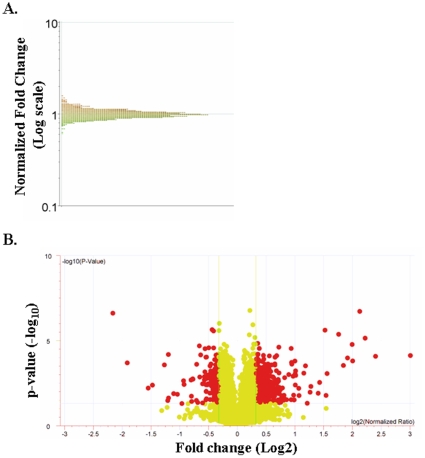
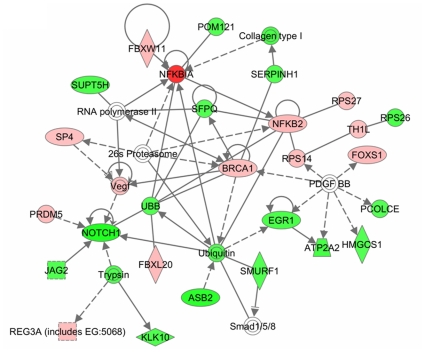
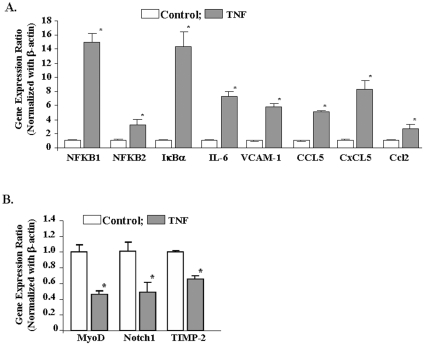
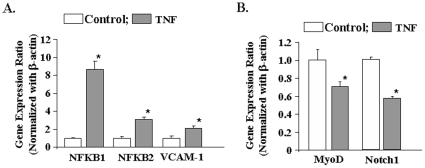
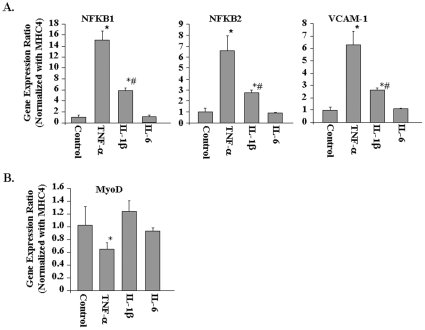
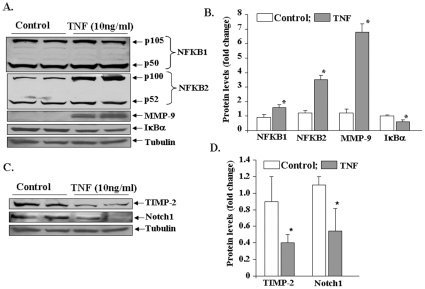
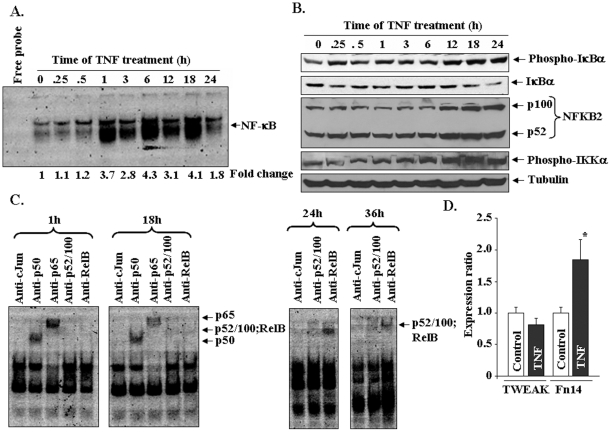
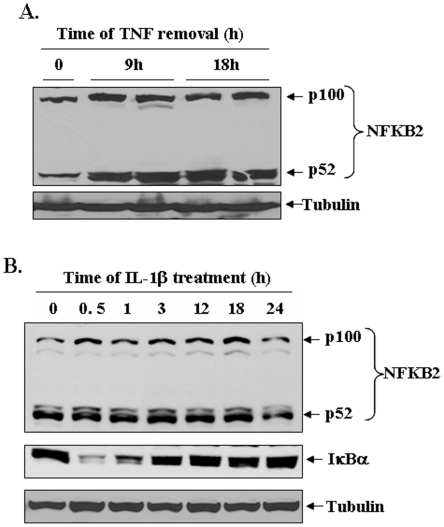
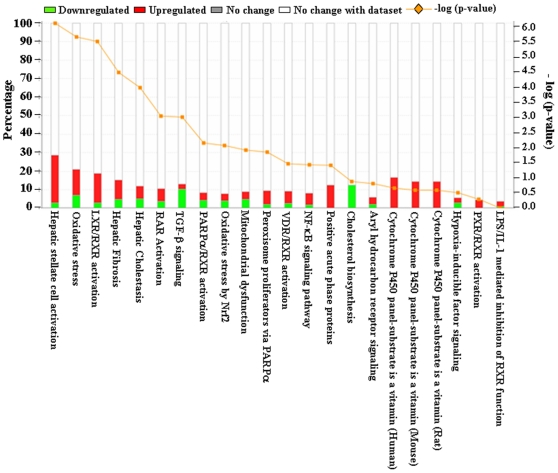
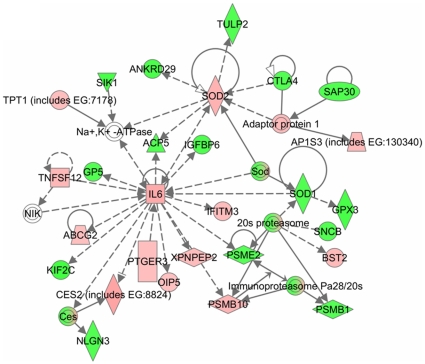
METHODOLOGY/PRINCIPAL FINDINGS: We have used microarray, quantitative real-time PCR (QRT-PCR), Western blot, and bioinformatics tools to study the effects of TNF-α on various molecular pathways and gene networks in C2C12 cells (a mouse myoblastic cell line). Microarray analyses of C2C12 myotubes treated with TNF-α (10 ng/ml) for 18h showed differential expression of a number of genes involved in distinct molecular pathways. The genes involved in nuclear factor-kappa B (NF-kappaB) signaling, 26s proteasome pathway, Notch1 signaling, and chemokine networks are the most important ones affected by TNF-α. The expression of some of the genes in microarray dataset showed good correlation in independent QRT-PCR and Western blot assays. Analysis of TNF-treated myotubes showed that TNF-α augments the activity of both canonical and alternative NF-κB signaling pathways in myotubes. Bioinformatics analyses of microarray dataset revealed that TNF-α affects the activity of several important pathways including those involved in oxidative stress, hepatic fibrosis, mitochondrial dysfunction, cholesterol biosynthesis, and TGF-β signaling. Furthermore, TNF-α was found to affect the gene networks related to drug metabolism, cell cycle, cancer, neurological disease, organismal injury, and abnormalities in myotubes.
TNF-α regulates the expression of multiple genes involved in various toxic pathways which may be responsible for TNF-induced muscle loss in catabolic conditions. Our study suggests that TNF-α activates both canonical and alternative NF-κB signaling pathways in a time-dependent manner in skeletal muscle cells. The study provides novel insight into the mechanisms of action of TNF-α in skeletal muscle cells.
骨骼肌萎缩是许多疾病状态和病症的一种使人虚弱的后果。肿瘤坏死因子-α(TNF-α)是最重要的肌肉消耗细胞因子之一,其水平升高会导致显著的肌肉异常。然而,TNF-α导致骨骼肌萎缩的潜在分子机制还不太清楚。
方法/主要发现:我们使用微阵列、定量实时 PCR(QRT-PCR)、Western blot 和生物信息学工具研究了 TNF-α对 C2C12 细胞(一种小鼠成肌细胞系)中各种分子途径和基因网络的影响。用 TNF-α(10ng/ml)处理 18 小时的 C2C12 肌管的微阵列分析显示,许多参与不同分子途径的基因表达存在差异。受 TNF-α影响的最重要的基因包括核因子-κB(NF-κB)信号通路、26s 蛋白酶体通路、Notch1 信号通路和趋化因子网络。微阵列数据集的一些基因的表达在独立的 QRT-PCR 和 Western blot 检测中显示出良好的相关性。对 TNF 处理的肌管的分析表明,TNF-α增强了肌管中经典和替代 NF-κB 信号通路的活性。微阵列数据集的生物信息学分析显示,TNF-α影响包括氧化应激、肝纤维化、线粒体功能障碍、胆固醇生物合成和 TGF-β信号通路在内的几个重要途径的活性。此外,TNF-α还发现与药物代谢、细胞周期、癌症、神经疾病、机体损伤和肌管异常相关的基因网络有关。
TNF-α调节参与各种毒性途径的多个基因的表达,这些基因可能是 TNF 诱导的分解代谢条件下肌肉损失的原因。我们的研究表明,TNF-α以时间依赖的方式激活骨骼肌细胞中的经典和替代 NF-κB 信号通路。该研究为 TNF-α在骨骼肌细胞中的作用机制提供了新的见解。