Department of Pathology, University of Alabama at Birmingham, Birmingham, AL, USA.
Immunol Rev. 2010 Nov;238(1):216-32. doi: 10.1111/j.1600-065X.2010.00961.x.
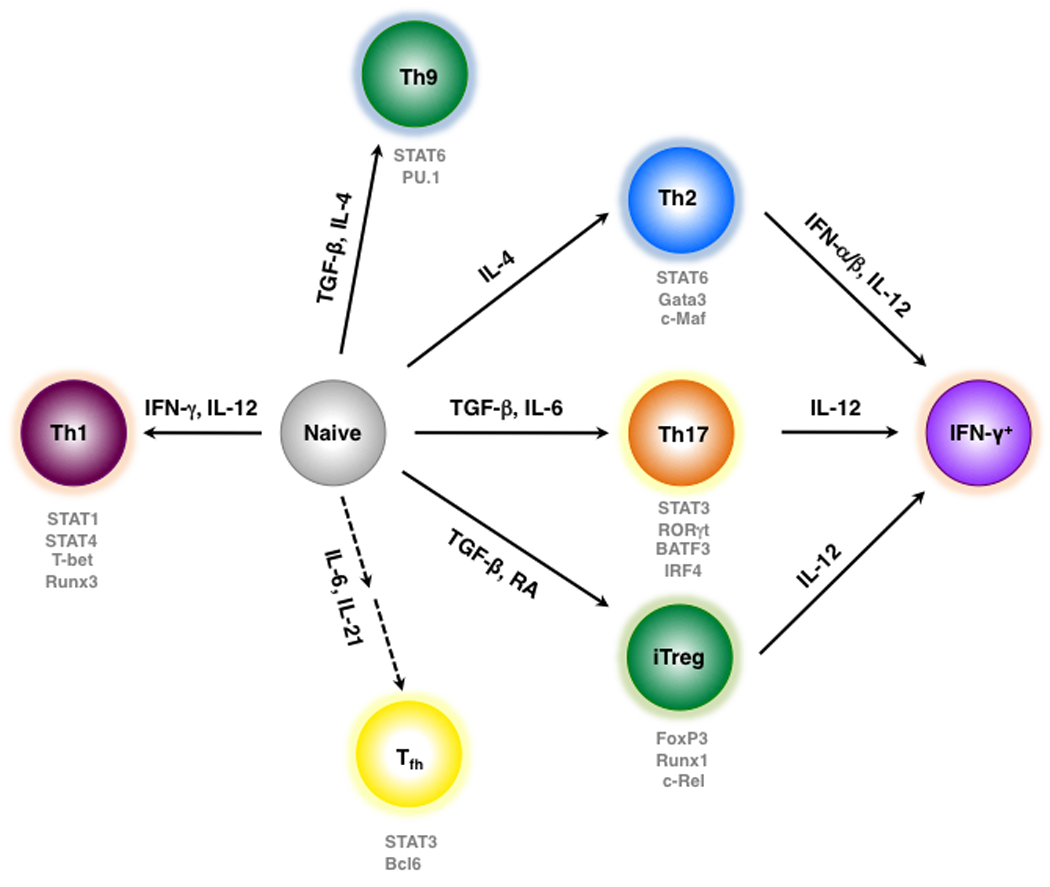
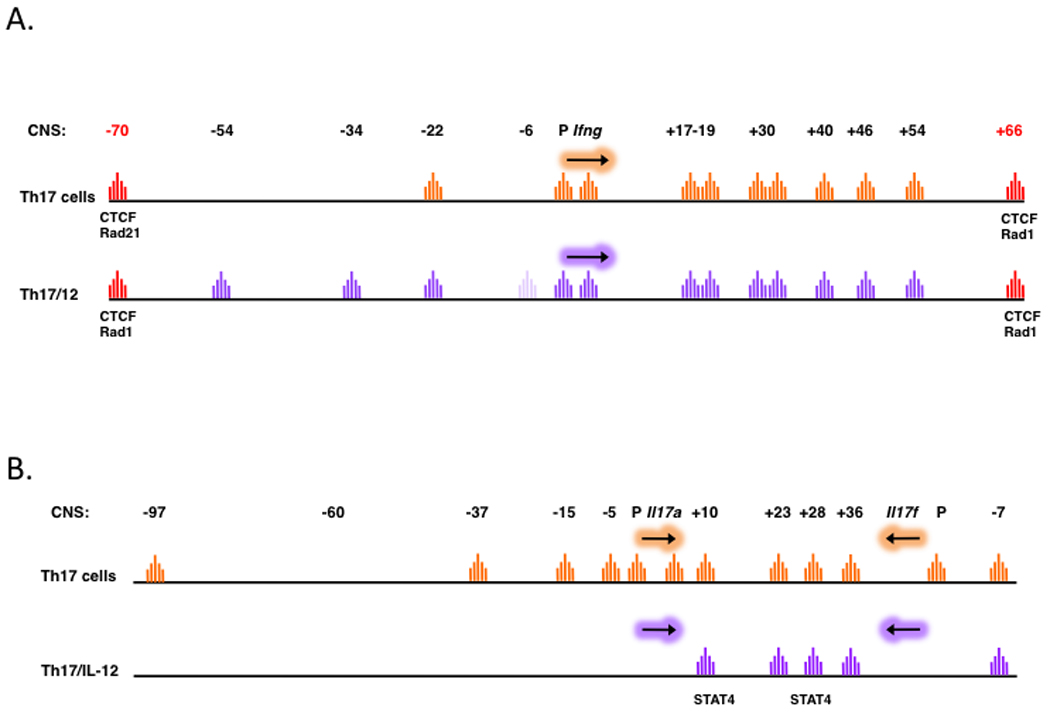
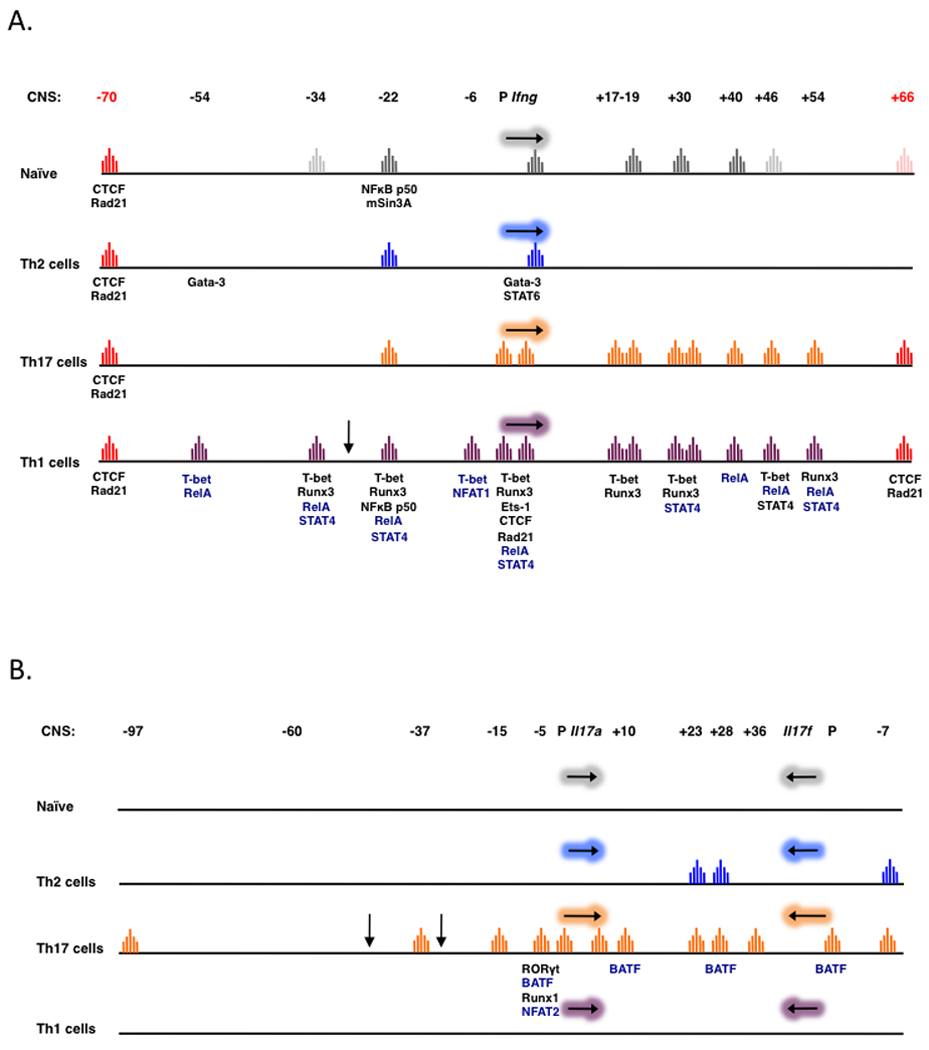
Study of the development of distinct CD4(+) T-cell subsets from naive precursors continues to provide excellent opportunities for dissection of mechanisms that control lineage-specific gene expression or repression. Whereas it had been thought that the induction of transcription networks that control T-lineage commitment were highly stable, reinforced by epigenetic processes that confer heritability of functional phenotypes by the progeny of mature T cells, recent findings support a more dynamic view of T-lineage commitment. Here, we highlight advances in the mapping and functional characterization of cis elements in the Ifng locus that have provided new insights into the control of the chromatin structure and transcriptional activity of this signature T-helper 1 cell gene. We also examine epigenetic features of the Ifng locus that have evolved to enable its reprogramming for expression by other T-cell subsets, particularly T-helper 17 cells, and contrast features of the Ifng locus with those of the Il17a-Il17f locus, which appears less promiscuous.
从幼稚前体细胞中分化出不同的 CD4(+) T 细胞亚群的研究,为剖析控制谱系特异性基因表达或抑制的机制提供了极好的机会。尽管人们曾认为控制 T 细胞谱系定型的转录网络的诱导是高度稳定的,并且受到表观遗传过程的强化,这些过程赋予了成熟 T 细胞后代功能表型的遗传性,但最近的发现支持了 T 细胞谱系定型更具动态性的观点。在这里,我们重点介绍了 Ifng 基因座中顺式元件的作图和功能特征的研究进展,这些研究为控制该特征性 T 辅助 1 细胞基因的染色质结构和转录活性提供了新的见解。我们还研究了 Ifng 基因座的表观遗传特征,这些特征已经进化到能够使其被其他 T 细胞亚群(特别是 T 辅助 17 细胞)重新编程表达,并将 Ifng 基因座的特征与 Il17a-Il17f 基因座的特征进行对比,后者似乎不那么混杂。