INRA UMR1301/UNSA/CNRS UMR6243, 400 Route des Chappes, BP167, Sophia Antipolis, France.
BMC Genomics. 2010 Oct 25;11:598. doi: 10.1186/1471-2164-11-598.
Microsatellites are the most popular source of molecular markers for studying population genetic variation in eukaryotes. However, few data are currently available about their genomic distribution and abundance across the phylum Nematoda. The recent completion of the genomes of several nematode species, including Meloidogyne incognita, a major agricultural pest worldwide, now opens the way for a comparative survey and analysis of microsatellites in these organisms.
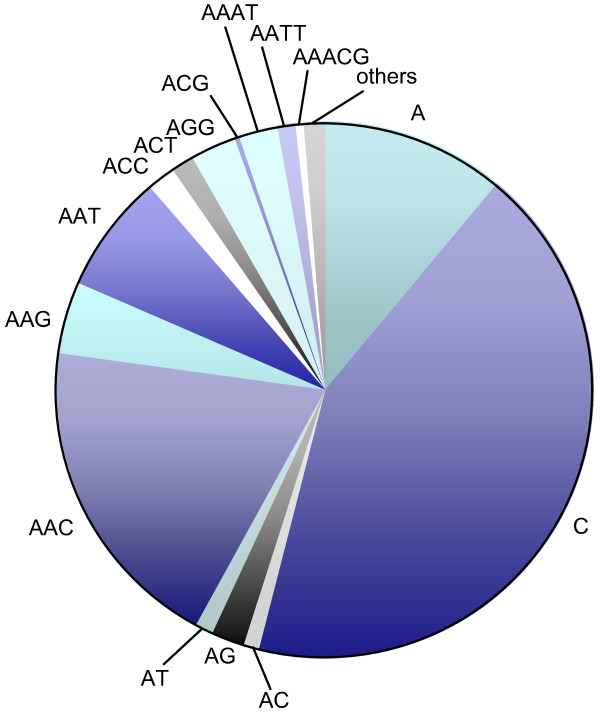
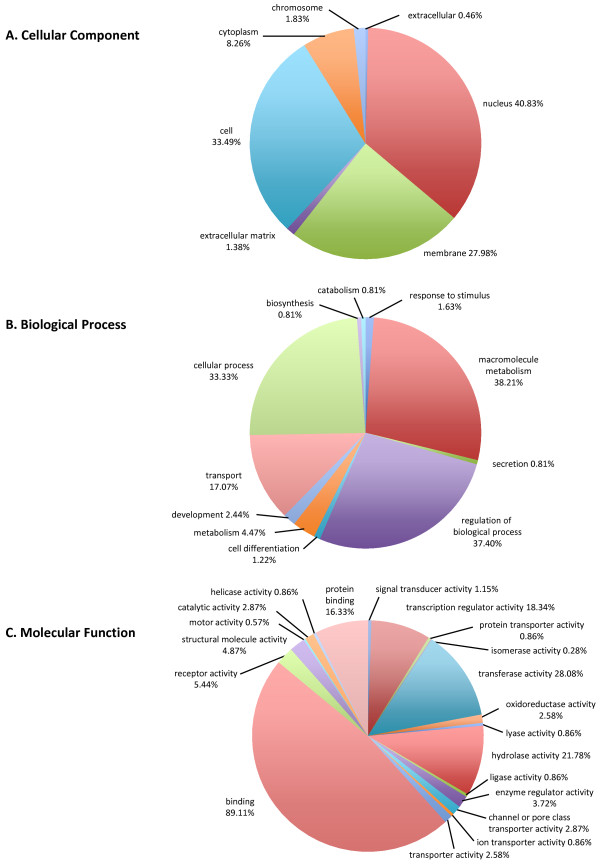
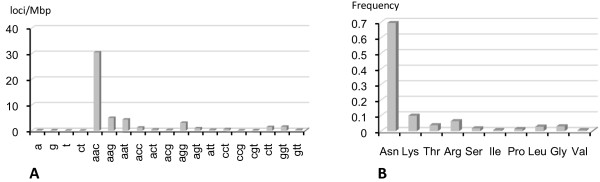
Using MsatFinder, the total numbers of 1-6 bp perfect microsatellites detected in the complete genomes of five nematode species (Brugia malayi, Caenorhabditis elegans, M. hapla, M. incognita, Pristionchus pacificus) ranged from 2,842 to 61,547, and covered from 0.09 to 1.20% of the nematode genomes. Under our search criteria, the most common repeat motifs for each length class varied according to the different nematode species considered, with no obvious relation to the AT-richness of their genomes. Overall, (AT)n, (AG)n and (CT)n were the three most frequent dinucleotide microsatellite motifs found in the five genomes considered. Except for two motifs in P. pacificus, all the most frequent trinucleotide motifs were AT-rich, with (AAT)n and (ATT)n being the only common to the five nematode species. A particular attention was paid to the microsatellite content of the plant-parasitic species M. incognita. In this species, a repertoire of 4,880 microsatellite loci was identified, from which 2,183 appeared suitable to design markers for population genetic studies. Interestingly, 1,094 microsatellites were identified in 801 predicted protein-coding regions, 99% of them being trinucleotides. When compared against the InterPro domain database, 497 of these CDS were successfully annotated, and further assigned to Gene Ontology terms.
Contrasted patterns of microsatellite abundance and diversity were characterized in five nematode genomes, even in the case of two closely related Meloidogyne species. 2,245 di- to hexanucleotide loci were identified in the genome of M. incognita, providing adequate material for the future development of a wide range of microsatellite markers in this major plant parasite.
微卫星是研究真核生物群体遗传变异最常用的分子标记来源。然而,目前关于线虫门的基因组分布和丰度的数据很少。最近完成了几个线虫物种的基因组,包括全球主要农业害虫根结线虫,现在为这些生物的微卫星比较调查和分析开辟了道路。
使用 MsatFinder,在五种线虫物种(马来丝虫、秀丽隐杆线虫、哈氏副柔线虫、根结线虫、太平洋侧殖吸虫)的完整基因组中检测到的 1-6 bp 完美微卫星总数从 2,842 到 61,547,占线虫基因组的 0.09 到 1.20%。在我们的搜索条件下,对于每种长度类别的最常见重复基序,根据所考虑的不同线虫物种而有所不同,与它们基因组的 A/T 丰富度没有明显关系。总的来说,(AT)n、(AG)n 和(CT)n 是在考虑的五个基因组中发现的三种最常见的二核苷酸微卫星基序。除了太平洋侧殖吸虫中的两个基序外,所有最常见的三核苷酸基序都是富含 A/T 的,(AAT)n 和(ATT)n 是仅在五种线虫物种中共同的。特别关注了寄生植物的根结线虫的微卫星含量。在这个物种中,鉴定出了 4880 个微卫星基因座,其中 2183 个适合设计用于群体遗传研究的标记。有趣的是,在 801 个预测的蛋白质编码区中鉴定出了 1094 个微卫星,其中 99%为三核苷酸。与 InterPro 结构域数据库进行比较时,成功注释了其中的 497 个 CDS,并进一步分配到基因本体论术语中。
即使在两个密切相关的根结线虫物种中,也描述了五个线虫基因组中微卫星丰度和多样性的对比模式。在根结线虫的基因组中鉴定出了 2245 个二到六核苷酸基因座,为这个主要植物寄生虫的广泛微卫星标记的未来发展提供了充足的材料。