Department of Molecular Biology, Centre for Carbohydrate Recognition and Signalling, Aarhus University, Gustav Wieds Vej 10, Aarhus C DK-8000, Denmark.
Nat Commun. 2010 Apr 12;1(1):10. doi: 10.1038/ncomms1009.
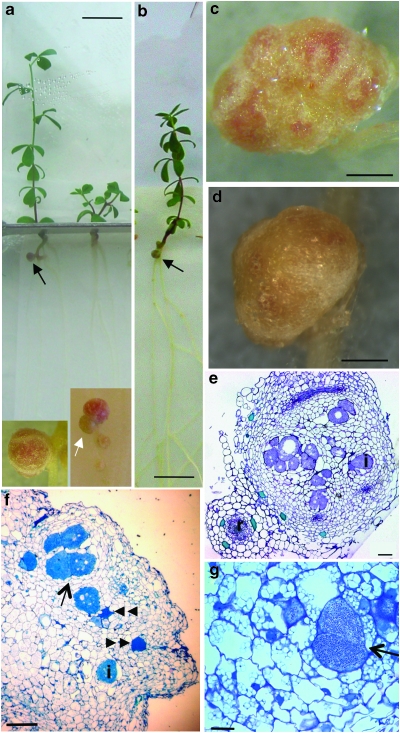
Bacterial infection of interior tissues of legume root nodules is controlled at the epidermal cell layer and is closely coordinated with progressing organ development. Using spontaneous nodulating Lotus japonicus plant mutants to uncouple nodule organogenesis from infection, we have determined the role of 16 genes in these two developmental processes. We show that host-encoded mechanisms control three alternative entry processes operating in the epidermis, the root cortex and at the single cell level. Single cell infection did not involve the formation of trans-cellular infection threads and was independent of host Nod-factor receptors and bacterial Nod-factor signals. In contrast, Nod-factor perception was required for epidermal root hair infection threads, whereas primary signal transduction genes preceding the secondary Ca2+ oscillations have an indirect role. We provide support for the origin of rhizobial infection through direct intercellular epidermal invasion and subsequent evolution of crack entry and root hair invasions observed in most extant legumes.
豆科植物根瘤内部组织的细菌感染受到表皮细胞层的控制,并与器官发育的进程密切协调。我们利用自发结瘤的百脉根突变体,将根瘤器官发生与感染过程分离开来,从而确定了这两个发育过程中 16 个基因的作用。我们表明,宿主编码的机制控制了在表皮、根皮层和单细胞水平上三种不同的进入过程。单细胞感染不涉及细胞间感染线的形成,也不依赖于宿主的结瘤因子受体和细菌的结瘤因子信号。相比之下,表皮根毛感染线需要结瘤因子感知,而在二次 Ca2+振荡之前的初级信号转导基因则具有间接作用。我们为通过直接的细胞间表皮入侵以及随后在大多数现存豆科植物中观察到的裂缝进入和根毛入侵的演化来解释根瘤菌感染的起源提供了支持。