Department of Biology, Emory University, Atlanta, Georgia, United States of America.
PLoS One. 2010 Oct 18;5(10):e13449. doi: 10.1371/journal.pone.0013449.
The small RNA (sRNA) MicA has been shown to post-transcriptionally regulate translation of the outer membrane protein A (OmpA) in Escherichia coli. It uses an antisense mechanism to down-regulate OmpA protein synthesis and induce mRNA degradation. MicA is genomically localized between the coding regions of the gshA and luxS genes and is divergently transcribed from its neighbours. Transcription of the luxS gene which originates within or upstream of the MicA sequence would thus be complementary to the sRNA. LuxS regulation is as yet unclear.
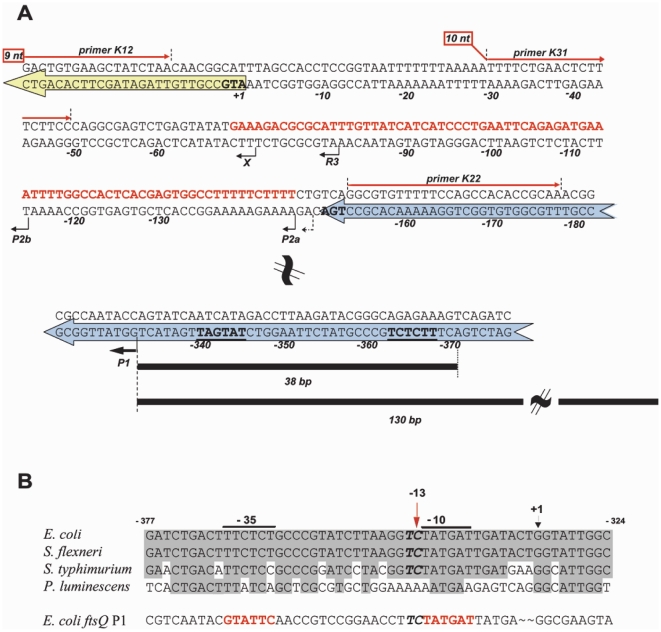
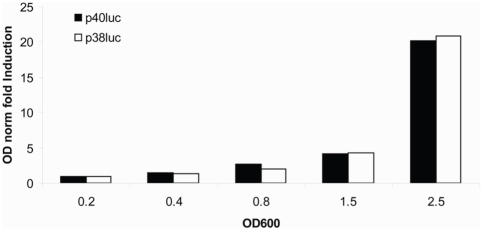
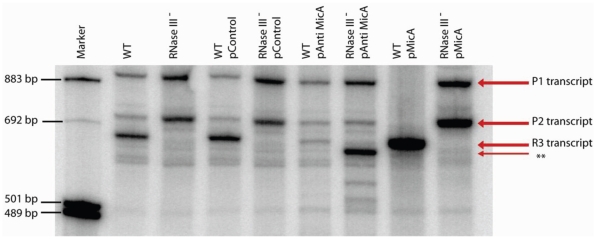
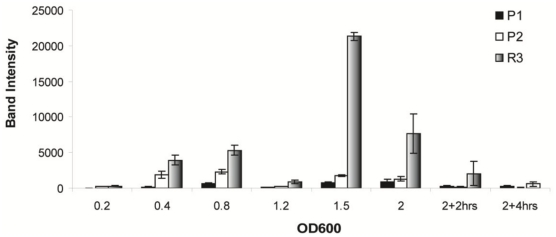
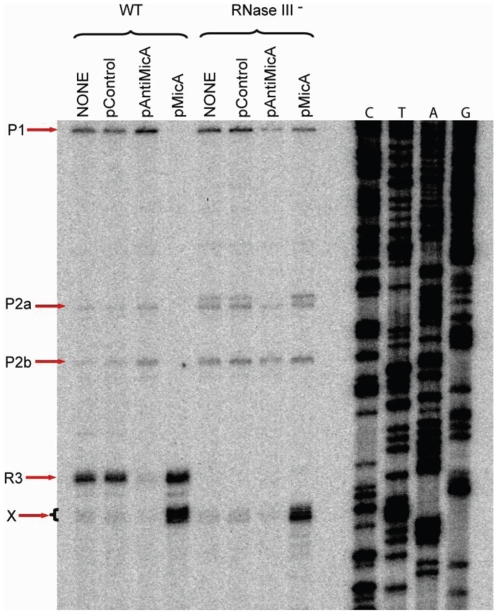
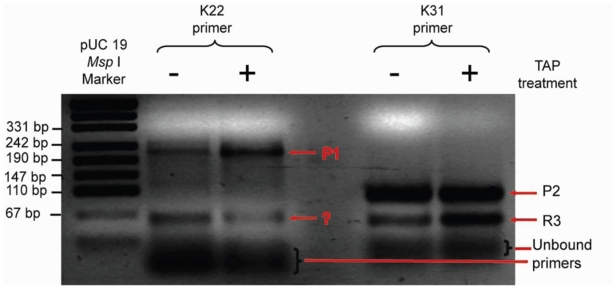
METHODOLOGY/PRINCIPAL FINDINGS: In this report, I show that the luxS mRNA exists as three long (major) transcripts of sizes that suggest just such interaction. The sRNA MicA's expression affects the abundance of each of these luxS transcripts. The involvement of the ribonuclease, RNase III in the accumulation of the shortest transcript is demonstrated. When MicA accumulates during growth, or is induced to be over-expressed, the cleaved mRNA species is observed to increase in intensity. Using primer extension and 5'-RACE experiments in combination with sRNA overexpression plasmids, I identify the exact origin of two of the three luxS transcripts, one of which is seen to result from a previously unidentified σ(S) dependent promoter.
CONCLUSIONS/SIGNIFICANCE: The presented data provides strong evidence that MicA functions in cis and in trans, targeting both luxS mRNA as well as the previously established ompA and phoP regulation. The proposed luxS regulation by MicA would be in tandem with another sRNA CyaR, shown recently to be involved in inhibiting translation of the luxS mRNA. Regulation of luxS expression is additionally shown to occur on a transcriptional level via σ(S) with variable transcript levels in different growth phases unlike what was previously assumed. This is the first known case of an sRNA in E. coli which targets both in cis (luxS mRNA) and in trans (ompA and phoP mRNAs).
小 RNA (sRNA) MicA 已被证明可以在转录后调节大肠杆菌外膜蛋白 A (OmpA) 的翻译。它使用反义机制下调 OmpA 蛋白合成并诱导 mRNA 降解。MicA 位于 gshA 和 luxS 基因的编码区之间,与相邻基因呈反式转录。因此,从 MicA 序列内部或上游起源的 luxS 基因的转录与 sRNA 互补。LuxS 调节尚不清楚。
方法/主要发现:在本报告中,我表明 luxS mRNA 存在三种大小的长(主要)转录本,这表明存在这种相互作用。sRNA MicA 的表达会影响这些 luxS 转录本的丰度。证明了核糖核酸酶 RNase III 参与了最短转录本的积累。当 MicA 在生长过程中积累或被诱导过度表达时,观察到切割的 mRNA 物种的强度增加。使用引物延伸和 5'-RACE 实验与 sRNA 过表达质粒相结合,我确定了三种 luxS 转录本中的两种的确切起始点,其中一种转录本来自以前未识别的 σ(S) 依赖性启动子。
结论/意义:所提供的数据提供了强有力的证据表明 MicA 以顺式和反式起作用,靶向 luxS mRNA 以及先前建立的 ompA 和 phoP 调节。最近表明,MicA 对 luxS 表达的调节与另一种 sRNA CyaR 相协调,该 sRNA 被证明参与抑制 luxS mRNA 的翻译。luxS 表达的调节还通过 σ(S) 在转录水平上进行,与先前假设的不同,不同生长阶段的转录本水平不同。这是大肠杆菌中第一个已知的靶向顺式(luxS mRNA)和反式(ompA 和 phoP mRNAs)的 sRNA。