Department of Biotechnology and Laboratory Science in Medicine, National Yang-Ming University, Taipei, Taiwan.
Reprod Biol Endocrinol. 2010 Oct 27;8:127. doi: 10.1186/1477-7827-8-127.
SERPINE2, also known as glia-derived nexin or protease nexin-1, belongs to the serine protease inhibitor (SERPIN) superfamily. It is one of the potent serpins that modulates the activity of the plasminogen activator (PA) and was implicated in tissue remodeling. In this study, we investigated the expression patterns of SERPINE2 in the mouse placenta and uterus during the estrous cycle, pregnancy, and lactation.
SERPINE2 was purified from mouse seminal vesicle secretion using liquid chromatography (LC) and identified by LC/tandem mass spectrometry. The antiserum against the SERPINE2 protein was raised in rabbits. To reveal the uterine and placental expression of SERPINE2, tissues at various stages were collected for real-time PCR quantification, Western blotting, and immunohistochemical staining.
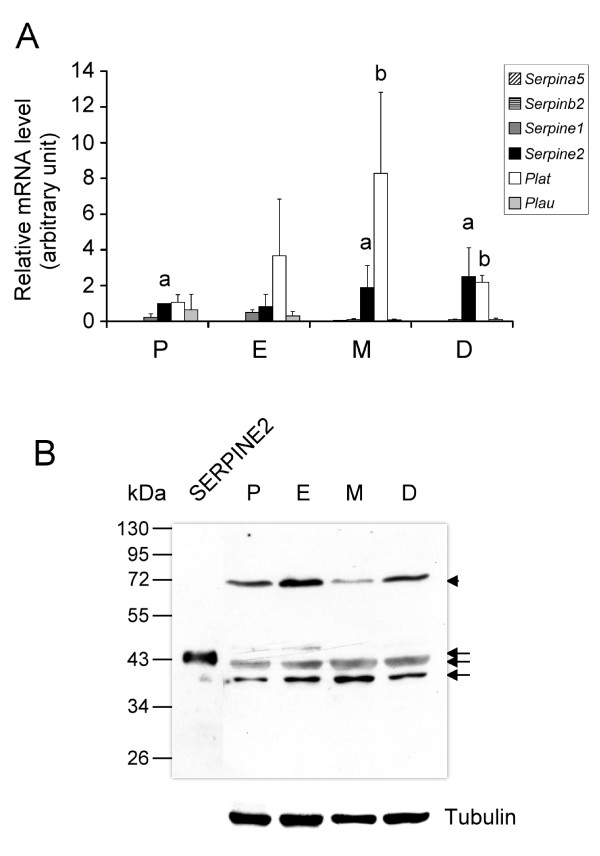
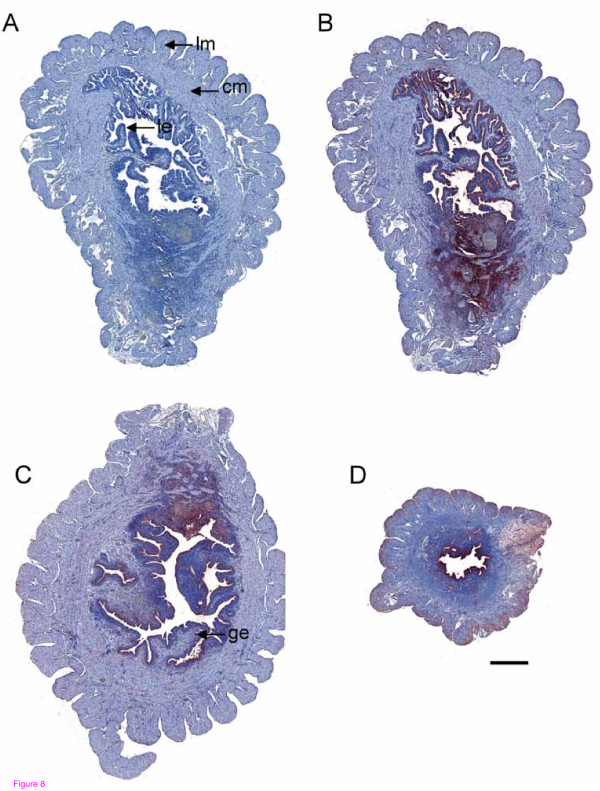
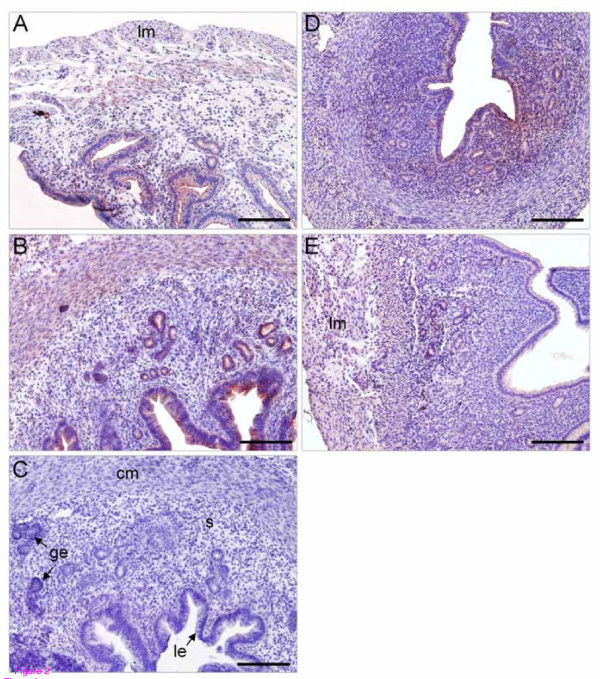
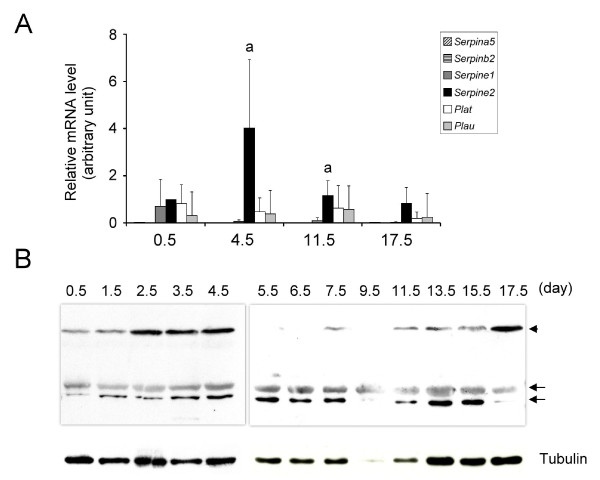
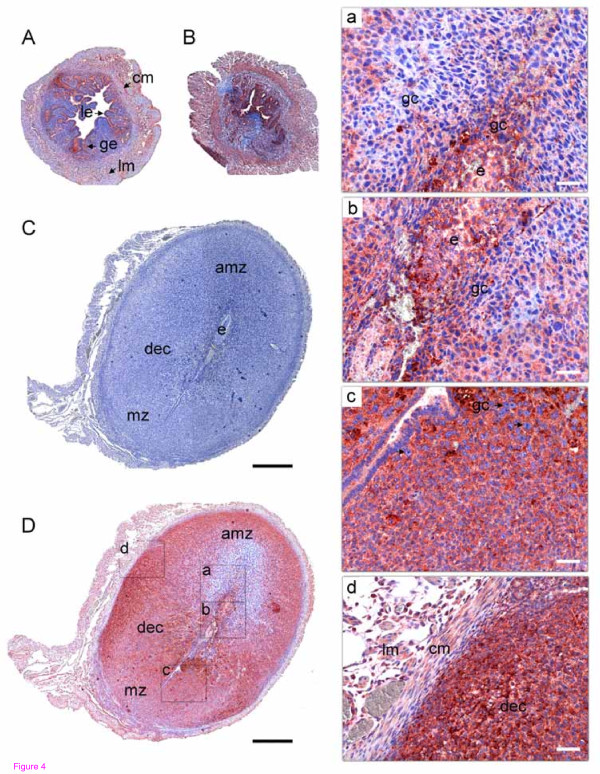
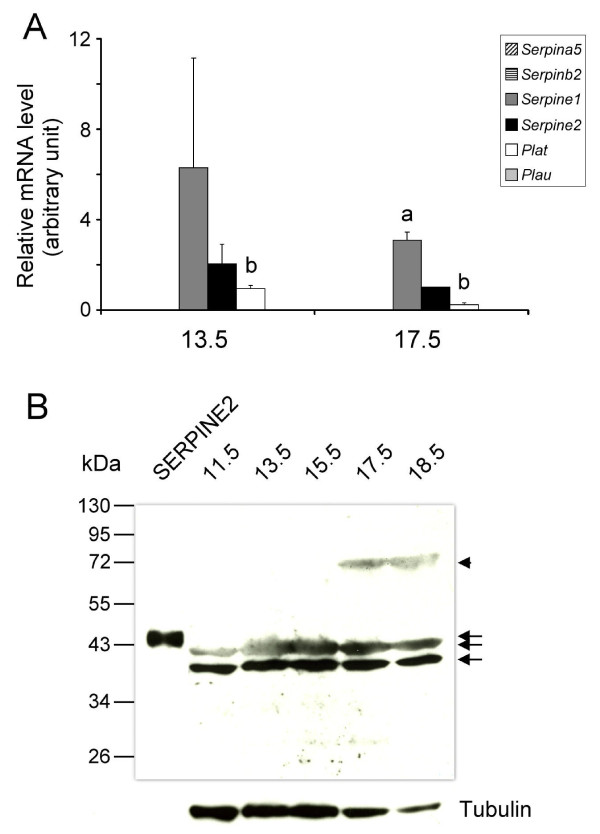
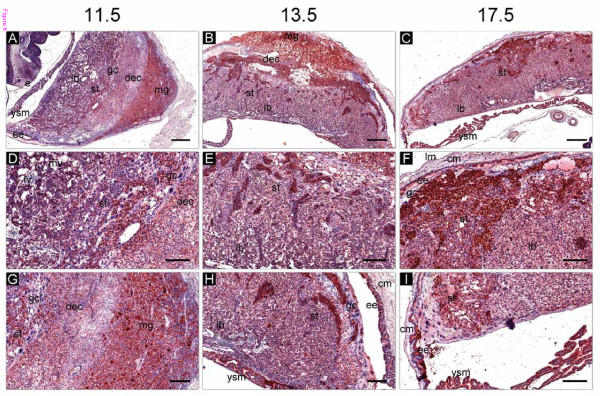
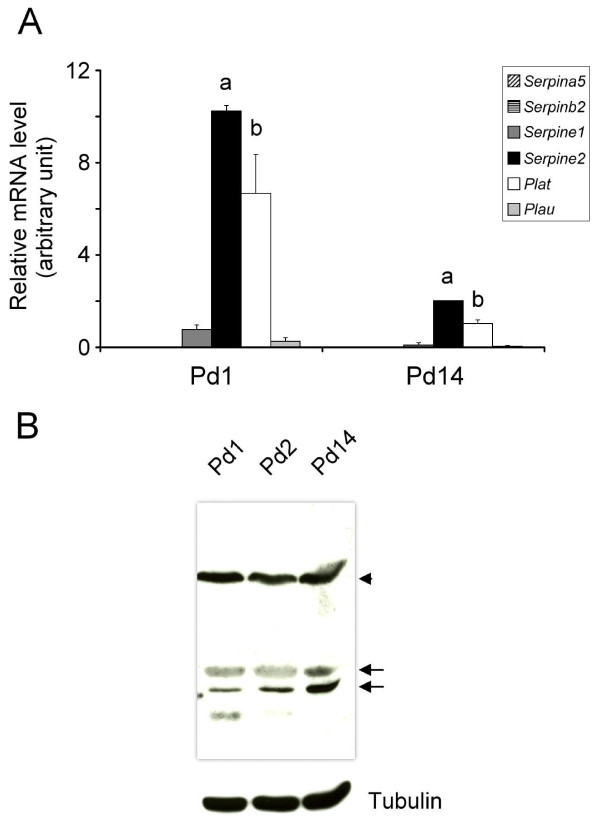
Serpine2 mRNA was the major PA inhibitor in the placenta and uterus during the estrous cycle, pregnancy, and lactation, although Serpine1 mRNA had higher expression levels than Serpine2 mRNA in the placenta. Plat seemed to be the major PA in the mouse uterus and placenta. Antiserum against the SERPINE2 protein specifically recognized two forms of SERPINE2 and an extra 75-kDa protein, which was probably a complex of SERPINE2 with a certain protease, from among thousands of protein components in the tissue extract as demonstrated by Western blotting. In the uterus, SERPINE2 was primarily localized in luminal and glandular epithelial cells but it also was detected in circular and longitudinal smooth muscle cells during the estrous cycle and lactation. It was prominently expressed in decidual stroma cells, the metrial gland, and endometrial epithelium of the pregnant uterus. In the placenta, SERPINE2 was expressed in trophoblasts of the labyrinth and spongiotrophoblasts. However, its expression was remarkably reduced in giant cells which existed in the giant cell-decidual junction zone. In contrast, prominent expression of SERPINE2 seemed to be detected on clusters of glycogen cells near the junction zone. In addition, yolk sac membranes also showed high expression of SERPINE2.
These findings indicate that SERPINE2 is a major PA inhibitor in the placenta and uterus during the estrous cycle, pregnancy, and lactation. It may participate in the PA-modulated tissue remodeling process in the mouse placenta and uterus.
丝氨酸蛋白酶抑制剂 2(SERPINE2),又称神经胶质衍生的连接蛋白或蛋白酶连接蛋白 1,属于丝氨酸蛋白酶抑制剂(SERPIN)超家族。它是一种能够调节纤溶酶原激活物(PA)活性的有效丝氨酸蛋白酶抑制剂,与组织重塑有关。在这项研究中,我们研究了 SERPINE2 在小鼠发情周期、妊娠和哺乳期胎盘和子宫中的表达模式。
使用液相色谱(LC)从小鼠精囊分泌物中纯化 SERPINE2,并通过 LC/串联质谱进行鉴定。用 SERPINE2 蛋白免疫兔制备抗血清。为了揭示 SERPINE2 在子宫和胎盘的表达,我们收集了不同阶段的组织进行实时 PCR 定量、Western 印迹和免疫组织化学染色。
在发情周期、妊娠和哺乳期,丝氨酸蛋白酶抑制剂 2 mRNA 是胎盘和子宫中主要的 PA 抑制剂,尽管 SERPINE1 mRNA 在胎盘中的表达水平高于 SERPINE2 mRNA。PLAT 似乎是小鼠子宫和胎盘的主要 PA。抗 SERPINE2 蛋白的血清特异性识别 SERPINE2 的两种形式和一个额外的 75 kDa 蛋白,这可能是 SERPINE2 与组织提取物中某种蛋白酶的复合物,如 Western 印迹所示。在子宫中,SERPINE2 主要定位于腔上皮细胞和腺上皮细胞,但在发情周期和哺乳期也存在于环状和纵向平滑肌细胞中。它在妊娠子宫的蜕膜基质细胞、蜕膜腺和子宫内膜上皮中表达显著。在胎盘,SERPINE2 表达于胎盘绒毛和海绵滋养层细胞。然而,它在巨细胞中表达显著减少,巨细胞存在于巨细胞-蜕膜交界处。相比之下,在交界区附近的糖原细胞簇中似乎检测到 SERPINE2 的明显表达。此外,卵黄囊膜也表现出 SERPINE2 的高表达。
这些发现表明,SERPINE2 是发情周期、妊娠和哺乳期胎盘和子宫中主要的 PA 抑制剂。它可能参与了小鼠胎盘和子宫中 PA 调节的组织重塑过程。