Shoup-Knox Melanie L, Gallup Andrew C, Gallup Gordon G, McNay Ewan C
Department of Psychology, University at Albany Albany, NY, USA.
Front Evol Neurosci. 2010 Sep 24;2:108. doi: 10.3389/fnevo.2010.00108. eCollection 2010.
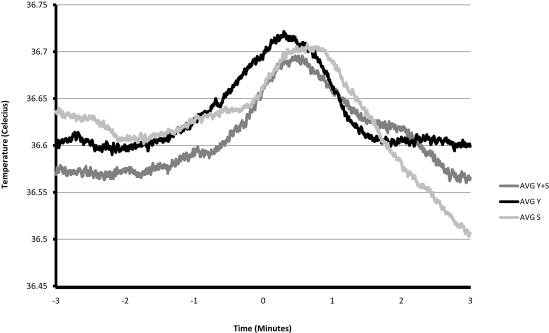
Recent research suggests that yawning is an adaptive behavior that functions to promote brain thermoregulation among homeotherms. To explore the relationship between brain temperature and yawning we implanted thermocoupled probes in the frontal cortex of rats to measure brain temperature before, during and after yawning. Temperature recordings indicate that yawns and stretches occurred during increases in brain temperature, with brain temperatures being restored to baseline following the execution of each of these behaviors. The circulatory changes that accompany yawning and stretching may explain some of the thermal similarities surrounding these events. These results suggest that yawning and stretching may serve to maintain brain thermal homeostasis.
最近的研究表明,打哈欠是一种适应性行为,其作用是促进恒温动物的大脑体温调节。为了探究大脑温度与打哈欠之间的关系,我们将热电偶探头植入大鼠的额叶皮质,以测量打哈欠前、打哈欠期间和打哈欠后的大脑温度。温度记录表明,打哈欠和伸展动作发生在大脑温度升高期间,并且在执行这些行为中的每一项之后,大脑温度恢复到基线水平。伴随打哈欠和伸展动作的循环变化可能解释了这些事件周围的一些热相似性。这些结果表明,打哈欠和伸展动作可能有助于维持大脑的热稳态。