Gallup Andrew C, Schild Anja B, Ühlein Markus A, Bugnyar Thomas, Massen Jorg J M
Psychology and Evolutionary Behavioral Sciences Programs, SUNY Polytechnic Institute, Utica, NY 13502, USA.
Department of Biological Sciences, Nova Southeastern University, Ft. Lauderdale, FL 33314, USA.
Animals (Basel). 2022 May 26;12(11):1357. doi: 10.3390/ani12111357.
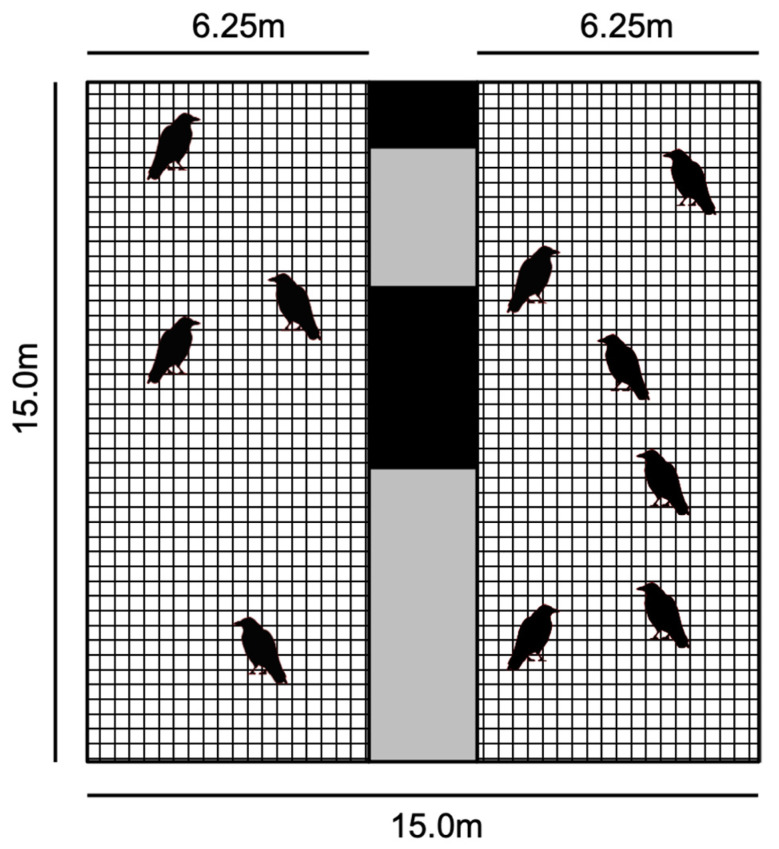
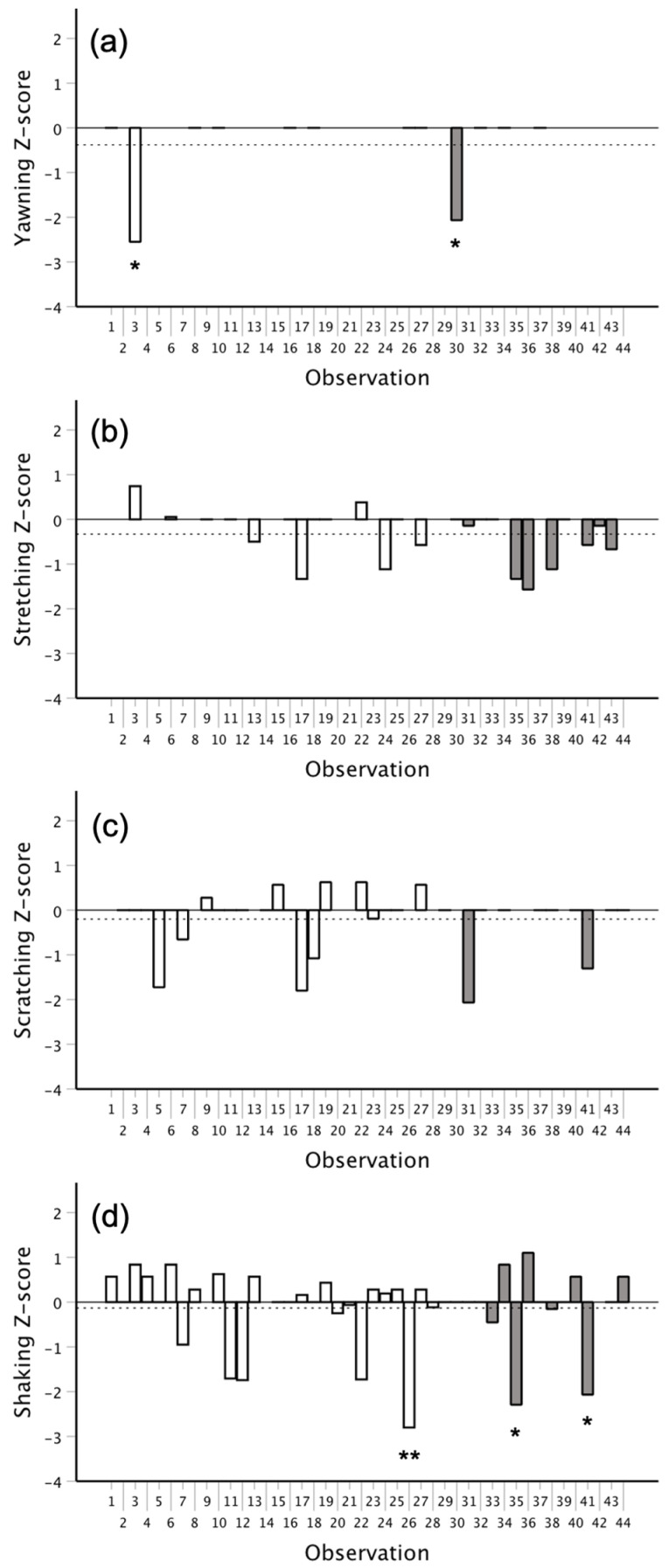
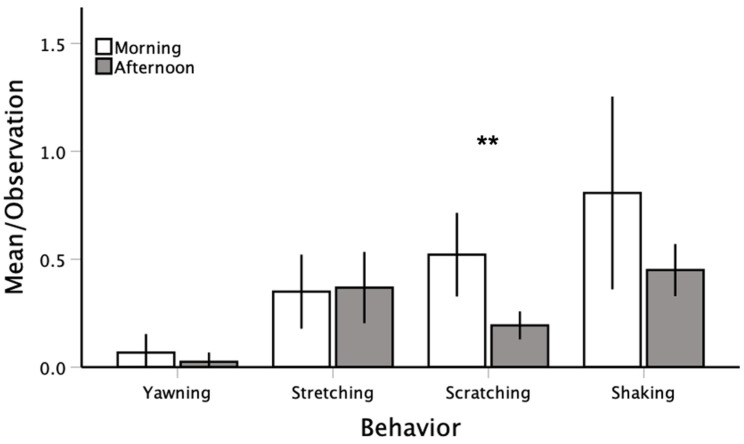
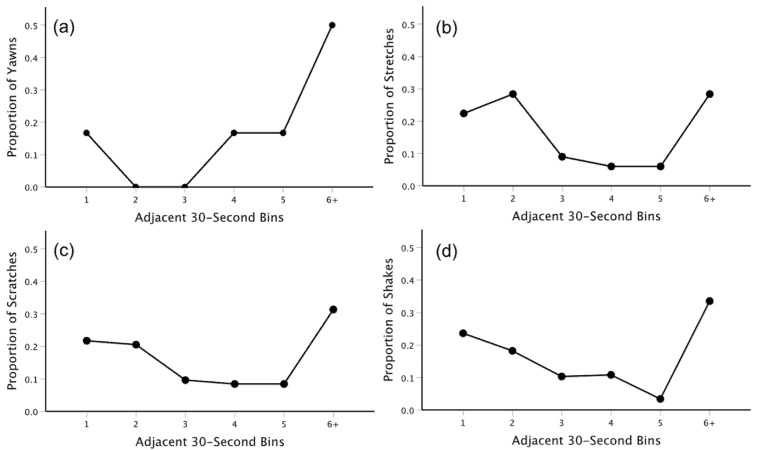
The overt and reflexive matching of behaviors among conspecifics has been observed in a growing number of social vertebrates, including avian species. In general, behavioral contagion-such as the spread of yawning-may serve important functions in group synchronization and vigilance behavior. Here, we performed an exploratory study to investigate yawn contagion among 10 captive juvenile ravens (), across two groups. Using observational methods, we also examined the contagiousness of three other distinct behaviors: stretching, scratching, and shaking. A total of 44 20 min observations were made across both groups, including 28 in the morning and 16 in the afternoon. The time and occurrence of all the behaviors from each bird were coded, and the temporal pattern of each behavior across both groups was then analyzed to assess the degree of social contagion. Overall, we found no evidence for contagious yawning, stretching, scratching, or shaking. However, yawns were relatively infrequent per observation (0.052 ± 0.076 yawns/bird) and thus experimental methods should be used to support this finding.
在越来越多的社会性脊椎动物中,包括鸟类,都观察到了同种个体之间行为的明显和反射性匹配。一般来说,行为传染——比如哈欠的传播——可能在群体同步和警戒行为中发挥重要作用。在这里,我们进行了一项探索性研究,以调查两组共10只圈养的幼年渡鸦之间的哈欠传染情况。我们还使用观察方法研究了其他三种不同行为的传染性:伸展、抓挠和抖动。两组共进行了44次20分钟的观察,包括上午28次和下午16次。对每只鸟的所有行为的时间和发生情况进行编码,然后分析两组中每种行为的时间模式,以评估社会传染程度。总体而言,我们没有发现哈欠、伸展、抓挠或抖动具有传染性的证据。然而,每次观察中哈欠相对较少(0.052±0.076次哈欠/只鸟),因此应该使用实验方法来支持这一发现。