Institute of Biomedicine, Department of Cell Biology and Anatomy, University of Turku, Turku, Finland.
BMC Cancer. 2010 Oct 30;10:596. doi: 10.1186/1471-2407-10-596.
Prostate tumours are commonly poorly oxygenated which is associated with tumour progression and development of resistance to chemotherapeutic drugs and radiotherapy. Fibroblast growth factor 8b (FGF8b) is a mitogenic and angiogenic factor, which is expressed at an increased level in human prostate tumours and is associated with a poor prognosis. We studied the effect of FGF8b on tumour oxygenation and growth parameters in xenografts in comparison with vascular endothelial growth factor (VEGF)-expressing xenografts, representing another fast growing and angiogenic tumour model.
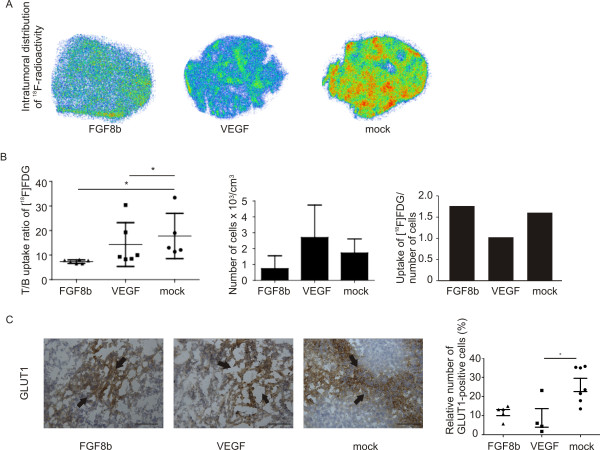
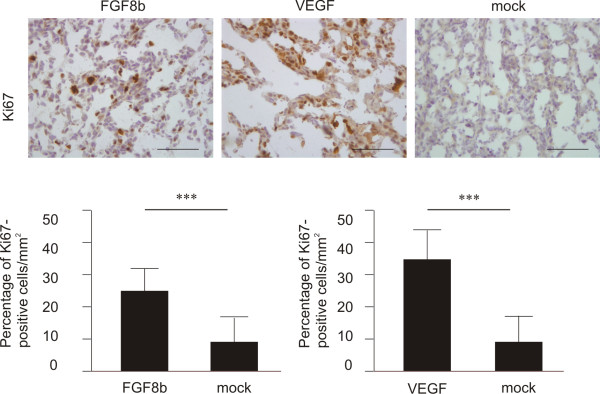
Subcutaneous tumours of PC-3 cells transfected with FGF8b, VEGF or empty (mock) vectors were produced and studied for vascularity, cell proliferation, glucose metabolism and oxygenation. Tumours were evaluated by immunohistochemistry (IHC), flow cytometry, use of radiolabelled markers of energy metabolism ([18F]FDG) and hypoxia ([18F]EF5), and intratumoral polarographic measurements of pO2.
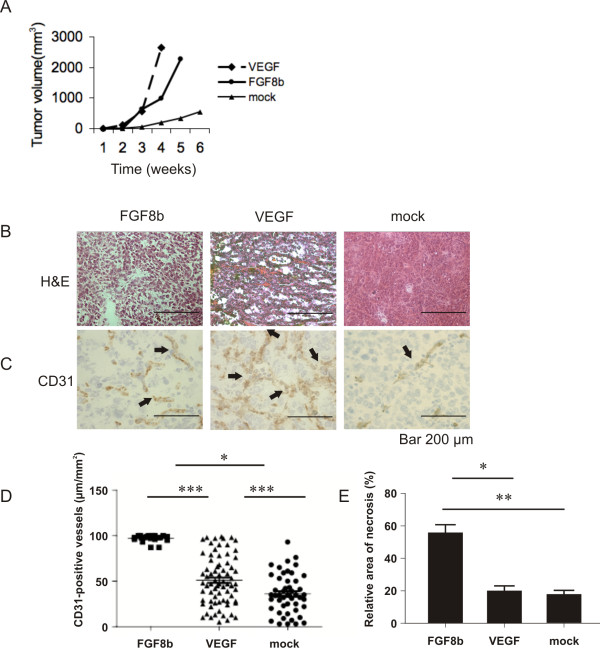
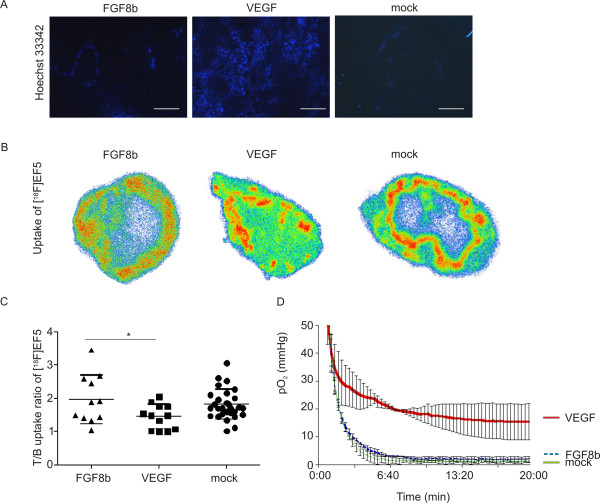
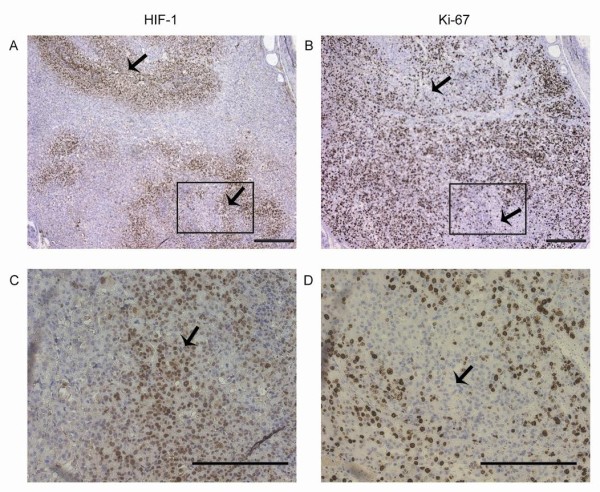
Both FGF8b and VEGF tumours grew rapidly in nude mice and showed highly vascularised morphology. Perfusion studies, pO2 measurements, [18F]EF5 and [18F]FDG uptake as well as IHC staining for glucose transport protein (GLUT1) and hypoxia inducible factor (HIF) 1 showed that VEGF xenografts were well-perfused and oxygenised, as expected, whereas FGF8b tumours were as hypoxic as mock tumours. These results suggest that FGF8b-induced tumour capillaries are defective. Nevertheless, the growth rate of hypoxic FGF8b tumours was highly increased, as that of well-oxygenised VEGF tumours, when compared with hypoxic mock tumour controls.
FGF8b is able to induce fast growth in strongly hypoxic tumour microenvironment whereas VEGF-stimulated growth advantage is associated with improved perfusion and oxygenation of prostate tumour xenografts.
前列腺肿瘤通常氧合不良,这与肿瘤的进展和对化疗药物和放疗的耐药性的发展有关。成纤维细胞生长因子 8b(FGF8b)是一种有丝分裂原和血管生成因子,在人类前列腺肿瘤中表达水平升高,与预后不良相关。我们研究了 FGF8b 对肿瘤氧合和生长参数的影响,与表达血管内皮生长因子(VEGF)的异种移植肿瘤进行比较,VEGF 代表另一种快速生长和血管生成的肿瘤模型。
构建转染 FGF8b、VEGF 或空载体(mock)的 PC-3 细胞的皮下肿瘤,并研究其血管生成、细胞增殖、葡萄糖代谢和氧合作用。通过免疫组织化学(IHC)、流式细胞术、放射性标记的能量代谢标记物([18F]FDG)和缺氧标记物([18F]EF5)以及肿瘤内极谱测量 pO2 来评估肿瘤。
FGF8b 和 VEGF 肿瘤在裸鼠中快速生长,表现出高度血管化的形态。灌注研究、pO2 测量、[18F]EF5 和[18F]FDG 摄取以及葡萄糖转运蛋白(GLUT1)和缺氧诱导因子(HIF)1 的 IHC 染色表明,VEGF 异种移植瘤灌注良好且氧合,正如预期的那样,而 FGF8b 肿瘤与 mock 肿瘤一样缺氧。这些结果表明,FGF8b 诱导的肿瘤毛细血管存在缺陷。然而,与缺氧 mock 肿瘤对照相比,缺氧 FGF8b 肿瘤的生长速度非常高,与富氧 VEGF 肿瘤的生长速度相当。
FGF8b 能够在强烈缺氧的肿瘤微环境中诱导快速生长,而 VEGF 刺激的生长优势与前列腺肿瘤异种移植瘤灌注和氧合的改善有关。