Department of Radiation Oncology, University of Iowa College of Medicine, Iowa City, IA, USA.
Cancer Gene Ther. 2011 Feb;18(2):135-43. doi: 10.1038/cgt.2010.64. Epub 2010 Oct 29.
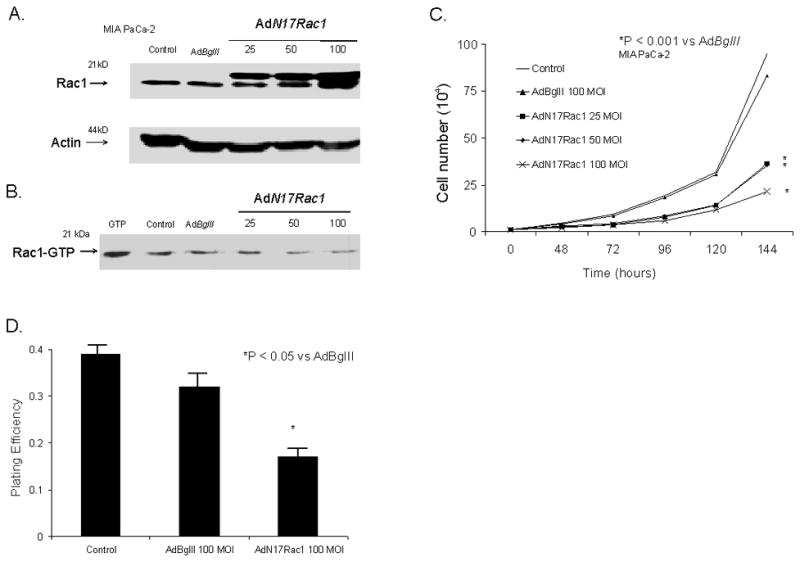
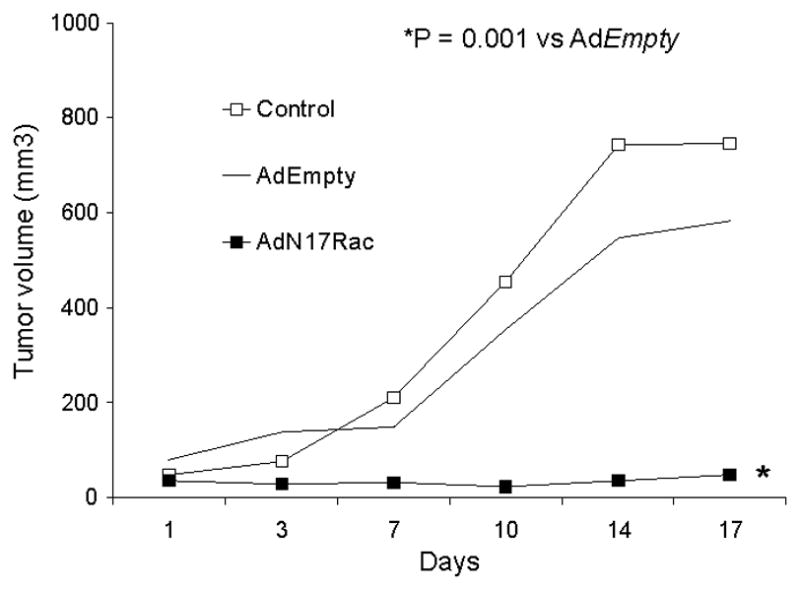
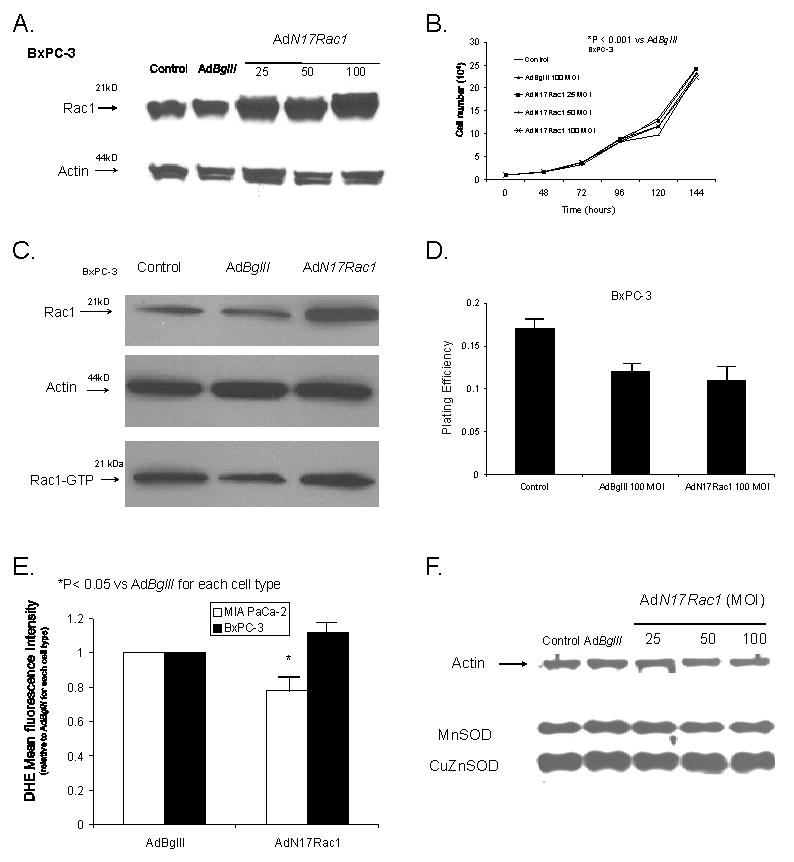
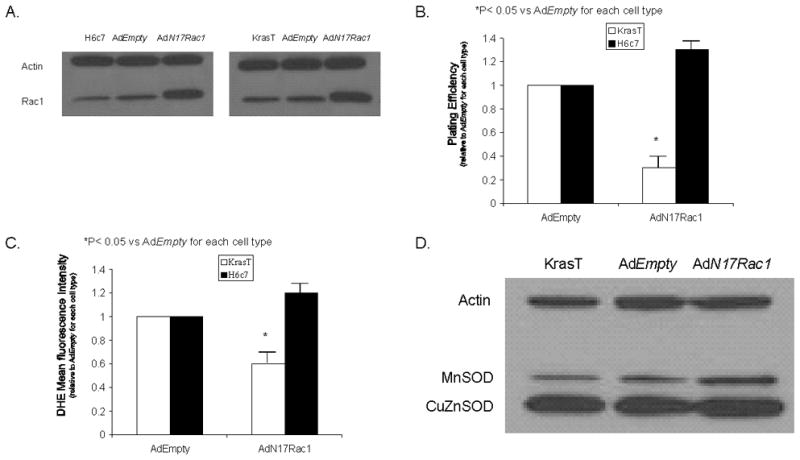
K-ras mutations occur in as high as 95% of patients with pancreatic cancer. K-ras activates Rac1-dependent NADPH oxidase, a key source of superoxide. Superoxide has an important function in pancreatic cancer cell proliferation, and scavenging or decreasing the levels of superoxide inhibits pancreatic cancer cell growth both in vitro and in vivo. DNA microarray analysis and RT-PCR has demonstrated that Rac1 is also upregulated in pancreatic cancer. The aim of this study was to determine whether inhibiting Rac1 would alter pancreatic tumor cell behavior. Human pancreatic cancer cells with mutant K-ras (MIA PaCa-2), wild-type K-ras (BxPC-3) and the immortal H6c7 cell line (pancreatic ductal epithelium) expressing K-ras oncogene (H6c7eR-KrasT) that is tumorigenic, were infected with a dominant/negative Rac1 construct (AdN17Rac1). In cells with mutant K-ras, AdN17Rac1 decreased rac activity, decreased superoxide levels and inhibited in vitro growth. However, in the BxPC-3 cell line, AdN17Rac1 did not change rac activity, superoxide levels or in vitro cell growth. Additionally, AdN17Rac1 decreased superoxide levels and inhibited in vitro growth in the KrasT tumorigenic cell line, but had no effect in the immortalized H6c7 cell line. In human pancreatic tumor xenografts, intratumoral injections of AdN17Rac1 inhibited tumor growth. These results suggest that activation of Rac1-dependent superoxide generation leads to pancreatic cancer cell proliferation. In pancreatic cancer, inhibition of Rac1 may be a potential therapeutic target.
K-ras 突变发生在高达 95%的胰腺癌患者中。K-ras 激活 Rac1 依赖性 NADPH 氧化酶,这是超氧化物的主要来源。超氧化物在胰腺癌细胞增殖中具有重要功能,清除或减少超氧化物的水平可抑制胰腺癌细胞在体外和体内的生长。DNA 微阵列分析和 RT-PCR 表明 Rac1 在胰腺癌中也上调。本研究的目的是确定抑制 Rac1 是否会改变胰腺肿瘤细胞的行为。具有突变 K-ras(MIA PaCa-2)、野生型 K-ras(BxPC-3)和表达 K-ras 癌基因(具有致瘤性的胰腺导管上皮细胞系 H6c7eR-KrasT)的人胰腺癌细胞被感染了显性/阴性 Rac1 构建体(AdN17Rac1)。在具有突变 K-ras 的细胞中,AdN17Rac1 降低了 Rac 活性,降低了超氧化物水平并抑制了体外生长。然而,在 BxPC-3 细胞系中,AdN17Rac1 没有改变 Rac 活性、超氧化物水平或体外细胞生长。此外,AdN17Rac1 降低了 KrasT 致瘤细胞系中的超氧化物水平并抑制了体外生长,但对永生化的 H6c7 细胞系没有影响。在人胰腺肿瘤异种移植物中,肿瘤内注射 AdN17Rac1 抑制了肿瘤生长。这些结果表明,Rac1 依赖性超氧化物生成的激活导致胰腺癌细胞增殖。在胰腺癌中,抑制 Rac1 可能是一个潜在的治疗靶点。