Department of Pathology and Program in Immunology and Virology, University of Massachusetts Medical School, Worcester, MA 01655, USA.
J Immunol. 2010 Dec 1;185(11):6753-64. doi: 10.4049/jimmunol.1000812. Epub 2010 Nov 3.
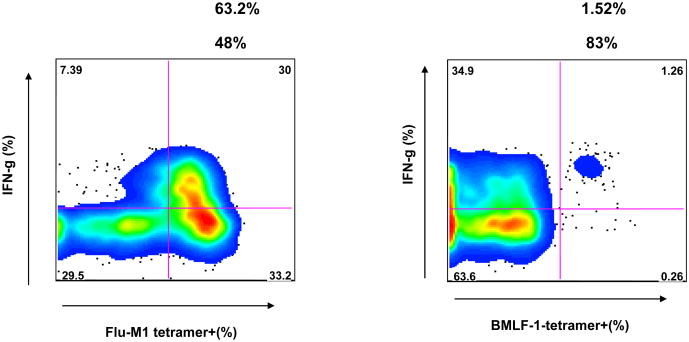
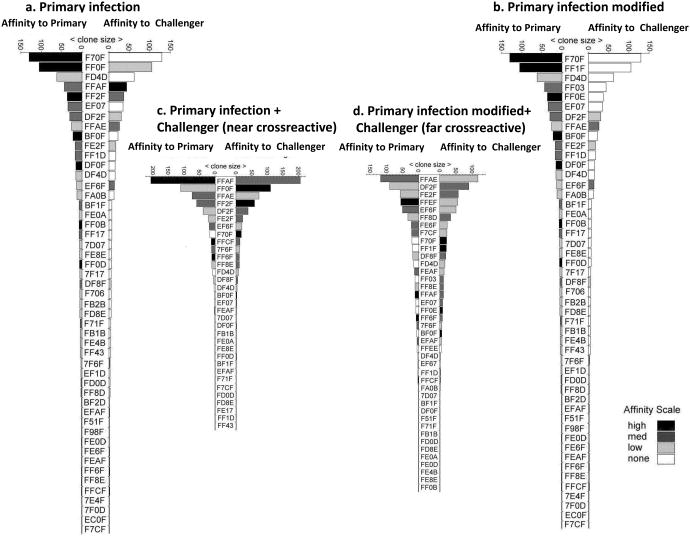
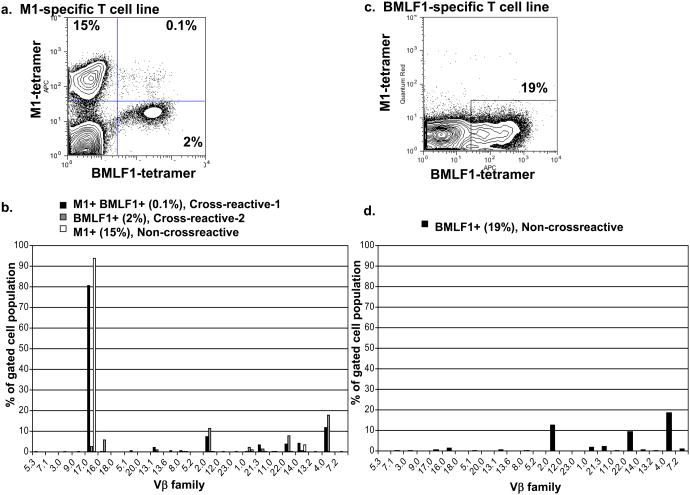
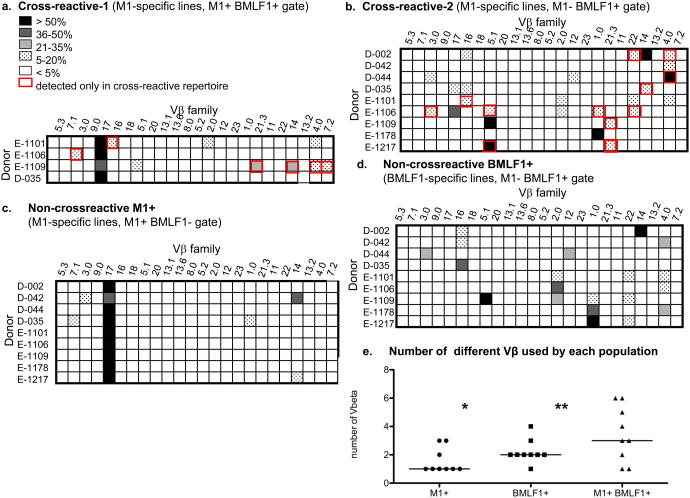
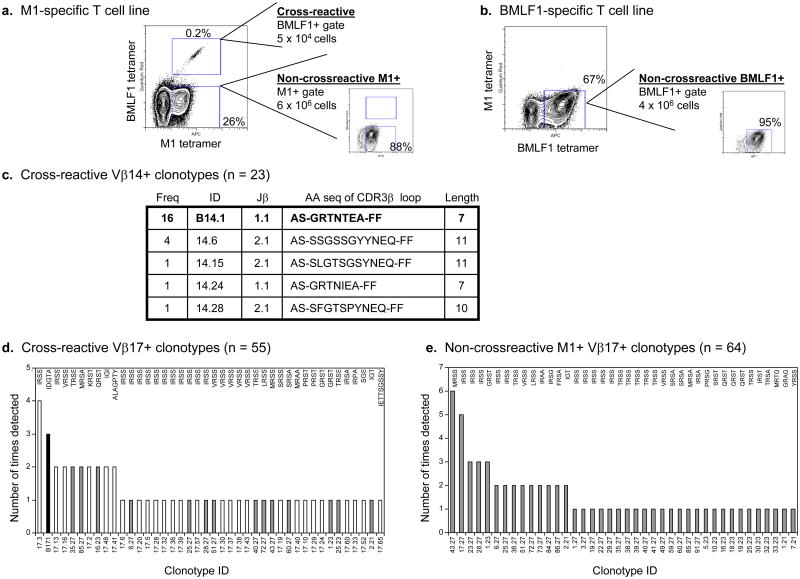
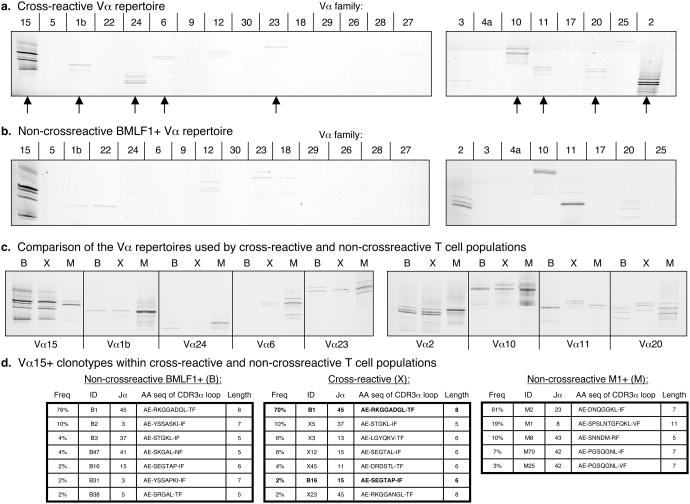
Memory T cells cross-reactive with epitopes encoded by related or even unrelated viruses may alter the immune response and pathogenesis of infection by a process known as heterologous immunity. Because a challenge virus epitope may react with only a subset of the T cell repertoire in a cross-reactive epitope-specific memory pool, the vigorous cross-reactive response may be narrowly focused, or oligoclonal. We show in this article, by examining human T cell cross-reactivity between the HLA-A2-restricted influenza A virus-encoded M1(58-66) epitope (GILGFVFTL) and the dissimilar Epstein-Barr virus-encoded BMLF1(280-288) epitope (GLCTLVAML), that, under some conditions, heterologous immunity can lead to a significant broadening, rather than a narrowing, of the TCR repertoire. We suggest that dissimilar cross-reactive epitopes might generate a broad, rather than a narrow, T cell repertoire if there is a lack of dominant high-affinity clones; this hypothesis is supported by computer simulation.
记忆 T 细胞与相关甚至不相关病毒编码的表位交叉反应,可能通过异源免疫的过程改变感染的免疫反应和发病机制。因为挑战病毒表位可能仅与交叉反应表位特异性记忆池中 T 细胞库的一部分反应,所以强烈的交叉反应可能是狭隘的,或者是寡克隆的。我们在本文中通过检查人类 T 细胞在 HLA-A2 限制性流感病毒编码的 M1(58-66)表位(GILGFVFTL)和不同的 Epstein-Barr 病毒编码的 BMLF1(280-288)表位(GLCTLVAML)之间的交叉反应,表明在某些条件下,异源免疫可以导致 TCR 库的显著扩大,而不是缩小。我们假设,如果缺乏优势高亲和力克隆,不同的交叉反应表位可能会产生广泛的而不是狭窄的 T 细胞库;这一假设得到了计算机模拟的支持。