Medical Research Council Human Reproductive Sciences Unit, Centre for Reproductive Biology, The Queen's Medical Research Institute, Edinburgh, United Kingdom.
PLoS One. 2010 Oct 26;5(10):e13632. doi: 10.1371/journal.pone.0013632.
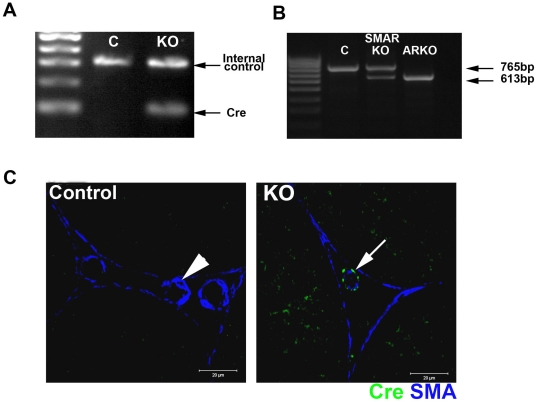
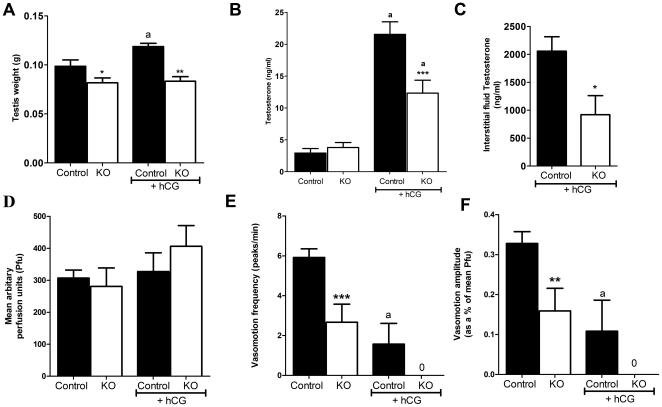
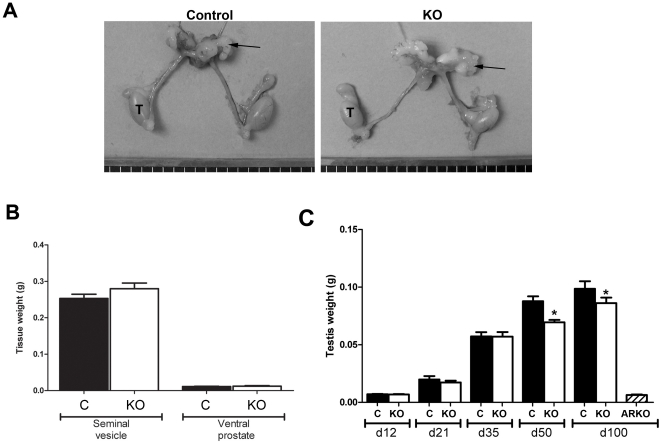
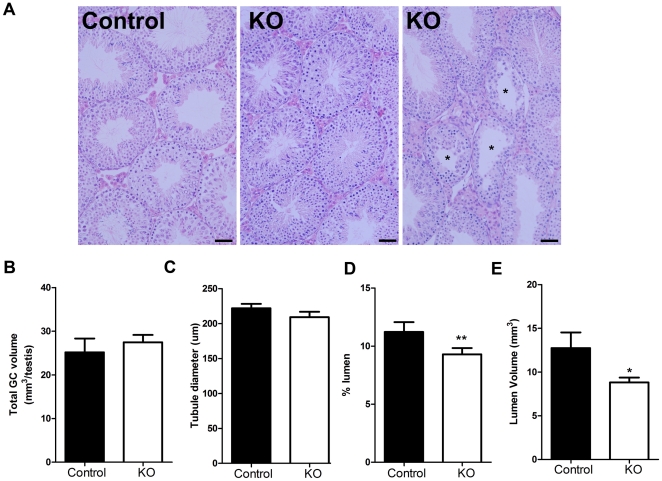
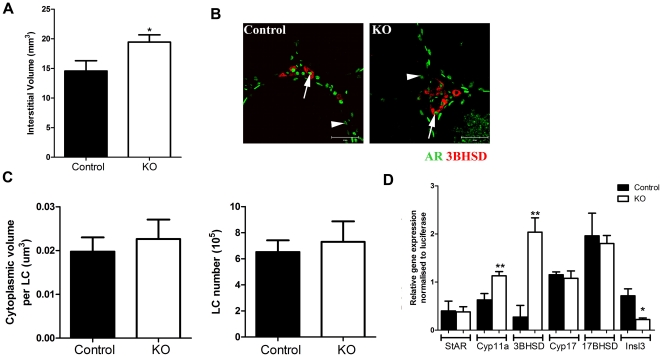
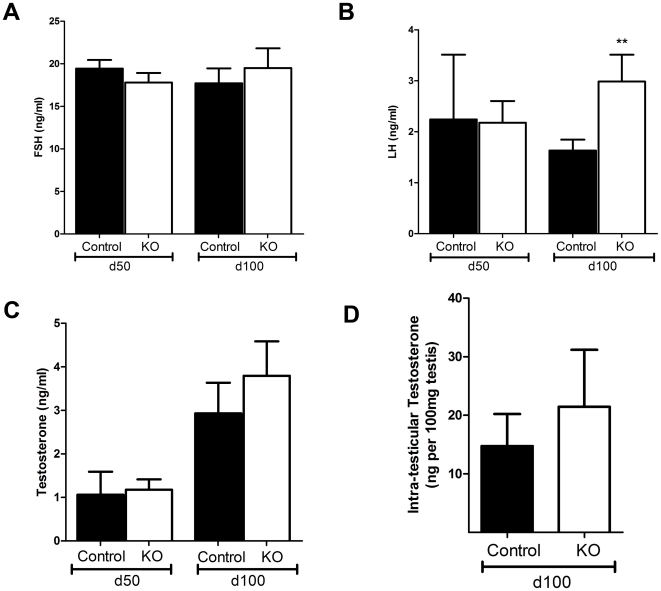
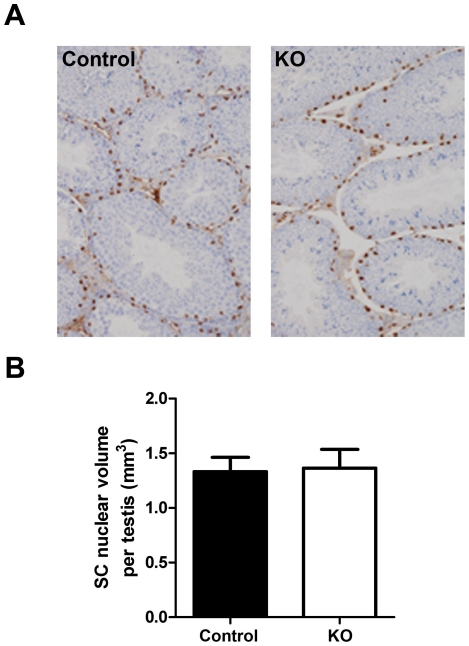
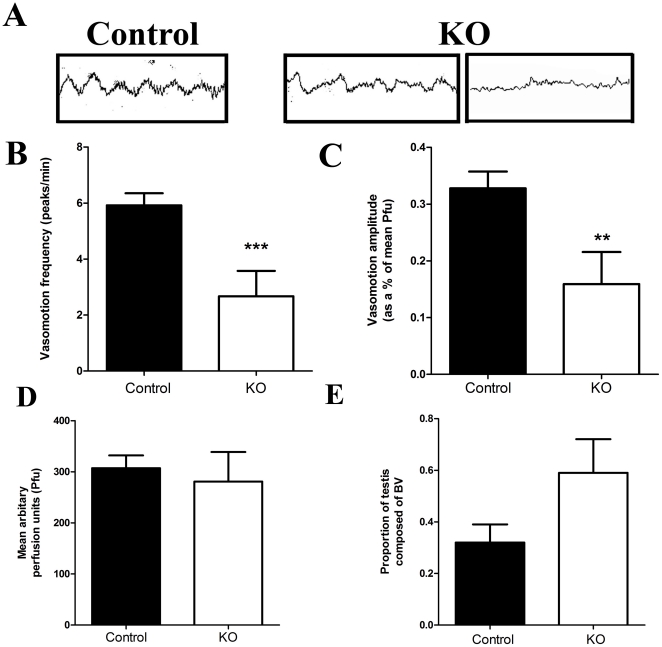
Regulation of blood flow through the testicular microvasculature by vasomotion is thought to be important for normal testis function as it regulates interstitial fluid (IF) dynamics which is an important intra-testicular transport medium. Androgens control vasomotion, but how they exert these effects remains unclear. One possibility is by signalling via androgen receptors (AR) expressed in testicular arteriole smooth muscle cells. To investigate this and determine the overall importance of this mechanism in testis function, we generated a blood vessel smooth muscle cell-specific AR knockout mouse (SMARKO). Gross reproductive development was normal in SMARKO mice but testis weight was reduced in adulthood compared to control littermates; this reduction was not due to any changes in germ cell volume or to deficits in testosterone, LH or FSH concentrations and did not cause infertility. However, seminiferous tubule lumen volume was reduced in adult SMARKO males while interstitial volume was increased, perhaps indicating altered fluid dynamics; this was associated with compensated Leydig cell failure. Vasomotion was impaired in adult SMARKO males, though overall testis blood flow was normal and there was an increase in the overall blood vessel volume per testis in adult SMARKOs. In conclusion, these results indicate that ablating arteriole smooth muscle AR does not grossly alter spermatogenesis or affect male fertility but does subtly impair Leydig cell function and testicular fluid exchange, possibly by locally regulating microvascular blood flow within the testis.
血管运动调节睾丸微血管的血流被认为对正常睾丸功能很重要,因为它调节间质液(IF)动力学,间质液是一种重要的睾丸内运输介质。雄激素控制血管运动,但它们如何发挥这些作用尚不清楚。一种可能性是通过在睾丸小动脉平滑肌细胞中表达的雄激素受体(AR)进行信号转导。为了研究这一点,并确定这种机制在睾丸功能中的整体重要性,我们生成了一种血管平滑肌细胞特异性 AR 敲除小鼠(SMARKO)。SMARKO 小鼠的生殖发育总体正常,但成年后睾丸重量比对照同窝仔鼠减少;这种减少不是由于生精细胞体积的任何变化,也不是由于睾酮、LH 或 FSH 浓度的缺陷,并且不会导致不育。然而,成年 SMARKO 雄性的曲细精管管腔体积减少,而间质体积增加,这可能表明流体动力学发生了变化;这与莱迪希细胞功能代偿性衰竭有关。成年 SMARKO 雄性的血管运动受损,尽管睾丸总血流量正常,而且成年 SMARKO 中每个睾丸的总血管体积增加。总之,这些结果表明,消除小动脉平滑肌 AR 不会严重改变精子发生或影响男性生育能力,但会微妙地损害莱迪希细胞功能和睾丸液体交换,可能通过局部调节睾丸内的微血管血流。