Baylor-Sammons Cancer Center/Texas Oncology, PA, GU Oncology Program, Dallas.
Onco Targets Ther. 2010 Oct 5;3:147-55. doi: 10.2147/ott.s12480.
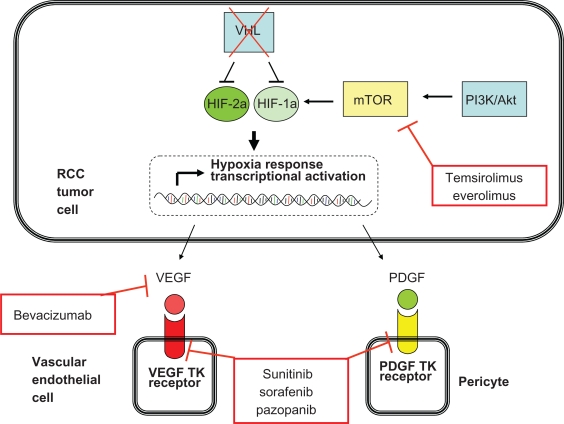
With the recent approval of pazopanib, an oral multitargeted tyrosine kinase inhibitor which potently targets vascular endothelial growth factor receptors 1-3, platelet-derived growth factor, and c-kit, six agents are now available for use in the management of metastatic renal cell carcinoma (RCC). Pazopanib has shown improved progression-free survival compared with placebo in treatment-naïve or cytokine-treated patients with metastatic RCC in large Phase II and Phase III clinical trials. Pazopanib has demonstrated a tolerable side effect profile and is currently being compared with sunitinib in a Phase III noninferiority trial. In this review, the outcomes of the clinical testing of pazopanib are discussed, as well as a perspective on the placement of pazopanib among other approved agents.
随着最近批准的帕唑帕尼(一种口服多靶点酪氨酸激酶抑制剂,可有效靶向血管内皮生长因子受体 1-3、血小板衍生生长因子和 c-kit)的使用,目前有六种药物可用于治疗转移性肾细胞癌(RCC)。在大型 II 期和 III 期临床试验中,与安慰剂相比,帕唑帕尼在治疗初治或细胞因子治疗的转移性 RCC 患者中显示出改善的无进展生存期。帕唑帕尼具有可耐受的副作用谱,目前正在与舒尼替尼进行 III 期非劣效性试验比较。在这篇综述中,讨论了帕唑帕尼的临床测试结果,以及在其他已批准的药物中放置帕唑帕尼的观点。