Department of Otolaryngology, University of Lübeck, Ratzeburger Allee 160, 23564, Lübeck, Germany.
Curr Allergy Asthma Rep. 2011 Feb;11(1):78-84. doi: 10.1007/s11882-010-0158-3.
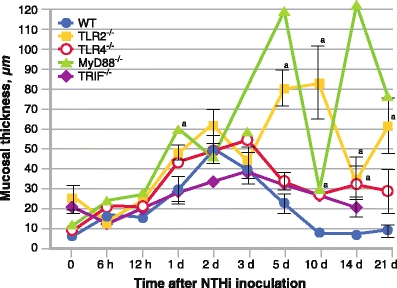
Otitis media (OM) is the most prevalent childhood disease in developed countries. Involvement of innate immunity mediated by Toll-like receptors (TLRs) in OM has been implicated primarily in cell lines and by association studies of innate immune gene polymorphisms with OM prevalence. However, the precise role of innate immunity in OM is incompletely understood. We review recent research that has advanced our understanding of how innate immunity in the middle ear is mediated by the interaction of pathogen molecules with receptors such as the TLRs, leading to the activation of adaptor molecules and production of proinflammatory cytokines. TLR genes and signaling molecules are upregulated in OM in a murine model. Deletion of several key innate immune genes results in persistent OM in mice, coupled with an inability to clear bacterial infection from the middle ear. It is concluded that an intact innate immune signaling system is critical to recovery from bacterial OM.
中耳炎(OM)是发达国家最常见的儿童疾病。Toll 样受体(TLRs)介导的固有免疫参与 OM 的主要作用是在细胞系中,并通过与 OM 患病率相关的固有免疫基因多态性的关联研究来表明。然而,固有免疫在 OM 中的确切作用还不完全清楚。我们回顾了最近的研究,这些研究增进了我们对中耳固有免疫如何通过病原体分子与 TLR 等受体的相互作用来介导的理解,从而导致衔接分子的激活和促炎细胞因子的产生。TLR 基因和信号分子在小鼠模型中的 OM 中上调。几种关键固有免疫基因的缺失会导致小鼠持续发生 OM,并伴有从中耳清除细菌感染的能力丧失。结论是,完整的固有免疫信号系统对细菌性 OM 的恢复至关重要。