Division of Electrical, Electronic and Information Engineering, Graduate School of Engineering, Osaka University, Suita, Japan.
PLoS One. 2010 Oct 29;5(10):e13738. doi: 10.1371/journal.pone.0013738.
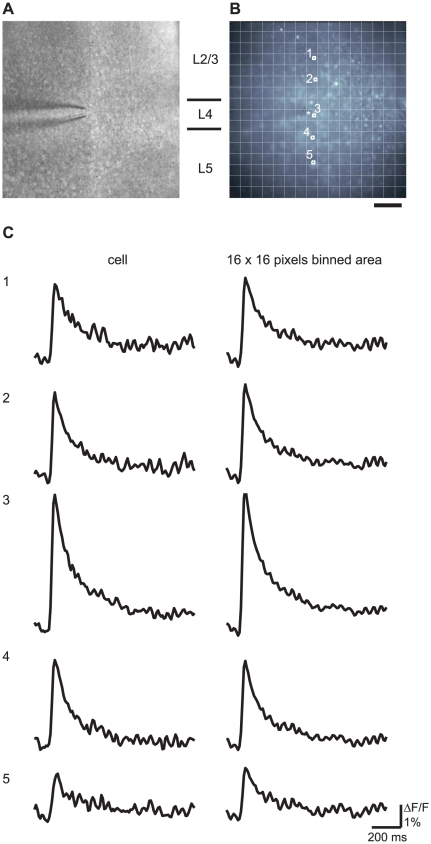
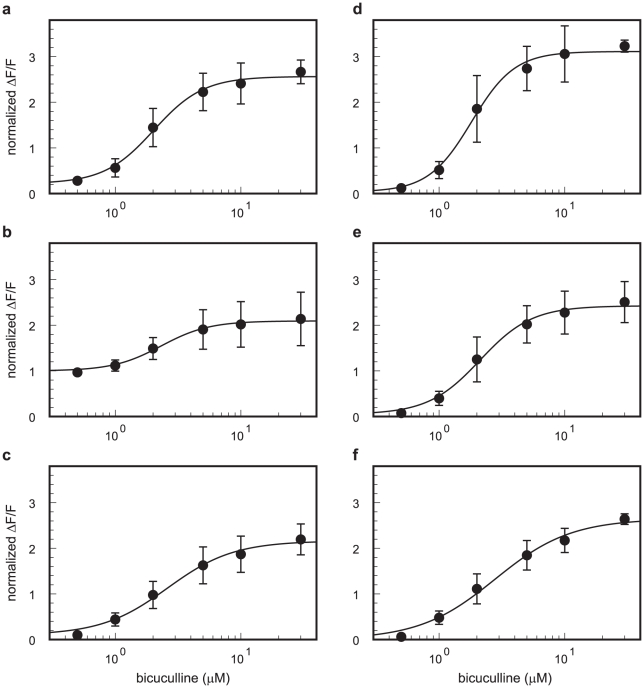
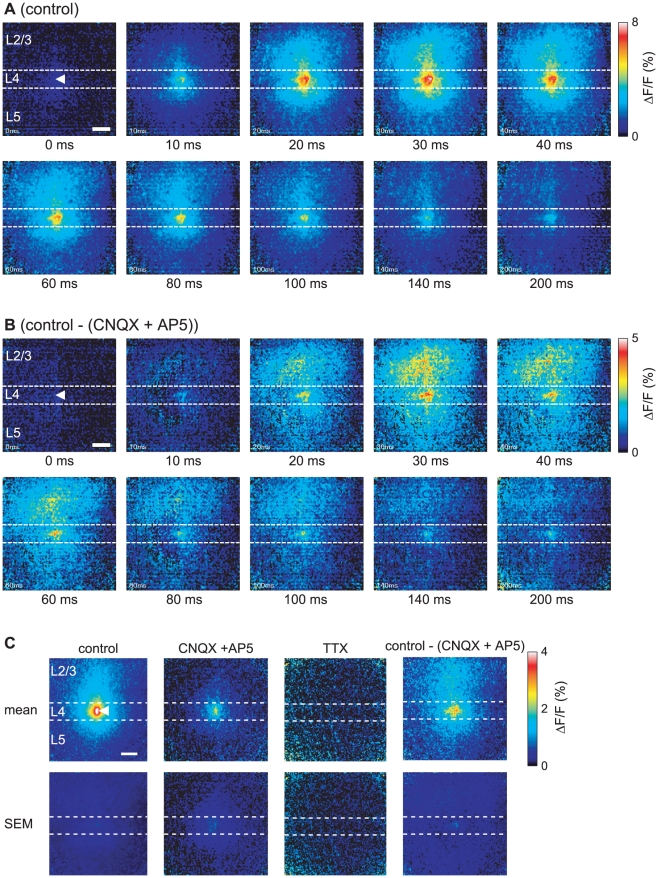
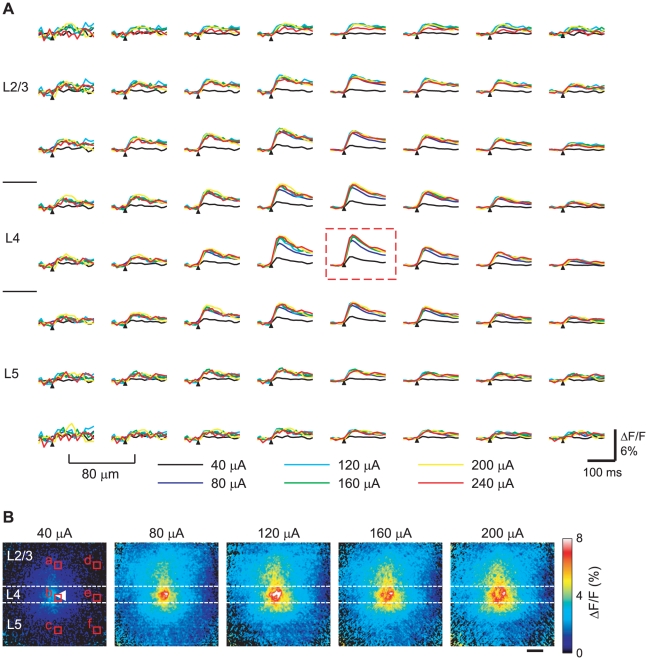
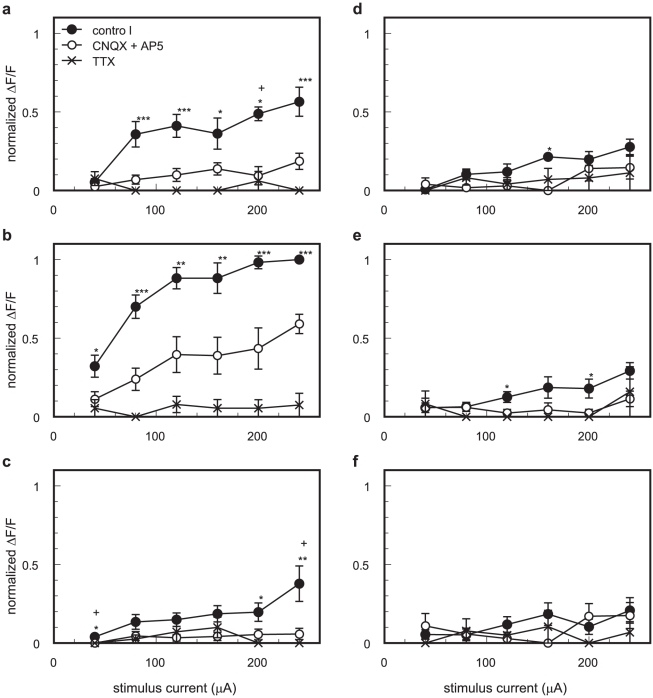
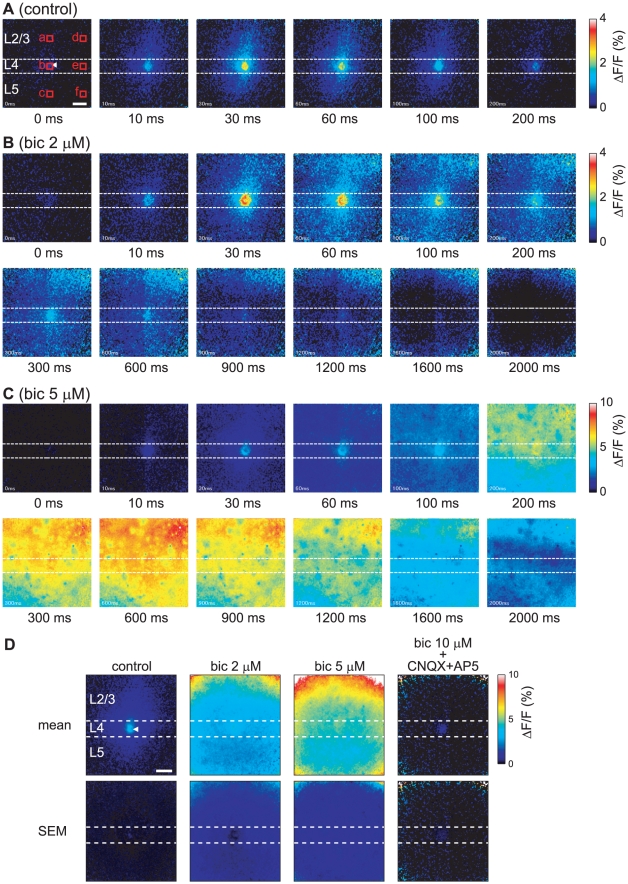
The calcium ion (Ca(2+)) is an important messenger for signal transduction, and the intracellular Ca(2+) concentration (Ca(2+)) changes in response to an excitation of the cell. To reveal the spatiotemporal properties of the propagation of an excitatory signal with action potentials in the primary visual cortical circuit, we conducted a Ca(2+) imaging study on slices of the mouse visual cortex. Electrical stimulation of layer 4 evoked Ca(2+) transients around the stimulus electrode. Subsequently, the high Ca(2+) region mainly propagated perpendicular to the cortical layer (vertical propagation), with horizontal propagation being restricted. When the excitatory synaptic transmission was blocked, only weak and concentric Ca(2+) transients were observed. When the action potential was blocked, the Ca(2+) transients disappeared almost completely. These results suggested that the action potential contributed to the induction of the Ca(2+) transients, and that excitatory synaptic connections were involved in the propagation of the high Ca(2+) region in the primary visual cortical circuit. To elucidate the involvement of inhibitory synaptic connections in signal propagation in the primary visual cortex, the GABA(A) receptor inhibitor bicuculline was applied. In this case, the evoked signal propagated from layer 4 to the entire field of view, and the prolonged Ca(2+) transients were observed compared with the control condition. Our results suggest that excitatory neurons are widely connected to each other over the entire primary visual cortex with recurrent synapses, and inhibitory neurons play a fundamental role in the organization of functional sub-networks by restricting the propagation of excitation signals.
钙离子(Ca(2+))是信号转导的重要信使,细胞内 Ca(2+)浓度(Ca(2+))会随细胞的兴奋而变化。为了揭示初级视觉皮层回路中动作电位兴奋信号的传播的时空特性,我们对小鼠视觉皮层切片进行了 Ca(2+)成像研究。刺激 4 层会在刺激电极周围引起Ca(2+)瞬变。随后,高Ca(2+)区域主要沿皮层层垂直传播(垂直传播),水平传播受限。当兴奋型突触传递被阻断时,仅观察到微弱且同心的Ca(2+)瞬变。当动作电位被阻断时,Ca(2+)瞬变几乎完全消失。这些结果表明,动作电位有助于诱导Ca(2+)瞬变,而兴奋性突触连接参与了初级视觉皮层回路中高Ca(2+)区域的传播。为了阐明抑制性突触连接在初级视觉皮层信号传播中的作用,我们应用了 GABA(A)受体抑制剂荷包牡丹碱。在这种情况下,诱发信号从 4 层传播到整个视野,与对照条件相比,观察到Ca(2+)瞬变延长。我们的结果表明,兴奋性神经元通过回返突触在整个初级视觉皮层中广泛相互连接,抑制性神经元通过限制兴奋信号的传播,在功能子网的组织中发挥着基本作用。