Department of Physiology, Hypertension and Renal Center of Excellence, Tulane University, 1430 Tulane Ave, New Orleans, LA 70112, USA.
Microvasc Res. 2011 Jan;81(1):135-42. doi: 10.1016/j.mvr.2010.11.001. Epub 2010 Nov 8.
we previously showed that epidermal growth factor receptor tyrosine kinase (EGFRtk) is essential in the development of myogenic tone. GRB2-SOS, protein kinase B (Akt), Janus kinase (JAK), and Signal Transducer and Activator of Transcription 3 (STAT3) are activated by stretch. Thus, we hypothesized that GRB2-SOS, Akt, JAK and STAT3 are downstream signaling of the EGFR and play role in myogenic tone.
myogenic tone was determined in freshly isolated coronary arterioles from C57/BL6 mice with and without inhibitors. Pressurized coronary arterioles under 25 and 75mm Hg were subjected to Western blot analysis to determine signaling phosphorylation. Smooth muscle cells (SMC) stimulated with EGF were used to determine the interaction between signaling.
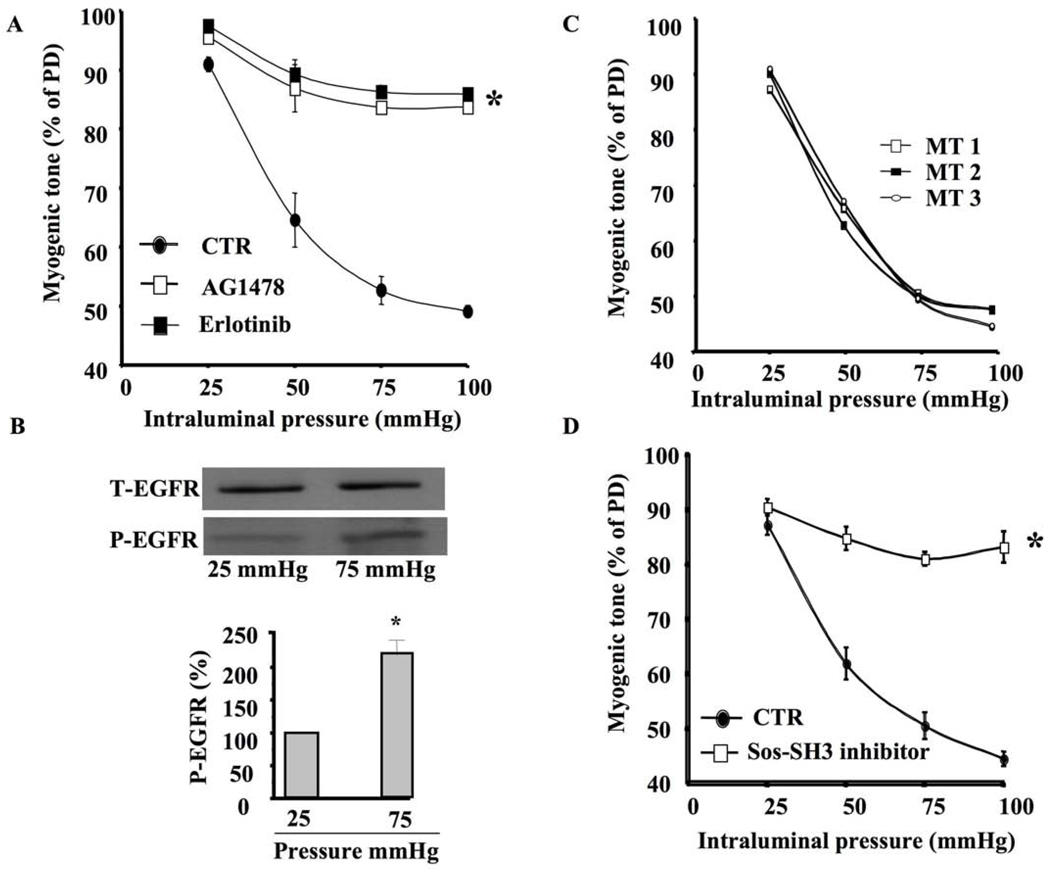
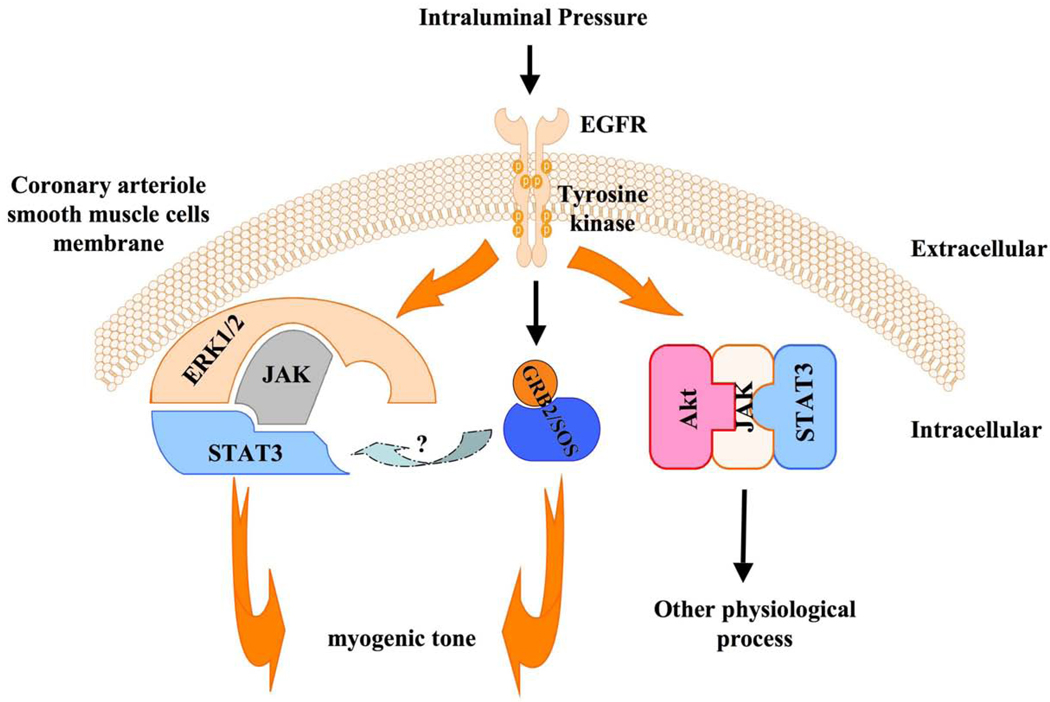
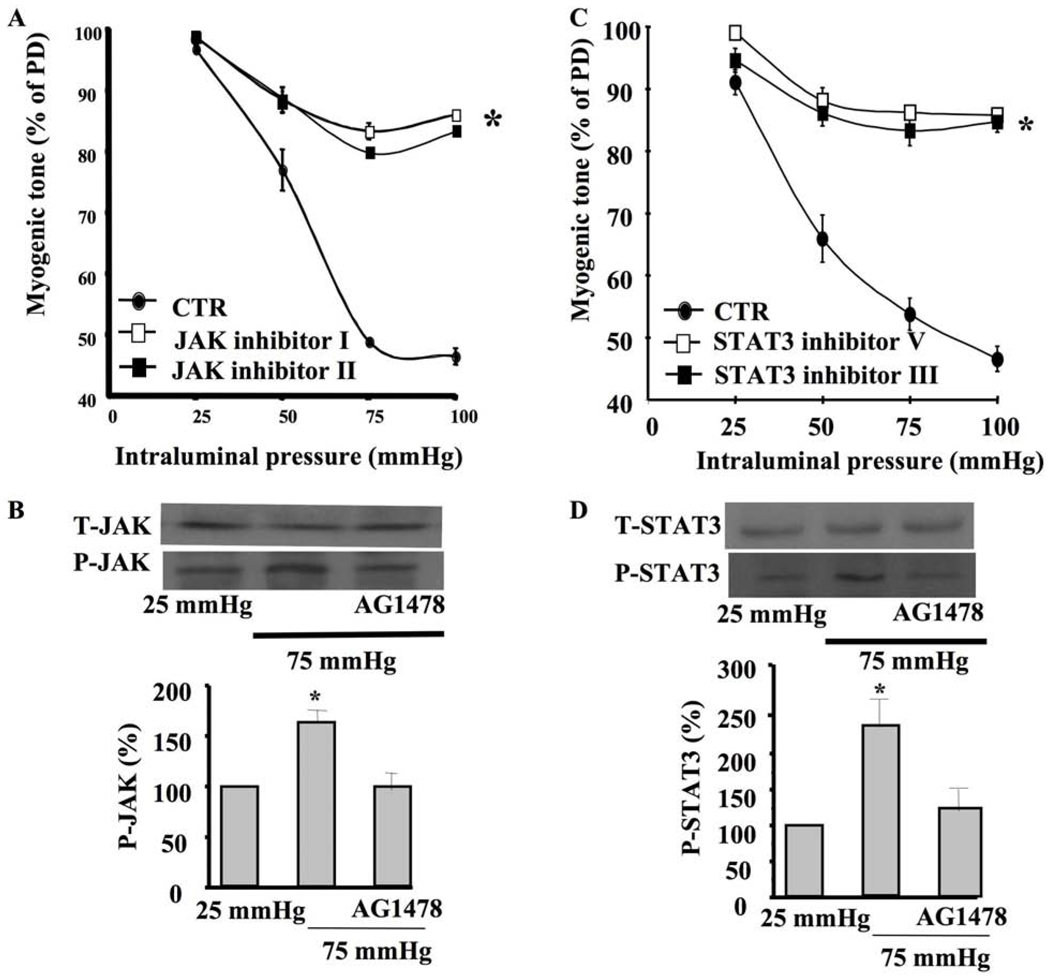
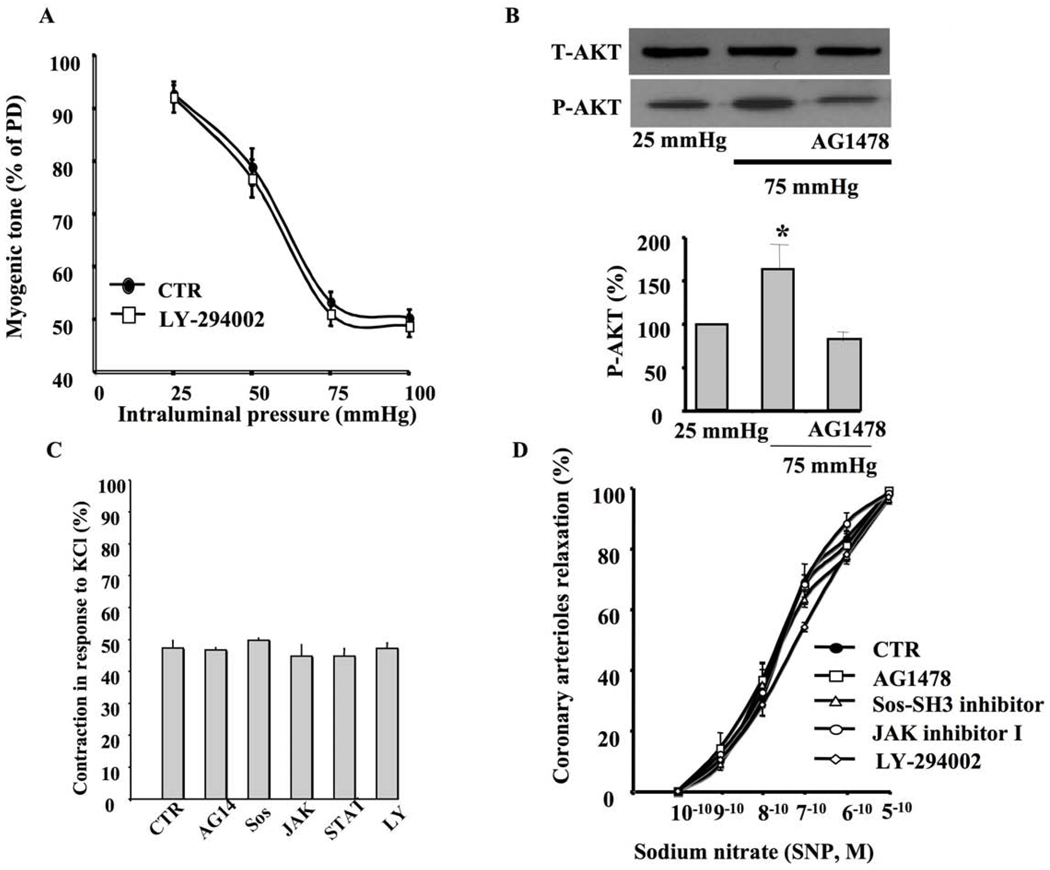
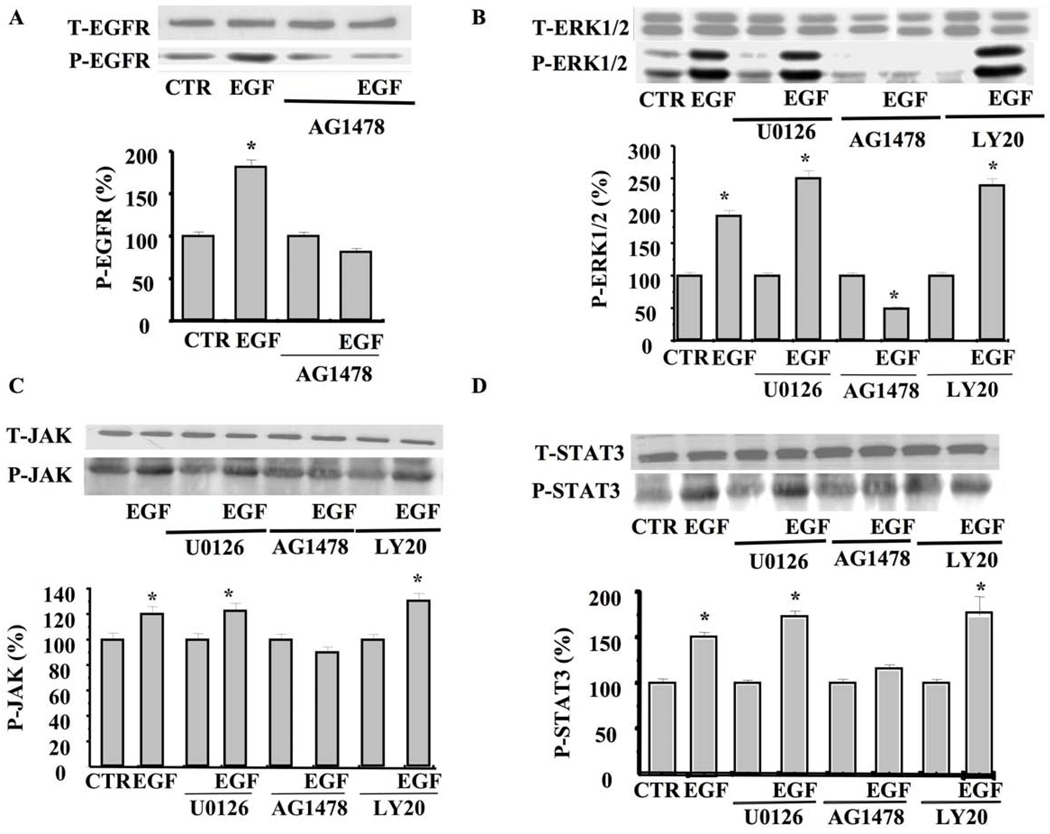
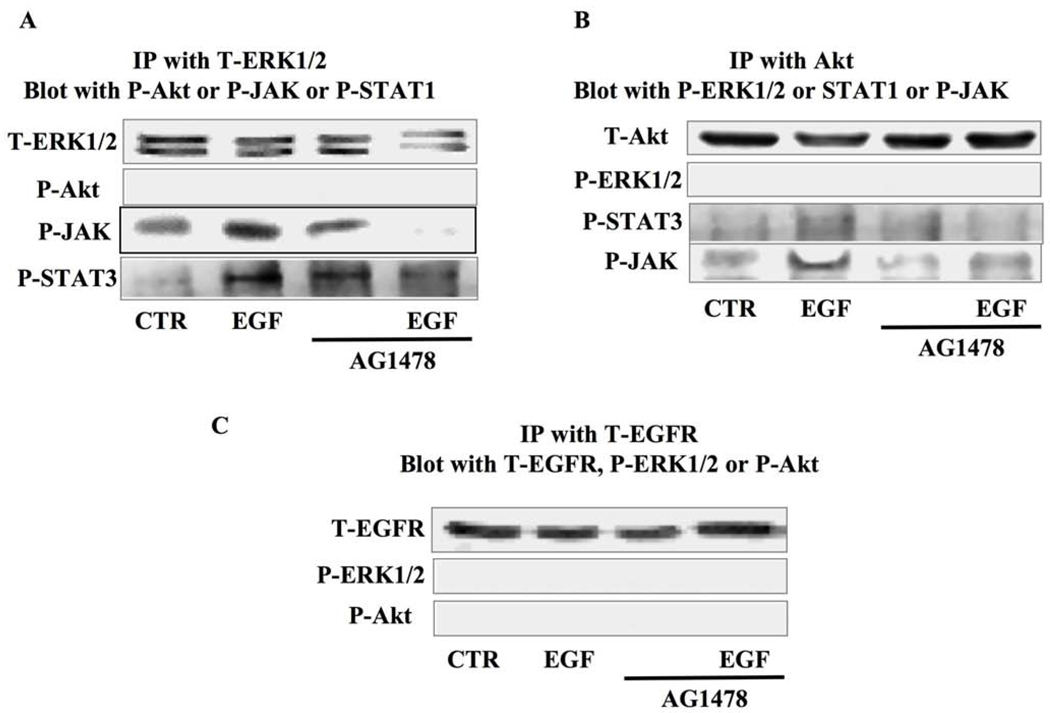
coronary arteriole myogenic tone was significantly reduced under EGFRtk, GRB2-SOS, JAK, and STAT3 inhibition (53.6 ± 2 vs. 83.4 ± 1.3; 82.8 ± 1; 83.6 ± 1; 86.1 ± 1% of passive diameter at 75mm Hg, p<0.05, respectively). However, Akt inhibition had no effect on coronary arteriole myogenic tone. Western blot analysis showed increased EGFRtk, STAT3, JAK, and Akt phosphorylation at 75mm Hg, which was significantly inhibited under EGFRtk inhibition. Interestingly, immunoprecipitation/Western blot analysis showed two intracellular complexes (ERK1/2-JAK-STAT3) involved in myogenic tone and (Akt-JAK-STAT3) not involved in myogenic tone.
these findings demonstrate that ERK1/2-JAK-STAT3 complex and GRB2-SOS, down stream signaling of the EGFRtk, are critical in the development of myogenic tone, thereby highlighting these signaling events as potential therapeutic targets in cardiovascular disease states associated with altered myogenic tone.
我们之前的研究表明,表皮生长因子受体酪氨酸激酶(EGFRtk)在肌源性张力的发展中是必不可少的。GRB2-SOS、蛋白激酶 B(Akt)、Janus 激酶(JAK)和信号转导和转录激活因子 3(STAT3)在拉伸时被激活。因此,我们假设 GRB2-SOS、Akt、JAK 和 STAT3 是 EGFR 的下游信号转导分子,并在肌源性张力中发挥作用。
在有和没有抑制剂的情况下,用 C57/BL6 小鼠新鲜分离的冠状动脉小动脉来测定肌源性张力。在 25 和 75mmHg 下对加压的冠状动脉小动脉进行 Western blot 分析,以确定信号转导的磷酸化。用 EGF 刺激平滑肌细胞(SMC)来确定信号转导的相互作用。
在 EGFRtk、GRB2-SOS、JAK 和 STAT3 抑制下,冠状动脉小动脉肌源性张力显著降低(分别为 53.6±2%和 83.4±1.3%、82.8±1%、83.6±1%和 86.1±1%的被动直径在 75mmHg 下,p<0.05)。然而,Akt 抑制对冠状动脉小动脉肌源性张力没有影响。Western blot 分析显示,在 75mmHg 下 EGFRtk、STAT3、JAK 和 Akt 的磷酸化增加,而在 EGFRtk 抑制下,这种增加明显受到抑制。有趣的是,免疫沉淀/Western blot 分析显示,两个细胞内复合物(ERK1/2-JAK-STAT3)参与肌源性张力,而(Akt-JAK-STAT3)不参与肌源性张力。
这些发现表明,ERK1/2-JAK-STAT3 复合物和 EGFRtk 的下游信号转导分子 GRB2-SOS,在肌源性张力的发展中是至关重要的,从而突出了这些信号事件作为与肌源性张力改变相关的心血管疾病状态的潜在治疗靶点。