Department of Anatomy, Cell Biology, Physiology and Biophysics, Institute of Biology, University of Campinas, CP 6109, CEP 13083-970, Campinas, SP, Brazil.
J Neuroinflammation. 2010 Nov 12;7:77. doi: 10.1186/1742-2094-7-77.
Interferon gamma (IFNγ) is a pro-inflammatory cytokine, which may be up-regulated after trauma to the peripheral or central nervous system. Such changes include reactive gliosis and synaptic plasticity that are considered important responses to the proper regenerative response after injury. Also, IFNγ is involved in the upregulation of the major histocompatibility complex class I (MHC class I), which has recently been shown to play an important role in the synaptic plasticity process following axotomy. There is also evidence that IFNγ may interfere in the differentiation and survival of neuronal cells. However, little is known about the effects of IFNγ absence on spinal cord neurons after injury.
We performed a unilateral sciatic nerve transection injury in C57BL/6J (wild type) and IFNγ-KO (mutant) mice and studied motoneuron morphology using light and electron microscopy. One week after the lesion, mice from both strains were sacrificed and had their lumbar spinal cords processed for histochemistry (n = 5 each group) and transmission electron microscopy (TEM, n = 5 each group). Spinal cord sections from non-lesioned animals were also used to investigate neuronal survival and the presence of apoptosis with TUNEL and immunohistochemistry.
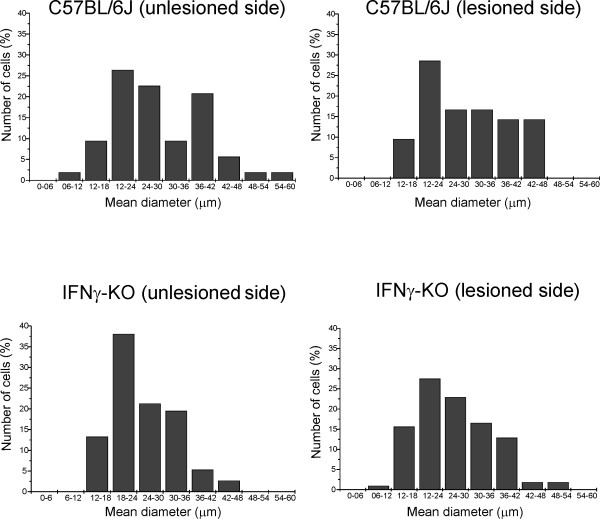
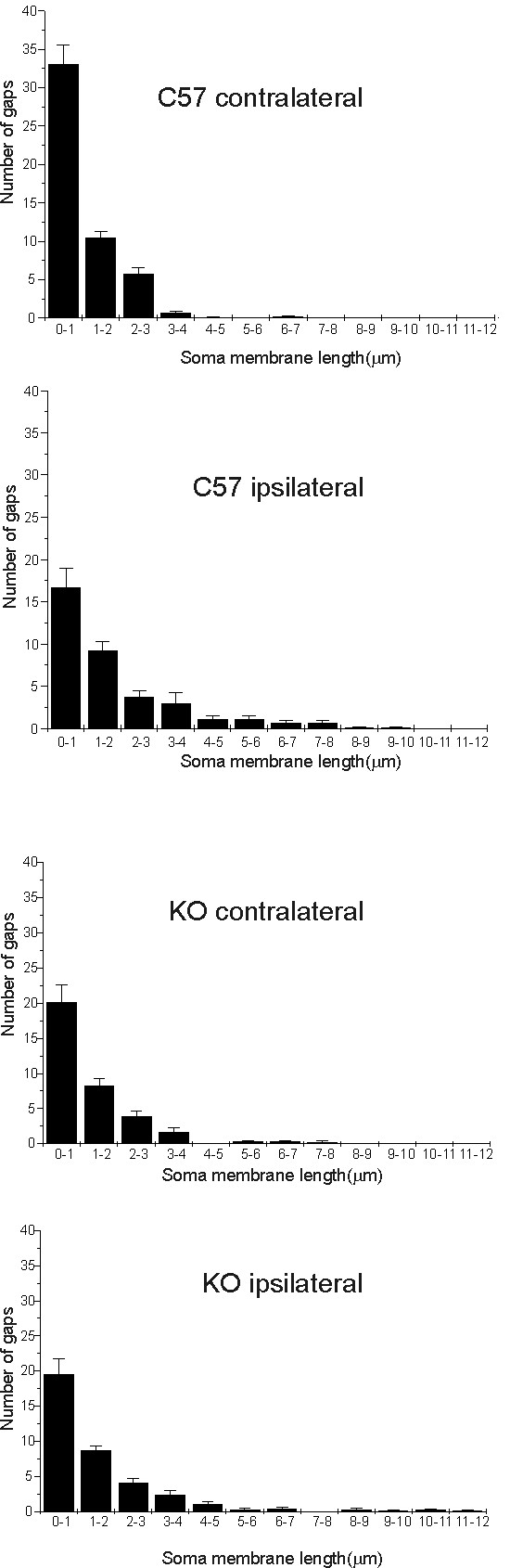
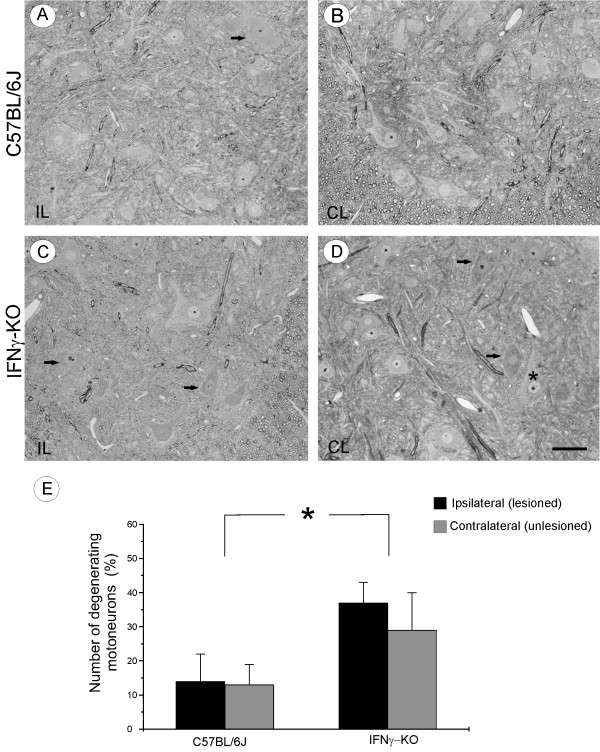
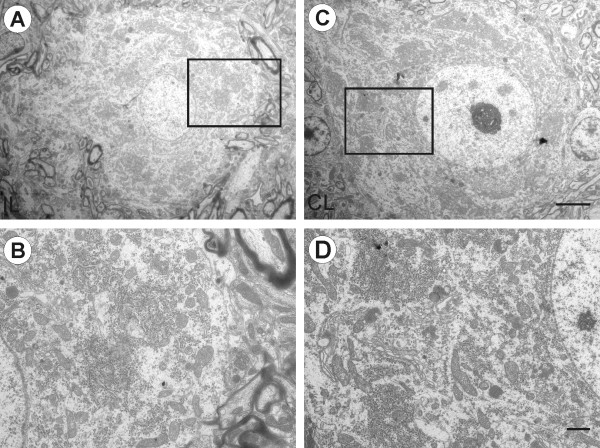
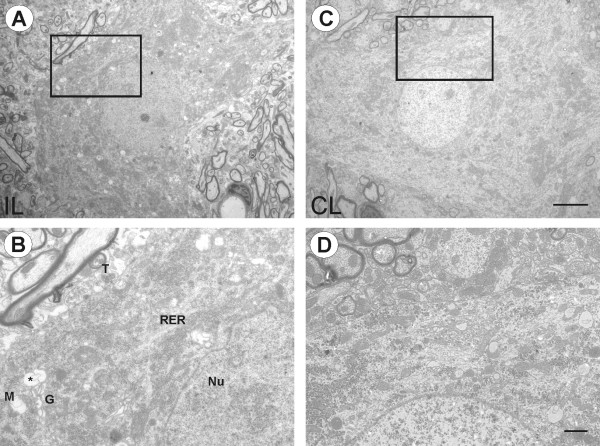
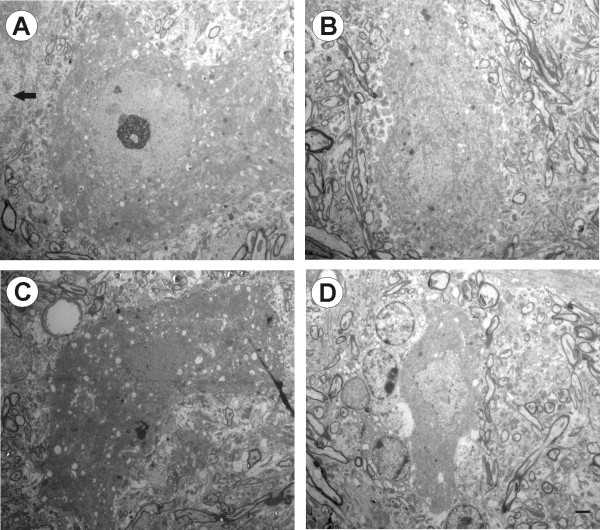
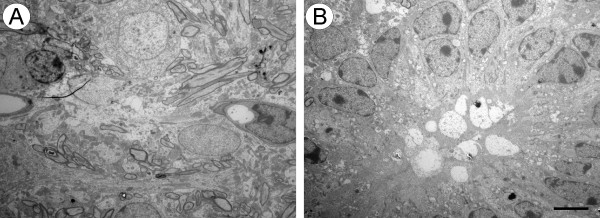
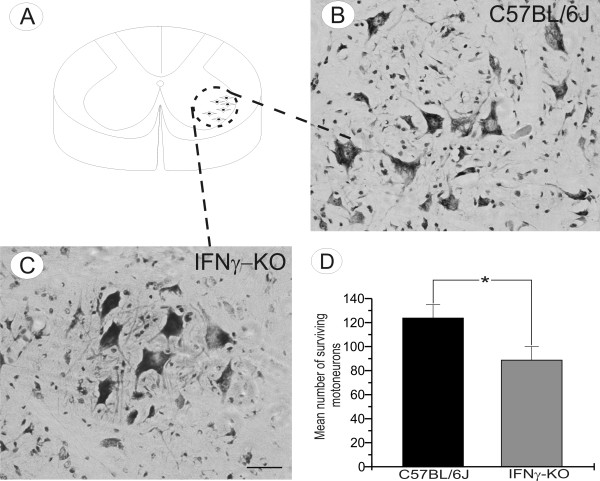
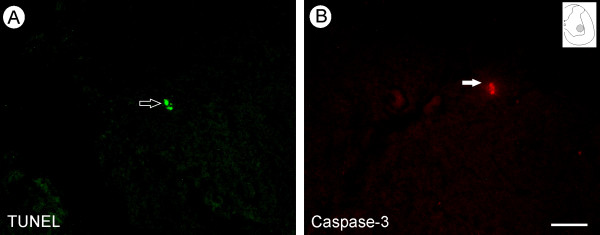
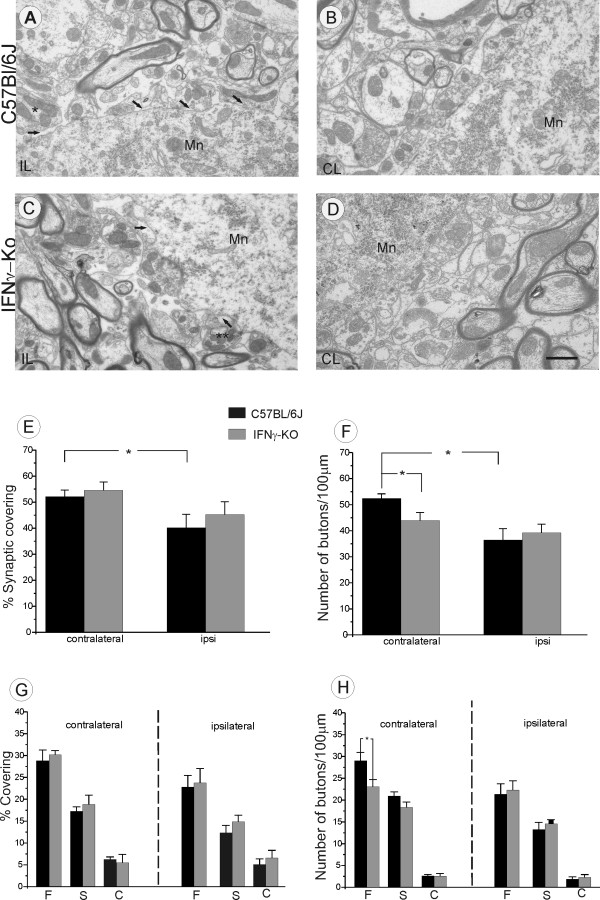
We find that presumed motoneurons in the lower lumbar ventral horn exhibited a smaller soma size in the IFNγ-KO series, regardless of nerve lesion. In plastic embedded sections stained with toluidine blue, the IFNγ-KO mice demonstrated a greater proportion of degenerating neurons in the ventral horn when compared to the control series (p < 0.05). Apoptotic death is suggested based on TUNEL and caspase 3 immunostaining. A sciatic nerve axotomy did not further aggravate the neuronal loss. The cellular changes were supported by electron microscopy, which demonstrated ventral horn neurons exhibiting intracellular vacuoles as well as degenerating nuclei and cytoplasm in the IFNγ-KO mice. Adjacent glial cells showed features suggestive of phagocytosis. Additional ultrastructural studies showed a decreased number of pre-synaptic terminals apposing to motoneurons in mutant mice. Nevertheless, no statistical difference regarding the input covering could be detected among the studied strains.
Altogether, these results suggest that IFNγ may be neuroprotective and its absence results in neuronal death, which is not further increased by peripheral axotomy.
干扰素 γ(IFNγ)是一种促炎细胞因子,在外周或中枢神经系统受到创伤后可能会被上调。这些变化包括反应性神经胶质增生和突触可塑性,被认为是损伤后适当再生反应的重要反应。此外,IFNγ参与主要组织相容性复合体 I 类(MHC 类 I)的上调,最近研究表明,它在轴突切断后突触可塑性过程中发挥重要作用。也有证据表明 IFNγ可能干扰神经元细胞的分化和存活。然而,对于 IFNγ 缺失对损伤后脊髓神经元的影响知之甚少。
我们在 C57BL/6J(野生型)和 IFNγ-KO(突变型)小鼠中进行了单侧坐骨神经横断损伤,并使用光镜和电子显微镜研究运动神经元形态。损伤后 1 周,每组处死 5 只小鼠,对其腰脊髓进行组织化学(每组 5 只)和透射电镜(每组 5 只)处理。还使用未受损动物的脊髓切片通过 TUNEL 和免疫组织化学法研究神经元存活和凋亡情况。
我们发现,无论神经损伤如何,下腰椎腹角中的假定运动神经元在 IFNγ-KO 系列中表现出更小的胞体大小。在甲苯胺蓝染色的塑料包埋切片中,与对照系列相比,IFNγ-KO 小鼠的腹角中表现出更多比例的变性神经元(p<0.05)。基于 TUNEL 和 caspase 3 免疫染色,提示发生了凋亡性死亡。坐骨神经轴突切断术并未进一步加重神经元丢失。电子显微镜证实了细胞变化,显示 IFNγ-KO 小鼠的腹角神经元表现出细胞内空泡以及变性核和细胞质。相邻的神经胶质细胞表现出吞噬作用的特征。进一步的超微结构研究表明,突变小鼠中与运动神经元吻合的前突触末端数量减少。然而,在所研究的品系之间未检测到输入覆盖的统计学差异。
总之,这些结果表明 IFNγ 可能具有神经保护作用,其缺失会导致神经元死亡,而外周轴突切断不会进一步增加神经元死亡。