Robert W. Franz Cancer Research Center, Earle A. Chiles Research Institute, Providence Cancer Center, Providence Portland Medical Center, Portland, OR 97213, USA.
Semin Oncol. 2010 Oct;37(5):524-32. doi: 10.1053/j.seminoncol.2010.09.013.
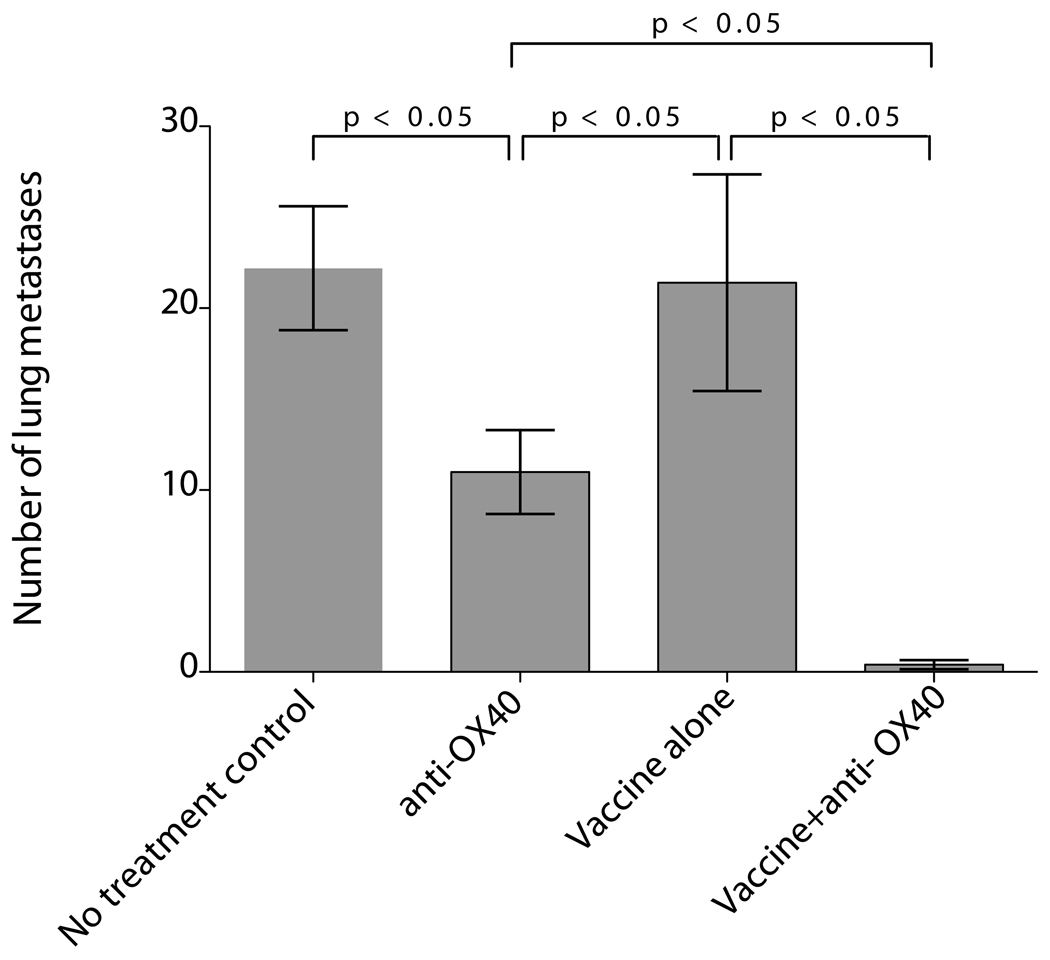
The existence of tumor-specific T cells, as well as their ability to be primed in cancer patients, confirms that the immune response can be deployed to combat cancer. However, there are obstacles that must be overcome to convert the ineffective immune response commonly found in the tumor environment to one that leads to sustained destruction of tumor. Members of the tumor necrosis factor (TNF) superfamily direct diverse immune functions. OX40 and its ligand, OX40L, are key TNF members that augment T-cell expansion, cytokine production, and survival. OX40 signaling also controls regulatory T-cell differentiation and suppressive function. Studies over the past decade have demonstrated that OX40 agonists enhance antitumor immunity in preclinical models using immunogenic tumors; however, treatment of poorly immunogenic tumors has been less successful. Combining strategies that prime tumor-specific T cells together with OX40 signaling could generate and maintain a therapeutic antitumor immune response.
肿瘤特异性 T 细胞的存在,以及它们在癌症患者中被激活的能力,证实了免疫反应可以被用来对抗癌症。然而,要将肿瘤微环境中常见的无效免疫反应转化为能够持续破坏肿瘤的反应,还存在许多障碍需要克服。肿瘤坏死因子(TNF)超家族成员可调节多种免疫功能。OX40 及其配体 OX40L 是增强 T 细胞扩增、细胞因子产生和存活的关键 TNF 成员。OX40 信号还控制调节性 T 细胞分化和抑制功能。过去十年的研究表明,OX40 激动剂可增强免疫原性肿瘤的临床前模型中的抗肿瘤免疫;然而,对免疫原性差的肿瘤的治疗效果则不太理想。将诱导肿瘤特异性 T 细胞与 OX40 信号相结合的策略可以产生和维持治疗性抗肿瘤免疫反应。