The Division of Cardiovascular Medicine, The Gill Heart Institute, Lexington, KY 40536-0509, United States.
Thromb Res. 2011 Mar;127(3):184-8. doi: 10.1016/j.thromres.2010.10.010. Epub 2010 Nov 13.
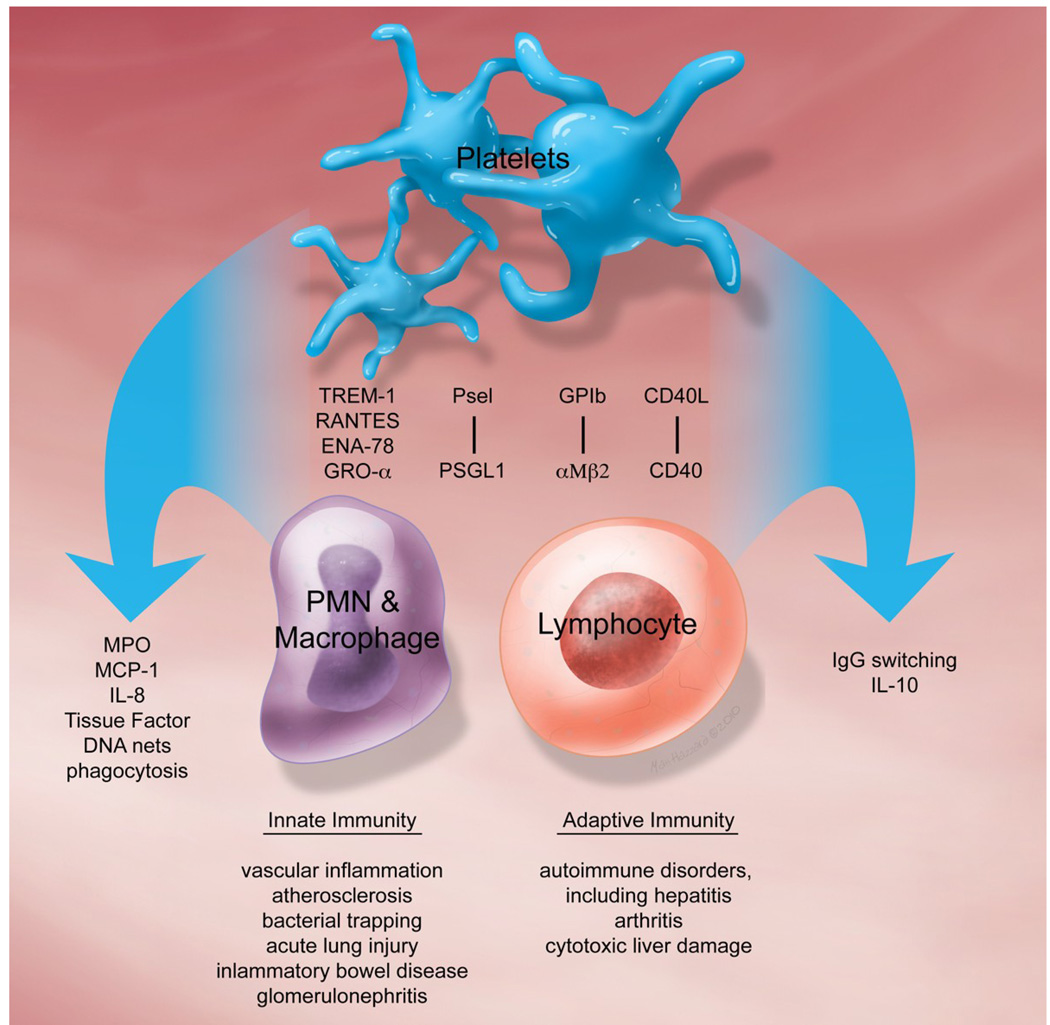
Platelets occupy a central role at the interface between thrombosis and inflammation. At sites of vascular damage, adherent platelets physically and functionally interact with circulating leukocytes. Activated platelets release soluble factors into circulation that may have local and systemic effects on blood and vascular cells. Platelets can also interact with a wide variety of microbial pathogens. Emerging evidence from animal models suggests that platelets may participate in a wide variety of processes involving tissue injury, immune responses and repair that underlie diverse diseases such as atherosclerosis, autoimmune disorders, inflammatory lung and bowel disorders, host-defense responses and sepsis. In this review, we summarize the general mechanisms by which platelets may contribute to immune function, and then discuss evidence for their role in host defense responses and sepsis from preclinical and clinical studies.
血小板在血栓形成和炎症之间的界面中起着核心作用。在血管损伤部位,黏附的血小板与循环中的白细胞在物理和功能上相互作用。活化的血小板将可溶性因子释放到循环中,这些因子可能对血液和血管细胞产生局部和全身影响。血小板还可以与多种微生物病原体相互作用。来自动物模型的新证据表明,血小板可能参与多种涉及组织损伤、免疫反应和修复的过程,这些过程是动脉粥样硬化、自身免疫性疾病、炎症性肺和肠道疾病、宿主防御反应和脓毒症等多种疾病的基础。在这篇综述中,我们总结了血小板可能有助于免疫功能的一般机制,然后讨论了来自临床前和临床研究的血小板在宿主防御反应和脓毒症中的作用证据。