Department of Neurosciences, University of California San Diego, La Jolla, California, USA.
Nat Neurosci. 2010 Dec;13(12):1505-10. doi: 10.1038/nn.2691. Epub 2010 Nov 14.
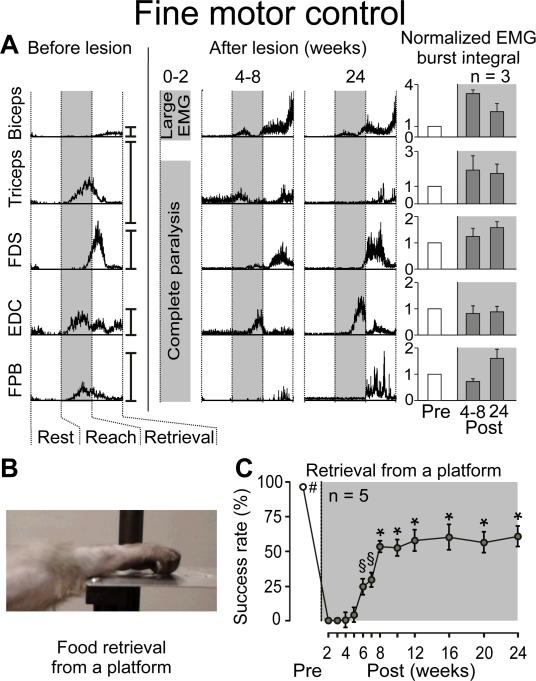
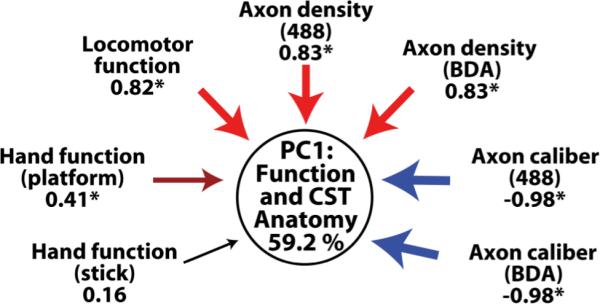
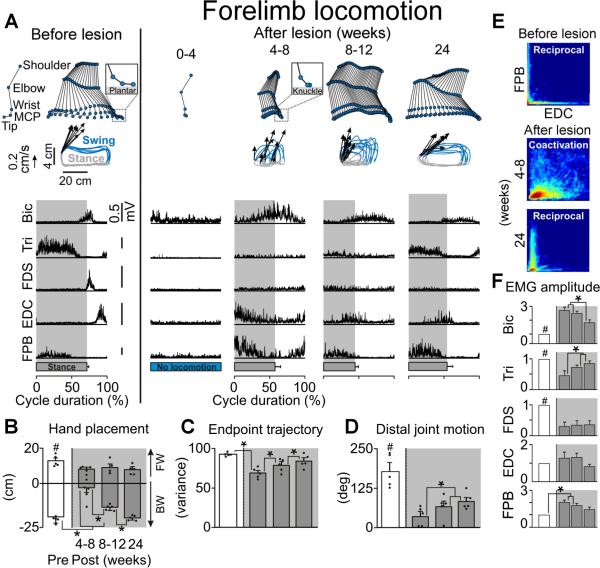
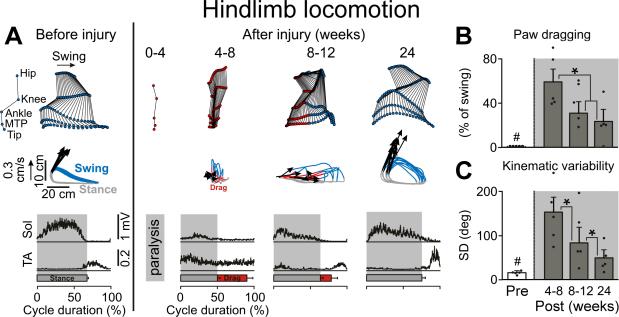
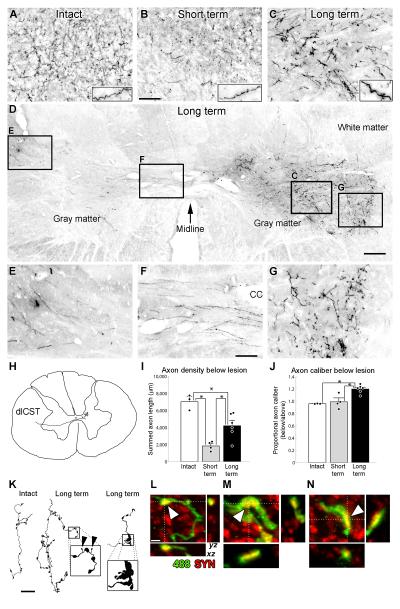
Although axonal regeneration after CNS injury is limited, partial injury is frequently accompanied by extensive functional recovery. To investigate mechanisms underlying spontaneous recovery after incomplete spinal cord injury, we administered C7 spinal cord hemisections to adult rhesus monkeys and analyzed behavioral, electrophysiological and anatomical adaptations. We found marked spontaneous plasticity of corticospinal projections, with reconstitution of fully 60% of pre-lesion axon density arising from sprouting of spinal cord midline-crossing axons. This extensive anatomical recovery was associated with improvement in coordinated muscle recruitment, hand function and locomotion. These findings identify what may be the most extensive natural recovery of mammalian axonal projections after nervous system injury observed to date, highlighting an important role for primate models in translational disease research.
尽管中枢神经系统损伤后的轴突再生受到限制,但部分损伤通常伴随着广泛的功能恢复。为了研究不完全性脊髓损伤后自发恢复的机制,我们对成年恒河猴进行 C7 脊髓半切,并分析了行为、电生理和解剖学的适应性。我们发现皮质脊髓投射有明显的自发可塑性,通过脊髓中线交叉轴突的发芽,重新形成了完全 60%的损伤前轴突密度。这种广泛的解剖学恢复与协调肌肉募集、手部功能和运动能力的改善有关。这些发现确定了迄今为止在神经系统损伤后观察到的哺乳动物轴突投射最广泛的自然恢复,突出了灵长类动物模型在转化疾病研究中的重要作用。