Department of Clinical Neurological Sciences, Schulich School of Medicine, University of Western Ontario, Canada.
Am J Psychiatry. 2011 Feb;168(2):152-62. doi: 10.1176/appi.ajp.2010.10010129. Epub 2010 Nov 15.
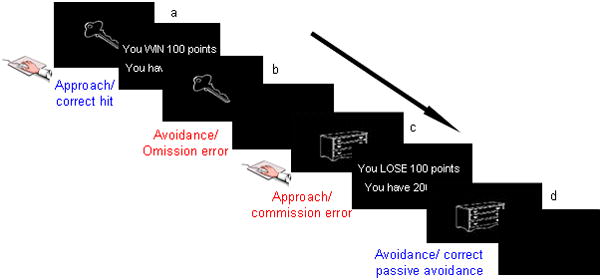
Dysfunction in the amygdala and orbitofrontal cortex has been reported in youths and adults with psychopathic traits. The specific nature of the functional irregularities within these structures remains poorly understood. The authors used a passive avoidance task to examine the responsiveness of these systems to early stimulus-reinforcement exposure, when prediction errors are greatest and learning maximized, and to reward in youths with psychopathic traits and comparison youths.
While performing the passive avoidance learning task, 15 youths with conduct disorder or oppositional defiant disorder plus a high level of psychopathic traits and 15 healthy subjects completed a 3.0-T fMRI scan.
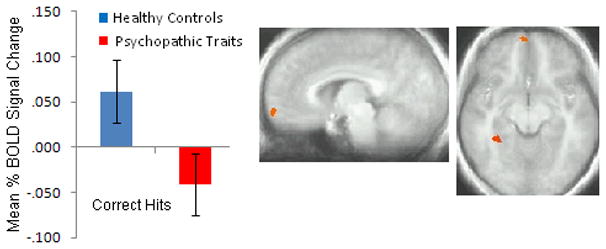
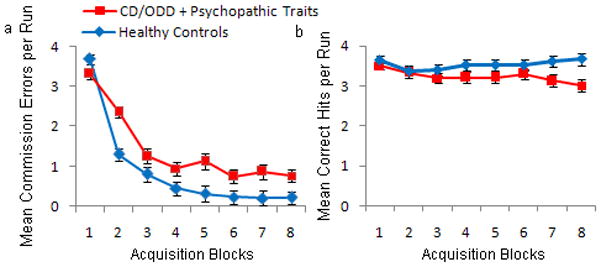
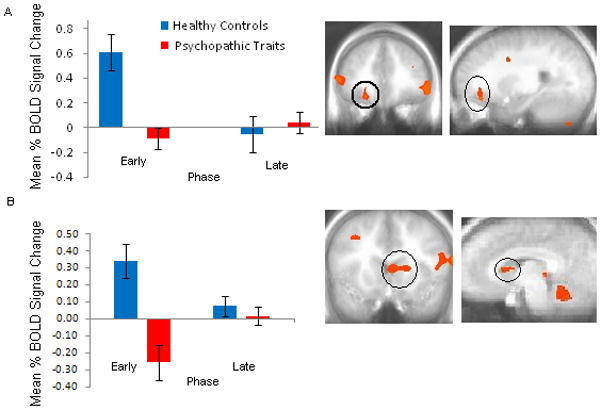
Relative to the comparison youths, the youths with a disruptive behavior disorder plus psychopathic traits showed less orbitofrontal responsiveness both to early stimulus-reinforcement exposure and to rewards, as well as less caudate response to early stimulus-reinforcement exposure. There were no group differences in amygdala responsiveness to these two task measures, but amygdala responsiveness throughout the task was lower in the youths with psychopathic traits.
Compromised sensitivity to early reinforcement information in the orbitofrontal cortex and caudate and to reward outcome information in the orbitofrontal cortex of youths with conduct disorder or oppositional defiant disorder plus psychopathic traits suggests that the integrated functioning of the amygdala, caudate, and orbitofrontal cortex may be disrupted. This provides a functional neural basis for why such youths are more likely to repeat disadvantageous decisions. New treatment possibilities are raised, as pharmacologic modulations of serotonin and dopamine can affect this form of learning.
在具有精神病特质的青少年和成年人中,已经报道了杏仁核和眶额皮层的功能障碍。这些结构内功能异常的具体性质仍知之甚少。作者使用被动回避任务来检查这些系统对早期刺激-强化暴露的反应性,因为预测错误最大,学习最大化,并且在具有精神病特质的青少年和比较青少年中奖励。
在执行被动回避学习任务时,15 名患有品行障碍或对立违抗性障碍且具有高水平精神病特质的青少年和 15 名健康受试者完成了 3.0-T fMRI 扫描。
与比较青少年相比,具有破坏性行为障碍和精神病特质的青少年在早期刺激-强化暴露和奖励方面表现出较少的眶额皮质反应性,以及在早期刺激-强化暴露方面表现出较少的尾状核反应性。两组在这两个任务指标的杏仁核反应性上均无差异,但具有精神病特质的青少年在整个任务中的杏仁核反应性较低。
具有品行障碍或对立违抗性障碍且具有精神病特质的青少年的眶额皮层和尾状核对早期强化信息以及眶额皮层对奖励结果信息的敏感性降低,表明杏仁核、尾状核和眶额皮层的综合功能可能受到干扰。这为为什么这些青少年更有可能重复不利决策提供了一个功能神经基础。由于 5-羟色胺和多巴胺的药物调节可以影响这种形式的学习,因此提出了新的治疗可能性。