Roeska Kerstin, Seilheimer Bernd
Biologische Heilmittel Heel GmbH, Baden-Baden, Germany.
J Immune Based Ther Vaccines. 2010 Nov 16;8:6. doi: 10.1186/1476-8518-8-6.
Infections with respiratory viruses can activate the innate immune response - an important host defence mechanism in the early stage of viral infection. Interferon (IFN) release, triggered by virus infection, is an important factor in establishing an antiviral state, where IFN activation occurs prior to the onset of the adaptive immune response.The two ultra-low-dose combination medications, Engystol® and Gripp-Heel®, have documented efficacy for the treatment of the respiratory infections. However, the underlying antiviral mechanisms remain elusive.
It was the goal to investigate whether Engystol® and Gripp-Heel® display antiviral activity in a prophylactic treatment protocol (2, 24 and 48 h pre-incubation) using a plaque reduction assay and whether the medications affect the release of type 1 IFN in virus-susceptible cell lines and human peripheral blood mononuclear cells (PBMCs).
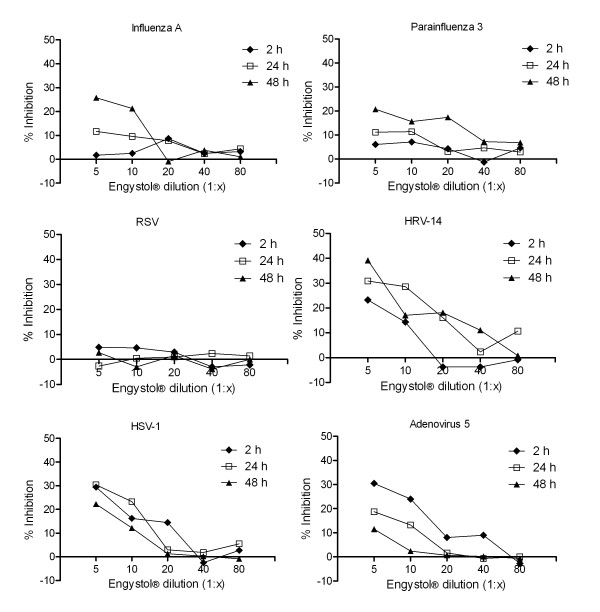
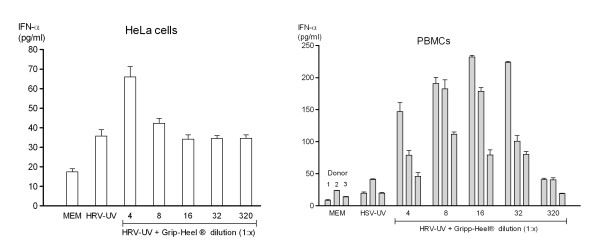
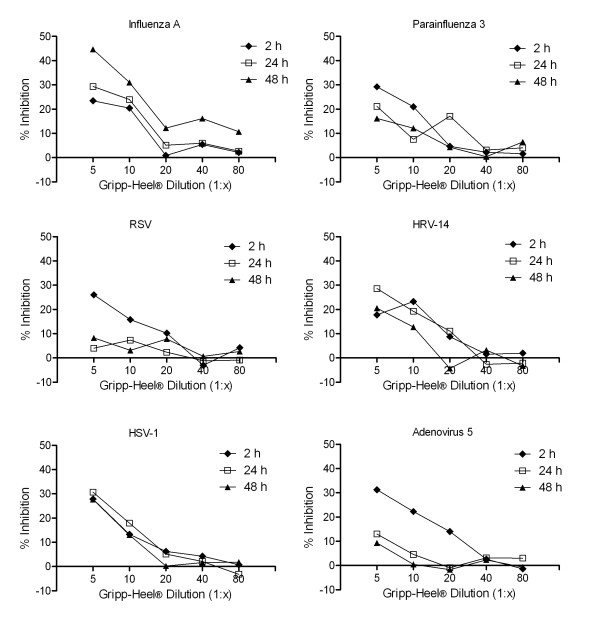
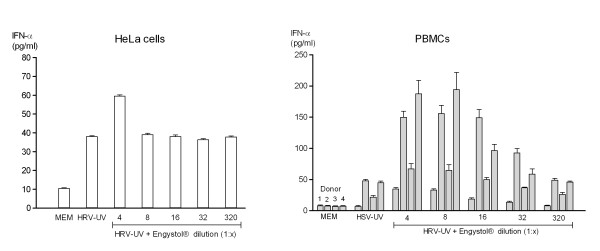
Both medications demonstrate prophylactic effect against viral respiratory virus replication. However, when the incubation was continued for up to 5 days, both medications exhibited a pronounced antiviral effect which was dependent on the pre-incubation time. Moreover, in co-stimulated HeLa cells as well as in activated PBMCs Gripp-Heel® and Engystol® demonstrated an increased type 1 IFN production.
Engystol® and Gripp-Heel® inhibited the replication of a variety of respiratory viruses. Additionally, we showed that pre-incubation affects the magnitude of the inhibitory effect differently for the various tested viruses. Both medications stimulate type 1 IFN release in different cell systems which suggests that their antiviral activity may be mediated possibly via modulation of the antiviral type 1 IFN host response.
呼吸道病毒感染可激活先天性免疫反应,这是病毒感染早期重要的宿主防御机制。病毒感染引发的干扰素(IFN)释放是建立抗病毒状态的重要因素,其中IFN激活发生在适应性免疫反应开始之前。两种超低剂量复方药物,恩吉斯托尔(Engystol®)和抗感灵(Gripp-Heel®),已被证明对呼吸道感染有治疗效果。然而,其潜在的抗病毒机制仍不清楚。
本研究旨在通过蚀斑减少试验,研究恩吉斯托尔(Engystol®)和抗感灵(Gripp-Heel®)在预防性治疗方案(预孵育2、24和48小时)中是否具有抗病毒活性,以及这两种药物是否会影响病毒易感细胞系和人外周血单核细胞(PBMC)中1型IFN的释放。
两种药物均显示出对病毒性呼吸道病毒复制的预防作用。然而,当孵育持续长达5天时,两种药物均表现出显著的抗病毒作用,且该作用取决于预孵育时间。此外,在共刺激的HeLa细胞以及活化的PBMC中,抗感灵(Gripp-Heel®)和恩吉斯托尔(Engystol®)均显示出1型IFN产生增加。
恩吉斯托尔(Engystol®)和抗感灵(Gripp-Heel®)可抑制多种呼吸道病毒的复制。此外,我们发现预孵育对各种测试病毒的抑制作用强度影响不同。两种药物均可在不同细胞系统中刺激1型IFN释放,这表明它们的抗病毒活性可能通过调节抗病毒1型IFN宿主反应来介导。