University of California San Diego, School of Medicine, Department of Pediatrics/Rady Children's Hospital San Diego, La Jolla, California 92093-0695, USA.
Nature. 2010 Nov 18;468(7322):443-6. doi: 10.1038/nature09544.
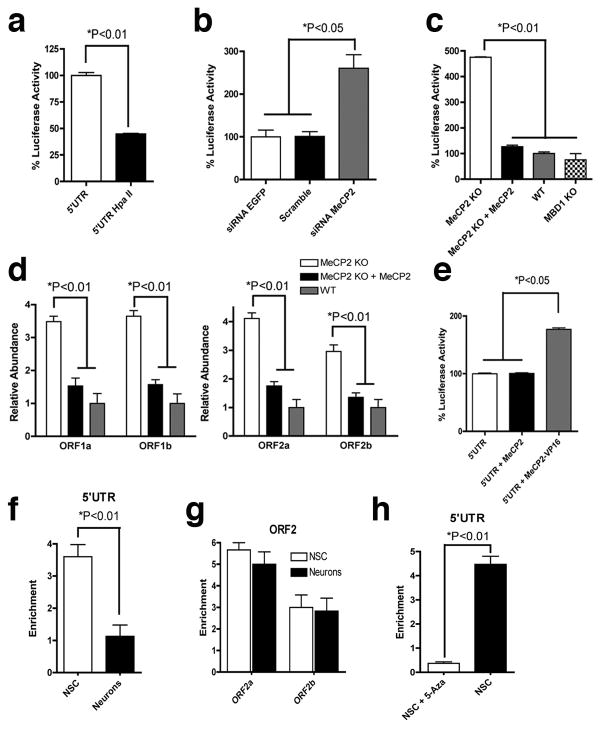
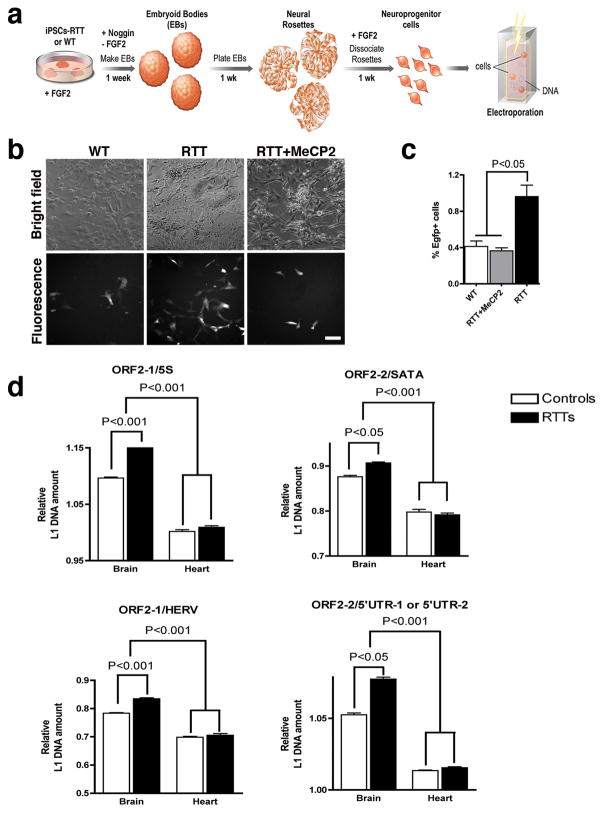
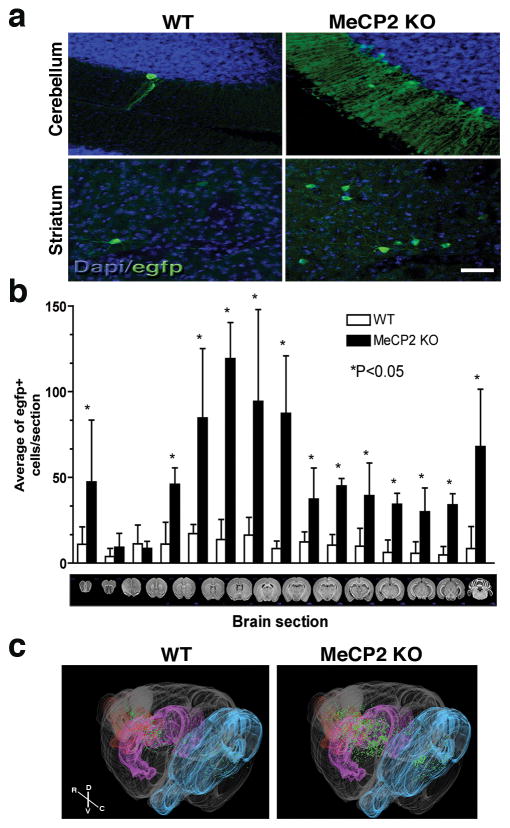
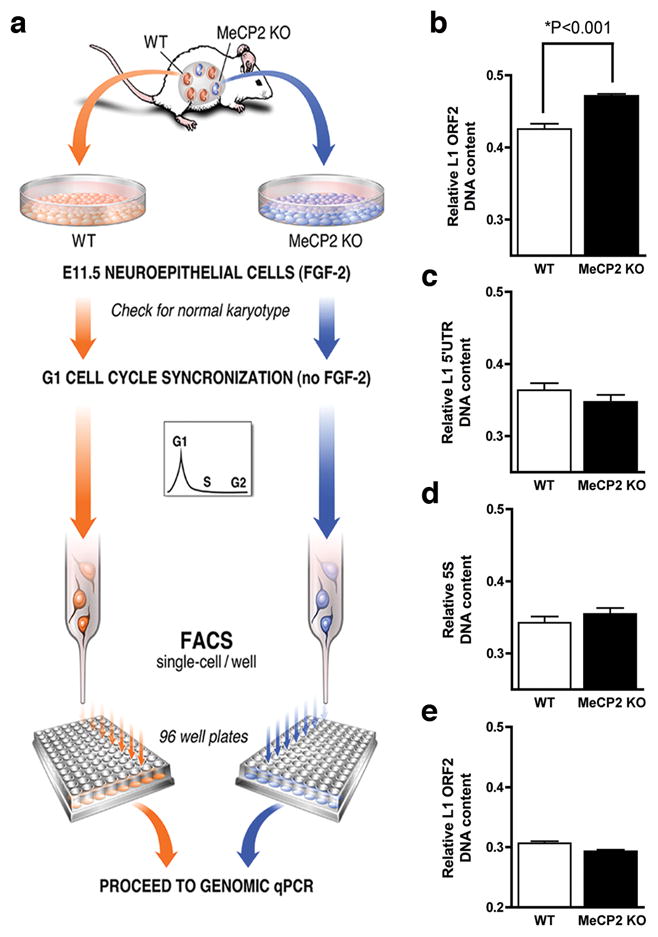
Long interspersed nuclear elements-1 (LINE-1 or L1s) are abundant retrotransposons that comprise approximately 20% of mammalian genomes. Active L1 retrotransposons can impact the genome in a variety of ways, creating insertions, deletions, new splice sites or gene expression fine-tuning. We have shown previously that L1 retrotransposons are capable of mobilization in neuronal progenitor cells from rodents and humans and evidence of massive L1 insertions was observed in adult brain tissues but not in other somatic tissues. In addition, L1 mobility in the adult hippocampus can be influenced by the environment. The neuronal specificity of somatic L1 retrotransposition in neural progenitors is partially due to the transition of a Sox2/HDAC1 repressor complex to a Wnt-mediated T-cell factor/lymphoid enhancer factor (TCF/LEF) transcriptional activator. The transcriptional switch accompanies chromatin remodelling during neuronal differentiation, allowing a transient stimulation of L1 transcription. The activity of L1 retrotransposons during brain development can have an impact on gene expression and neuronal function, thereby increasing brain-specific genetic mosaicism. Further understanding of the molecular mechanisms that regulate L1 expression should provide new insights into the role of L1 retrotransposition during brain development. Here we show that L1 neuronal transcription and retrotransposition in rodents are increased in the absence of methyl-CpG-binding protein 2 (MeCP2), a protein involved in global DNA methylation and human neurodevelopmental diseases. Using neuronal progenitor cells derived from human induced pluripotent stem cells and human tissues, we revealed that patients with Rett syndrome (RTT), carrying MeCP2 mutations, have increased susceptibility for L1 retrotransposition. Our data demonstrate that L1 retrotransposition can be controlled in a tissue-specific manner and that disease-related genetic mutations can influence the frequency of neuronal L1 retrotransposition. Our findings add a new level of complexity to the molecular events that can lead to neurological disorders.
长散在核元件-1(LINE-1 或 L1s)是丰富的逆转录转座子,约占哺乳动物基因组的 20%。活性 L1 逆转录转座子可以通过多种方式影响基因组,产生插入、缺失、新剪接位点或基因表达微调。我们之前已经表明,L1 逆转录转座子能够在啮齿动物和人类的神经元祖细胞中移动,并且在成年脑组织中观察到大量 L1 插入,但在其他体细胞组织中没有观察到。此外,环境可以影响成年海马体中的 L1 移动性。体细胞 L1 逆转座在神经祖细胞中的神经元特异性部分归因于 Sox2/HDAC1 抑制复合物向 Wnt 介导的 T 细胞因子/淋巴增强因子(TCF/LEF)转录激活剂的转变。转录开关伴随着神经元分化过程中的染色质重塑,允许 L1 转录的短暂刺激。L1 逆转录转座子在大脑发育过程中的活性可能会影响基因表达和神经元功能,从而增加大脑特异性遗传镶嵌性。进一步了解调节 L1 表达的分子机制应该为 L1 逆转座在大脑发育中的作用提供新的见解。在这里,我们表明,在缺乏甲基-CpG 结合蛋白 2(MeCP2)的情况下,L1 在啮齿动物中的转录和逆转座增加,MeCP2 是一种参与全局 DNA 甲基化和人类神经发育疾病的蛋白质。使用源自人类诱导多能干细胞和人类组织的神经元祖细胞,我们揭示了携带 MeCP2 突变的雷特综合征(RTT)患者对 L1 逆转座具有更高的易感性。我们的数据表明,L1 逆转座可以以组织特异性的方式进行控制,并且与疾病相关的遗传突变可以影响神经元 L1 逆转座的频率。我们的研究结果为可能导致神经紊乱的分子事件增添了新的复杂性。