Zhang Huaijian, Benz Heather L, Bezerianos Anastasios, Acharya Soumyadipta, Crone Nathan E, Maybhate Anil, Zheng Xiaoxiang, Thakor Nitish V
Qiushi Academcy for Advanced Studies, Zhejiang University, Hangzhou, China.
Annu Int Conf IEEE Eng Med Biol Soc. 2010;2010:130-3. doi: 10.1109/IEMBS.2010.5627179.
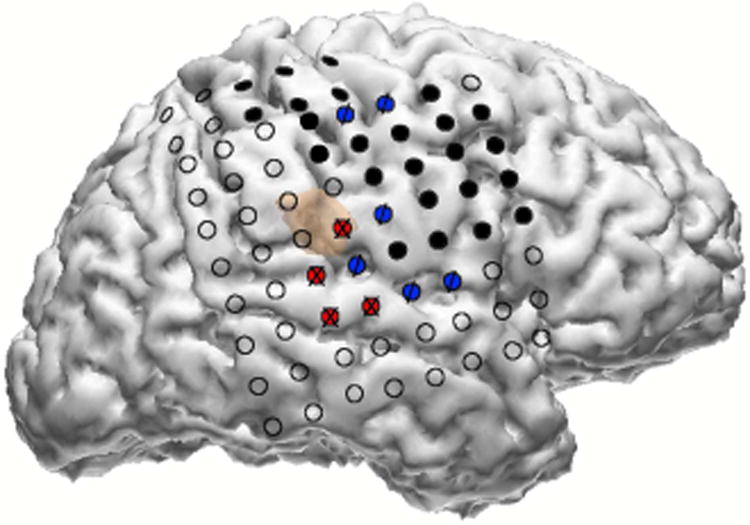
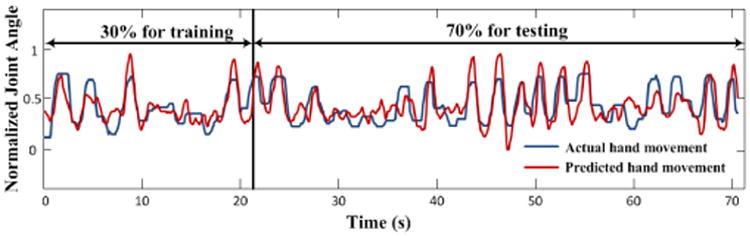
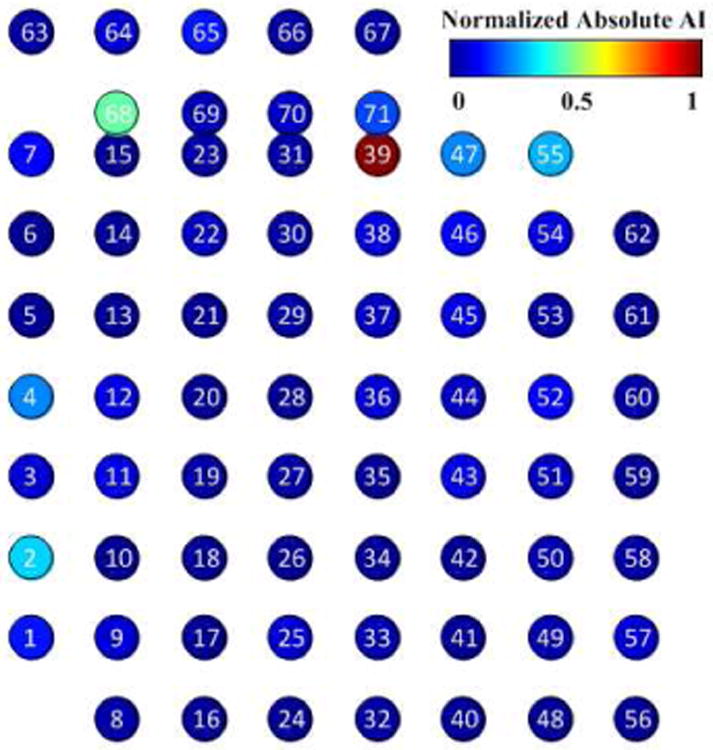
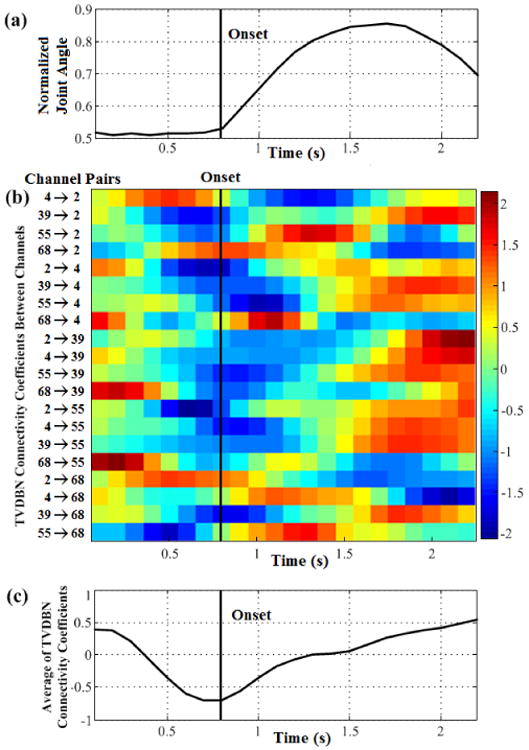
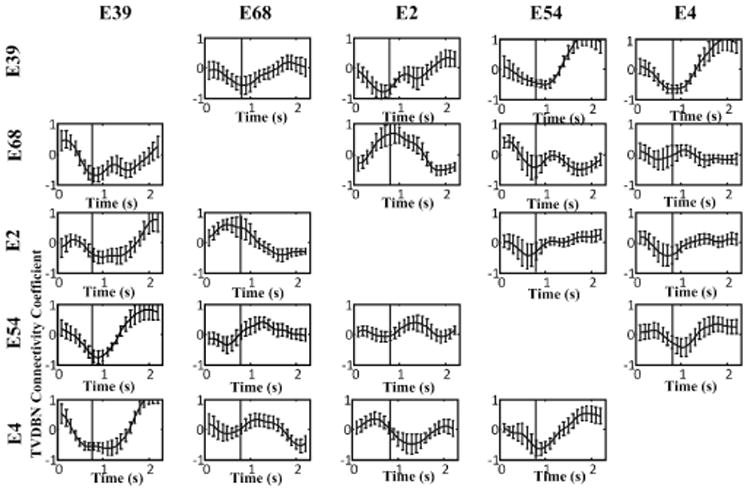
As a partially invasive and clinically obtained neural signal, the electrocorticogram (ECoG) provides a unique opportunity to study cortical processing in humans in vivo. Functional connectivity mapping based on the ECoG signal can provide insight into epileptogenic zones and putative cortical circuits. We describe the first application of time-varying dynamic Bayesian networks (TVDBN) to the ECoG signal for the identification and study of cortical circuits. Connectivity between motor areas as well as between sensory and motor areas preceding and during movement is described. We further apply the connectivity results of the TVDBN to a movement decoder, which achieves a correlation between actual and predicted hand movements of 0.68. This paper presents evidence that the connectivity information discovered with TVDBN is applicable to the design of an ECoG-based brain-machine interface.
作为一种部分侵入性的、通过临床获取的神经信号,皮质脑电图(ECoG)为在体研究人类皮质处理过程提供了独特的机会。基于ECoG信号的功能连接图谱能够深入了解致痫区和假定的皮质回路。我们描述了时变动态贝叶斯网络(TVDBN)在ECoG信号中的首次应用,用于识别和研究皮质回路。文中描述了运动区域之间以及运动之前和运动期间感觉与运动区域之间的连接情况。我们进一步将TVDBN的连接结果应用于运动解码器,该解码器实现了实际手部运动与预测手部运动之间0.68的相关性。本文提供了证据表明,通过TVDBN发现的连接信息适用于基于ECoG的脑机接口设计。