Institute for Immunology, 3028 Hewitt Hall, University of California, Irvine, CA 92697-4120, United States.
Mol Immunol. 2011 Jan;48(4):610-22. doi: 10.1016/j.molimm.2010.10.023. Epub 2010 Nov 26.
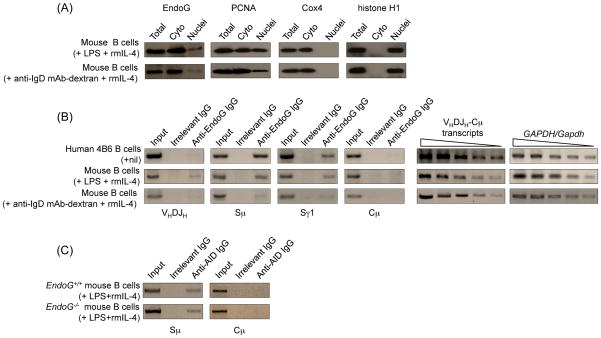
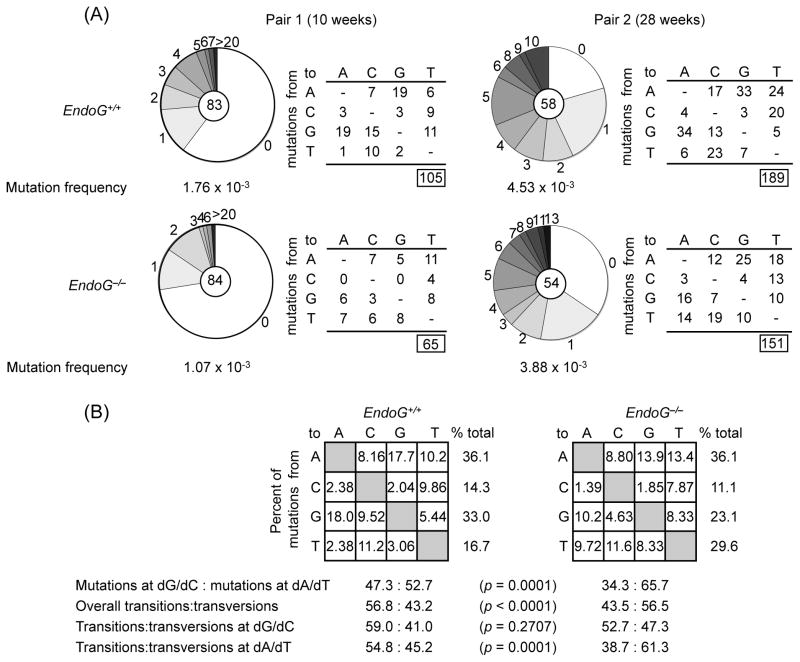
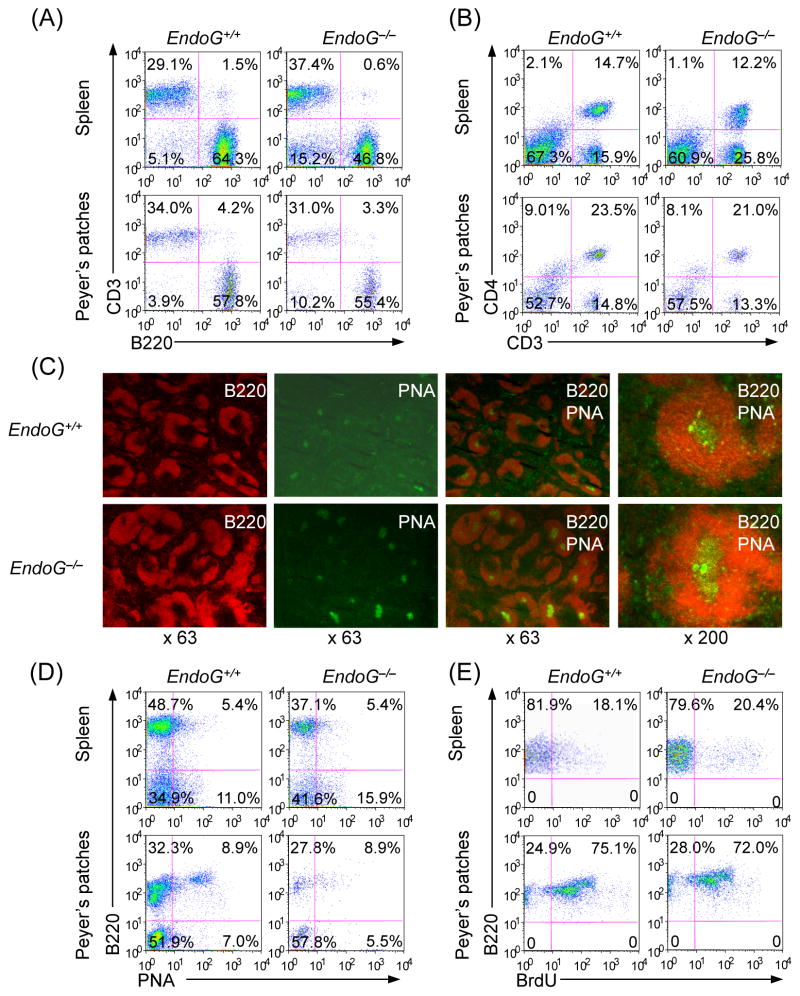
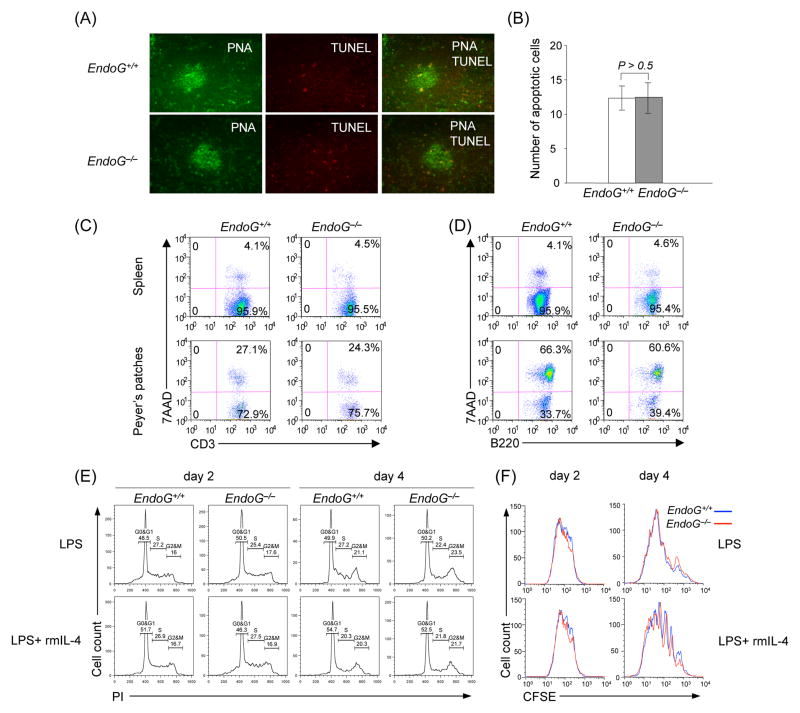
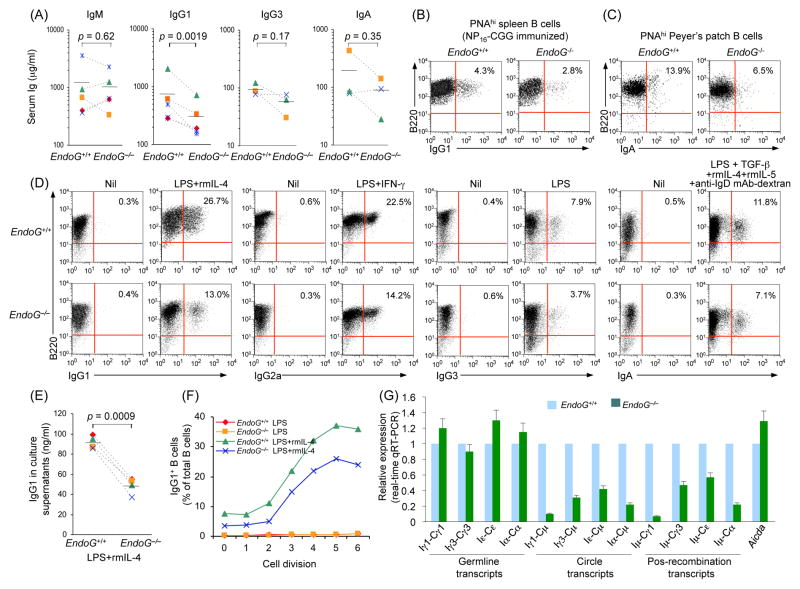
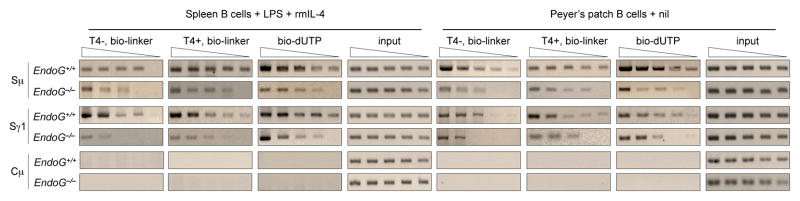
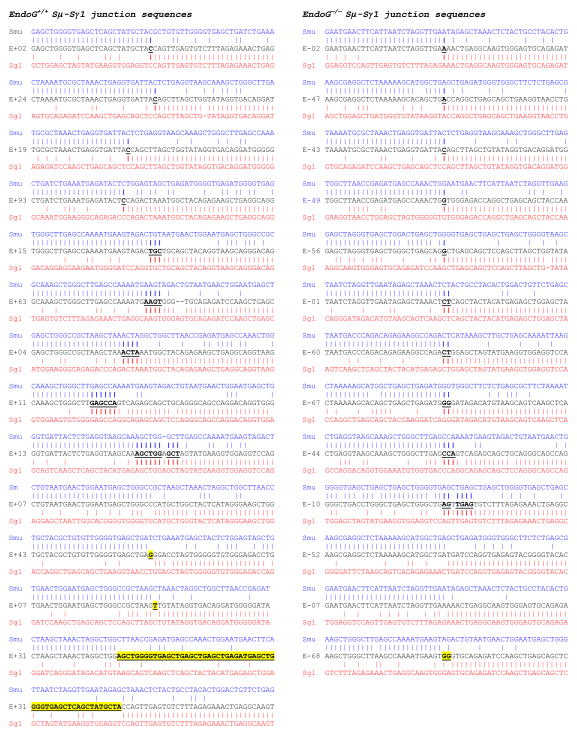
Immunoglobulin (Ig) class switch DNA recombination (CSR) is the crucial mechanism diversifying the biological effector functions of antibodies. Generation of double-strand DNA breaks (DSBs), particularly staggered DSBs, in switch (S) regions of the upstream and downstream CH genes involved in the specific recombination process is an absolute requirement for CSR. Staggered DSBs would be generated through deamination of dCs on opposite DNA strands by activation-induced cytidine deaminase (AID), subsequent dU deglycosylation by uracil DNA glycosylase (Ung) and abasic site nicking by apurinic/apyrimidic endonuclease. However, consistent with the findings that significant amounts of DSBs can be detected in the IgH locus in the absence of AID or Ung, we have shown in human and mouse B cells that AID generates staggered DSBs not only by cleaving intact double-strand DNA, but also by processing blunt DSB ends generated in an AID-independent fashion. How these AID-independent DSBs are generated is still unclear. It is possible that S region DNA may undergo AID-independent cleavage by structure-specific nucleases, such as endonuclease G (EndoG). EndoG is an abundant nuclease in eukaryotic cells. It cleaves single and double-strand DNA, primarily at dG/dC residues, the preferential sites of DSBs in S region DNA. We show here that EndoG can localize to the nucleus of B cells undergoing CSR and binds to S region DNA, as shown by specific chromatin immunoprecipitation assays. Using knockout EndoG(-/-) mice and EndoG(-/-) B cells, we found that EndoG deficiency resulted in a two-fold reduction in CSR in vivo and in vitro, as demonstrated by reduced cell surface IgG1, IgG2a, IgG3 and IgA, reduced secreted IgG1, reduced circle Iγ1-Cμ, Iγ3-Cμ, Iɛ-Cμ, Iα-Cμ transcripts, post-recombination Iμ-Cγ1, Iμ-Cγ3, Iμ-Cɛ and Iμ-Cα transcripts. In addition to reduced CSR, EndoG(-/-) mice showed a significantly altered spectrum of mutations in IgH J(H)-iEμ DNA. Impaired CSR in EndoG(-/-) B cells did not stem from altered B cell proliferation or apoptosis. Rather, it was associated with significantly reduced frequency of DSBs. Thus, our findings determine a role for EndoG in the generation of S region DSBs and CSR.
免疫球蛋白 (Ig) 类别转换 DNA 重组 (CSR) 是使抗体的生物学效应功能多样化的关键机制。在上游和下游 CH 基因的开关 (S) 区域中产生双链 DNA 断裂 (DSB),特别是交错 DSB,是 CSR 特定重组过程所必需的。交错 DSB 会通过激活诱导的胞嘧啶脱氨酶 (AID) 使相反 DNA 链上的 dCs 脱氨,随后通过尿嘧啶 DNA 糖基化酶 (Ung) 使 dU 去糖基化,并通过无嘌呤/无嘧啶内切核酸酶使碱基缺失位点切口。然而,与 AID 或 Ung 缺失时可以在 IgH 基因座中检测到大量 DSB 的发现一致,我们已经在人和小鼠 B 细胞中表明,AID 不仅通过切割完整的双链 DNA 产生交错 DSB,而且还通过以 AID 非依赖性方式产生的钝性 DSB 末端进行加工。这些 AID 非依赖性 DSB 是如何产生的尚不清楚。可能是 S 区 DNA 可能会被结构特异性核酸内切酶(如内切核酸酶 G (EndoG))以 AID 非依赖性方式切割。EndoG 是真核细胞中丰富的核酸内切酶。它切割单链和双链 DNA,主要在 dG/dC 残基处,这是 S 区 DNA 中 DSB 的优先位点。我们在这里表明,EndoG 可以定位到正在进行 CSR 的 B 细胞的核内,并通过特定的染色质免疫沉淀测定显示与 S 区 DNA 结合。使用敲除 EndoG(-/-) 小鼠和 EndoG(-/-) B 细胞,我们发现 EndoG 缺陷导致体内和体外 CSR 减少两倍,如细胞表面 IgG1、IgG2a、IgG3 和 IgA 减少、分泌 IgG1 减少、循环 Iγ1-Cμ、Iγ3-Cμ、Iɛ-Cμ、Iα-Cμ 转录物减少、重组后 Iμ-Cγ1、Iμ-Cγ3、Iμ-Cɛ 和 Iμ-Cα 转录物减少。除 CSR 减少外,EndoG(-/-) 小鼠在 IgH J(H)-iEμ DNA 中的突变谱也发生了显著改变。EndoG(-/-) B 细胞中的 CSR 受损并非源自 B 细胞增殖或凋亡的改变。相反,它与 DSB 频率的显著降低有关。因此,我们的发现确定了 EndoG 在 S 区 DSB 和 CSR 的产生中的作用。