Institute for Immunology, School of Medicine and School of Biological Sciences, University of California, Irvine, California, USA.
Nat Struct Mol Biol. 2010 Sep;17(9):1124-35. doi: 10.1038/nsmb.1884. Epub 2010 Aug 22.
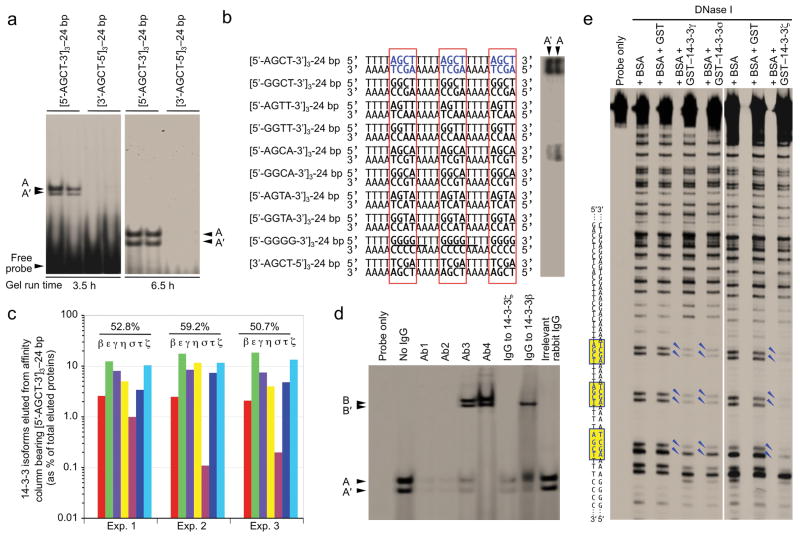
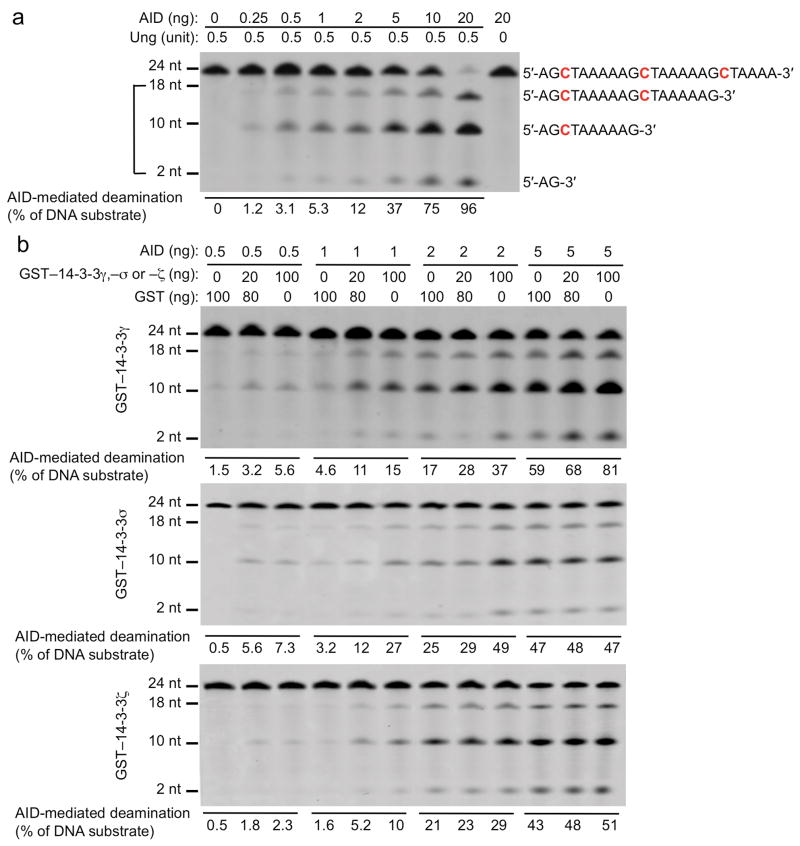
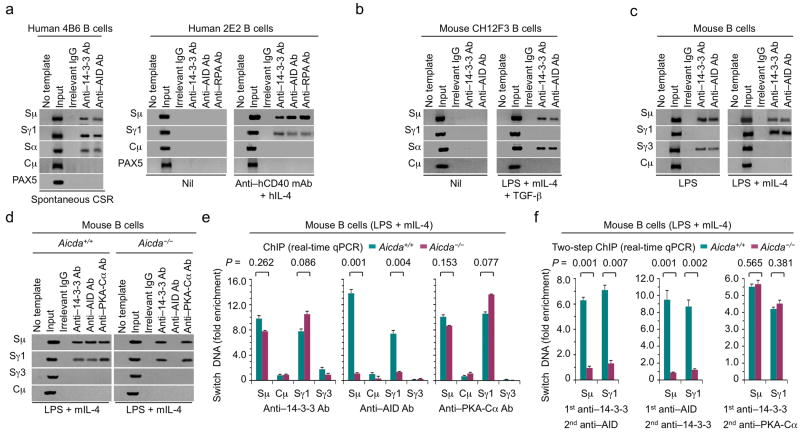
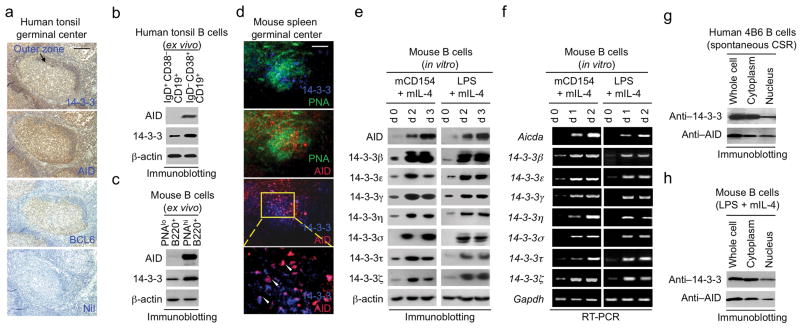
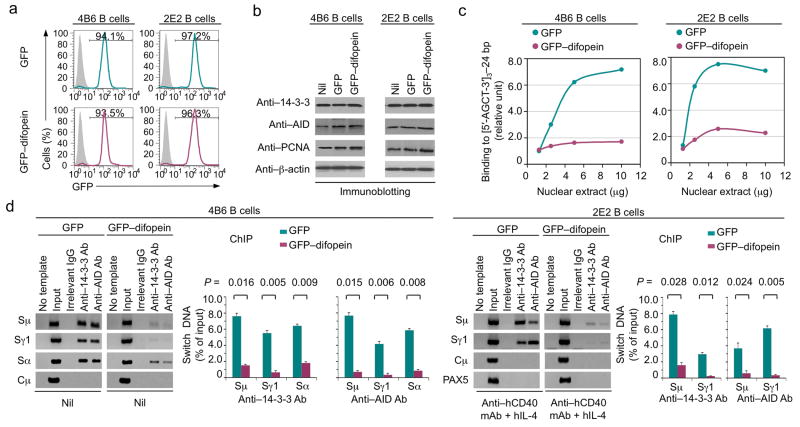
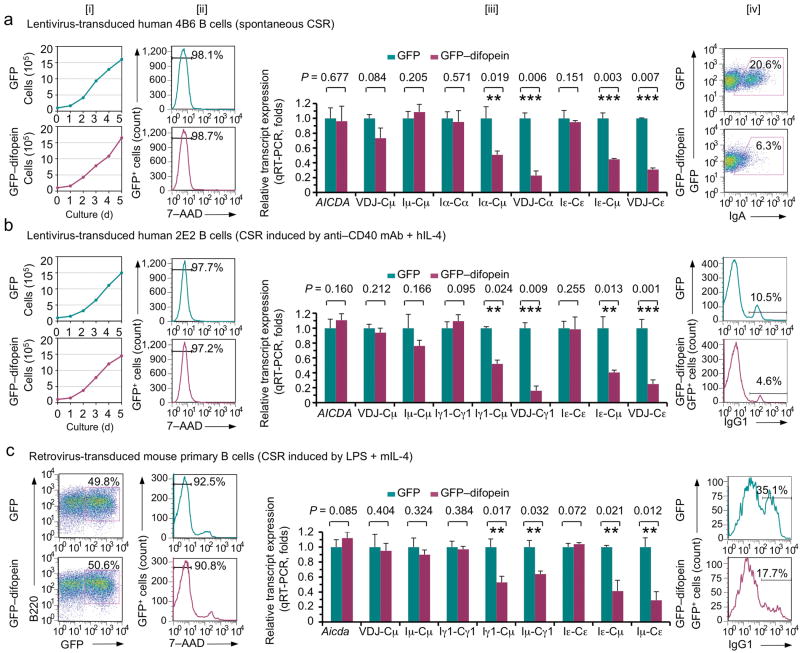
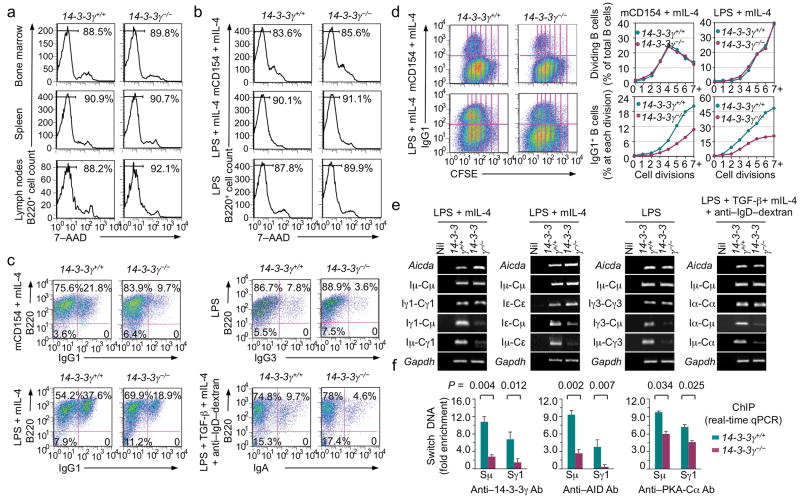
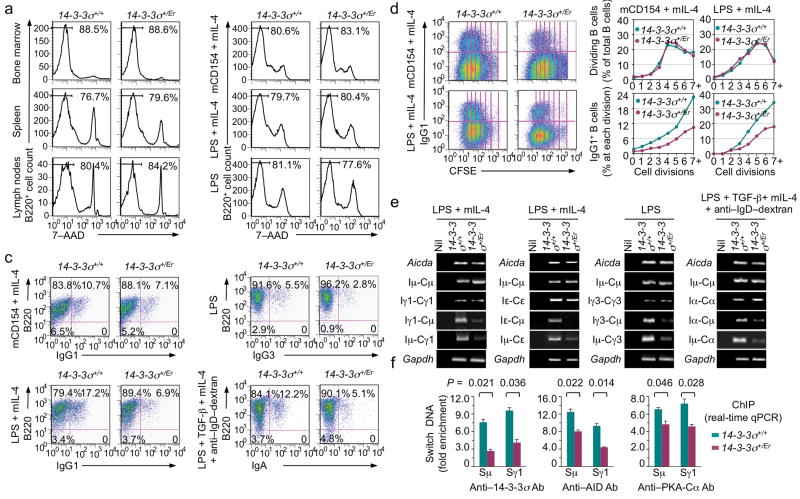
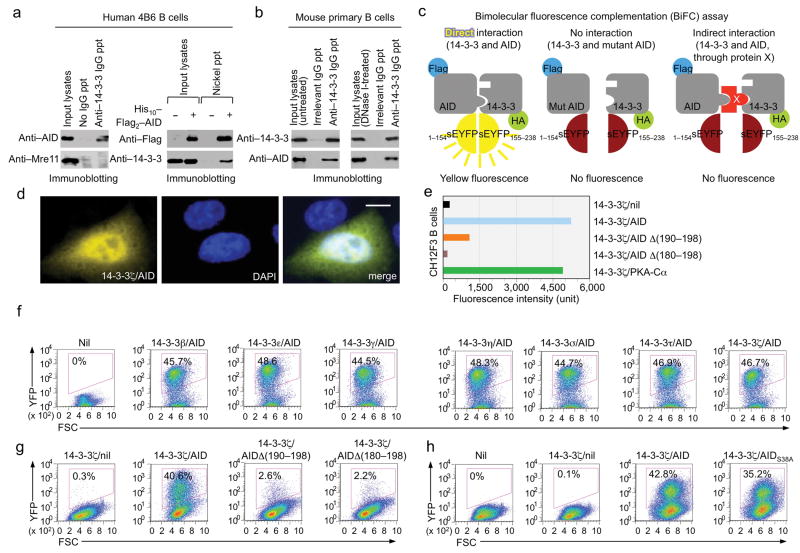
Class switch DNA recombination (CSR) is the mechanism that diversifies the biological effector functions of antibodies. Activation-induced cytidine deaminase (AID), a key protein in CSR, targets immunoglobulin H (IgH) switch regions, which contain 5'-AGCT-3' repeats in their core. How AID is recruited to switch regions remains unclear. Here we show that 14-3-3 adaptor proteins have an important role in CSR. 14-3-3 proteins specifically bound 5'-AGCT-3' repeats, were upregulated in B cells undergoing CSR and were recruited with AID to the switch regions that are involved in CSR events (Smu-->Sgamma1, Smu-->Sgamma3 or Smu-->Salpha). Moreover, blocking 14-3-3 by difopein, 14-3-3gamma deficiency or expression of a dominant-negative 14-3-3sigma mutant impaired recruitment of AID to switch regions and decreased CSR. Finally, 14-3-3 proteins interacted directly with AID and enhanced AID-mediated in vitro DNA deamination, further emphasizing the important role of these adaptors in CSR.
类别转换 DNA 重组(CSR)是使抗体的生物学效应功能多样化的机制。激活诱导的胞嘧啶脱氨酶(AID)是 CSR 中的关键蛋白,靶向免疫球蛋白 H(IgH)开关区,其核心含有 5'-AGCT-3' 重复序列。AID 如何被招募到开关区尚不清楚。在这里,我们表明 14-3-3 衔接蛋白在 CSR 中具有重要作用。14-3-3 蛋白特异性结合 5'-AGCT-3' 重复序列,在经历 CSR 的 B 细胞中上调,并与 AID 一起被招募到涉及 CSR 事件的开关区(Smu-->Sgamma1、Smu-->Sgamma3 或 Smu-->Salpha)。此外,通过 difopein、14-3-3γ 缺乏或表达显性负性 14-3-3sigma 突变体阻断 14-3-3 会损害 AID 向开关区的募集并降低 CSR。最后,14-3-3 蛋白与 AID 直接相互作用并增强 AID 介导的体外 DNA 脱氨作用,进一步强调了这些衔接蛋白在 CSR 中的重要作用。