Suto Kaori, Urabe Ken, Naruse Kouji, Uchida Kentaro, Matsuura Terumasa, Mikuni-Takagaki Yuko, Suto Mitsutoshi, Nemoto Noriko, Kamiya Kentaro, Itoman Moritoshi
Department of Orthopaedic Surgery, Kitasato University School of Medicine, 1-15-1 Kitasato, Minami-ku, Sagamihara, Kanagawa 252-0374, Japan.
Cell Tissue Bank. 2012 Mar;13(1):71-80. doi: 10.1007/s10561-010-9234-0. Epub 2010 Nov 30.
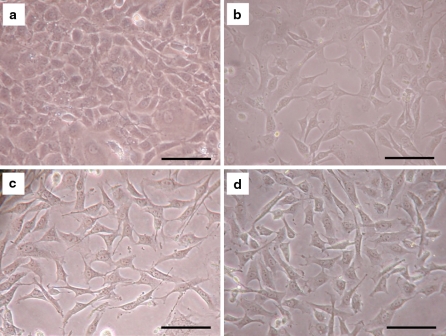
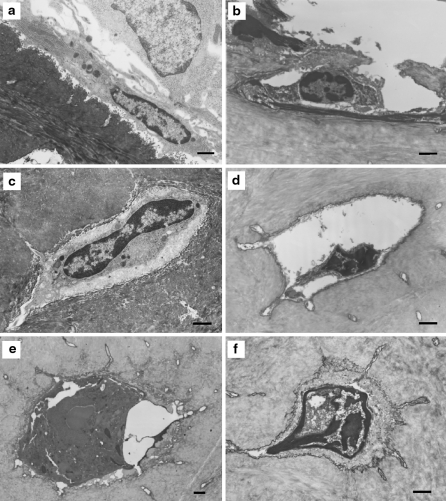
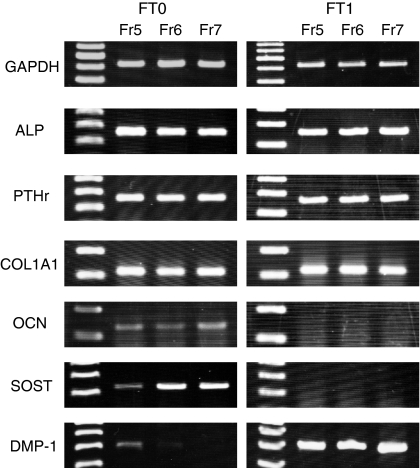
Frozen bone-patellar tendon bone allografts are useful in anterior cruciate ligament reconstruction as the freezing procedure kills tissue cells, thereby reducing immunogenicity of the grafts. However, a small portion of cells in human femoral heads treated by standard bone-bank freezing procedures survive, thus limiting the effectiveness of allografts. Here, we characterized the survival rates and mechanisms of cells isolated from rat bones and tendons that were subjected to freeze-thaw treatments, and evaluated the influence of these treatments on the mechanical properties of tendons. After a single freeze-thaw cycle, most cells isolated from frozen bone appeared morphologically as osteocytes and expressed both osteoblast- and osteocyte-related genes. Transmission electron microscopic observation of frozen cells using freeze-substitution revealed that a small number of osteocytes maintained large nuclei with intact double membranes, indicating that these osteocytes in bone matrix were resistant to ice crystal formation. We found that tendon cells were completely killed by a single freeze-thaw cycle, whereas bone cells exhibited a relatively high survival rate, although survival was significantly reduced after three freeze-thaw cycles. In patella tendons, the ultimate stress, Young's modulus, and strain at failure showed no significant differences between untreated tendons and those subjected to five freeze-thaw cycles. In conclusion, we identified that cells surviving after freeze-thaw treatment of rat bones were predominantly osteocytes. We propose that repeated freeze-thaw cycles could be applied for processing bone-tendon constructs prior to grafting as the treatment did not affect the mechanical property of tendons and drastically reduced surviving osteocytes, thereby potentially decreasing allograft immunogenecity.
冷冻骨-髌腱骨同种异体移植物在重建前交叉韧带中很有用,因为冷冻程序会杀死组织细胞,从而降低移植物的免疫原性。然而,采用标准骨库冷冻程序处理的人股骨头中的一小部分细胞能够存活,从而限制了同种异体移植物的有效性。在此,我们对经冻融处理的大鼠骨骼和肌腱中分离出的细胞的存活率和机制进行了表征,并评估了这些处理对肌腱力学性能的影响。经过一次冻融循环后,从冷冻骨中分离出的大多数细胞在形态上表现为骨细胞,并表达成骨细胞和骨细胞相关基因。使用冷冻置换法对冷冻细胞进行透射电子显微镜观察发现,少数骨细胞保持着具有完整双膜的大细胞核,这表明骨基质中的这些骨细胞对冰晶形成具有抗性。我们发现,肌腱细胞在一次冻融循环后就完全死亡,而骨细胞则表现出相对较高的存活率,不过在三次冻融循环后存活率显著降低。在髌腱中,未处理的肌腱与经过五次冻融循环的肌腱之间,其极限应力、杨氏模量和破坏应变均无显著差异。总之,我们确定经冻融处理后大鼠骨骼中存活的细胞主要是骨细胞。我们建议,在移植前可对骨-肌腱构建体进行反复冻融循环处理,因为该处理不会影响肌腱的力学性能,且能大幅减少存活的骨细胞,从而有可能降低同种异体移植物的免疫原性。