Roth Susanne Pauline, Glauche Sina Marie, Plenge Amelie, Erbe Ina, Heller Sandra, Burk Janina
Large Animal Clinic for Surgery, University of Leipzig, An den Tierkliniken 21, Leipzig, 04103, Germany.
Saxonian Incubator for Clinical Translation, University of Leipzig, Philipp-Rosenthal-Strasse 55, Leipzig, 04103, Germany.
BMC Biotechnol. 2017 Feb 14;17(1):13. doi: 10.1186/s12896-017-0329-6.
Decellularization of tendon tissue plays a pivotal role in current tissue engineering approaches for in vitro research as well as for translation of graft-based tendon restoration into clinics. Automation of essential decellularization steps like freeze-thawing is crucial for the development of more standardized decellularization protocols and commercial graft production under good manufacturing practice (GMP) conditions in the future.
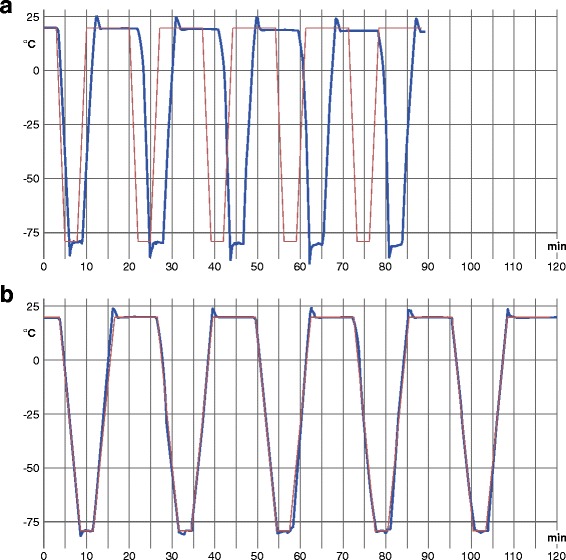
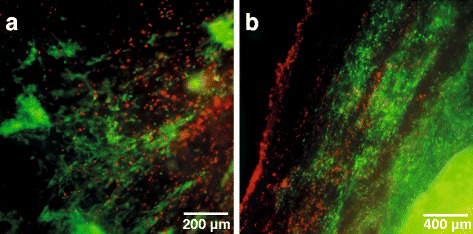
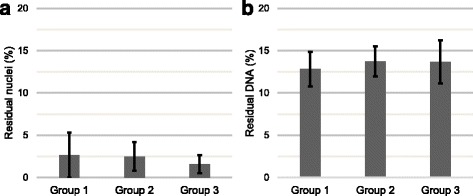
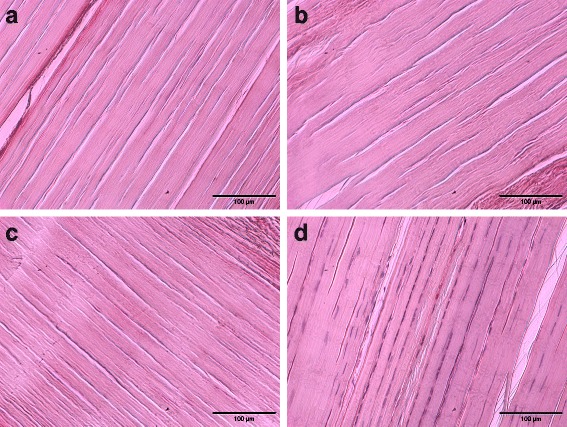
In this study, a liquid nitrogen-based controlled rate freezer was utilized for automation of repeated freeze-thawing for decellularization of equine superficial digital flexor tendons. Additional tendon specimens underwent manually performed freeze-thaw cycles based on an established procedure. Tendon decellularization was completed by using non-ionic detergent treatment (Triton X-100). Effectiveness of decellularization was assessed by residual nuclei count and calculation of DNA content. Cytocompatibility was evaluated by culturing allogeneic adipose tissue-derived mesenchymal stromal cells on the tendon scaffolds.
There were no significant differences in decellularization effectiveness between samples decellularized by the automated freeze-thaw procedure and samples that underwent manual freeze-thaw cycles. Further, we inferred no significant differences in the effectiveness of decellularization between two different cooling and heating rates applied in the automated freeze-thaw process. Both the automated protocols and the manually performed protocol resulted in roughly 2% residual nuclei and 13% residual DNA content. Successful cell culture was achieved with samples decellularized by automated freeze-thawing as well as with tendon samples decellularized by manually performed freeze-thaw cycles.
Automated freeze-thaw cycles performed by using a liquid nitrogen-based controlled rate freezer were as effective as previously described manual freeze-thaw procedures for decellularization of equine superficial digital flexor tendons. The automation of this key procedure in decellularization of large tendon samples is an important step towards the processing of large sample quantities under standardized conditions. Furthermore, with a view to the production of commercially available tendon graft-based materials for application in human and veterinary medicine, the automation of key procedural steps is highly required to develop manufacturing processes under GMP conditions.
肌腱组织的去细胞化在当前用于体外研究以及将基于移植物的肌腱修复转化为临床应用的组织工程方法中起着关键作用。像冻融这样的基本去细胞化步骤的自动化对于未来开发更标准化的去细胞化方案以及在良好生产规范(GMP)条件下进行商业移植物生产至关重要。
在本研究中,使用基于液氮的程序降温冷冻机对马浅屈肌腱进行去细胞化的反复冻融自动化操作。另外的肌腱样本根据既定程序进行手动冻融循环。通过使用非离子去污剂处理(Triton X-100)完成肌腱去细胞化。通过残留细胞核计数和DNA含量计算评估去细胞化的有效性。通过在肌腱支架上培养同种异体脂肪组织来源的间充质基质细胞来评估细胞相容性。
通过自动冻融程序去细胞化的样本与经历手动冻融循环的样本在去细胞化有效性方面没有显著差异。此外,我们推断在自动冻融过程中应用的两种不同冷却和加热速率之间的去细胞化有效性没有显著差异。自动方案和手动执行的方案均导致大约2%的残留细胞核和13%的残留DNA含量。通过自动冻融去细胞化的样本以及通过手动冻融循环去细胞化的肌腱样本均成功实现了细胞培养。
使用基于液氮的程序降温冷冻机进行的自动冻融循环对于马浅屈肌腱去细胞化与先前描述的手动冻融程序一样有效。在大肌腱样本去细胞化中这一关键程序的自动化是朝着在标准化条件下处理大量样本迈出的重要一步。此外,鉴于生产用于人类和兽医学的基于肌腱移植物的商用材料,非常需要关键程序步骤的自动化以开发符合GMP条件的制造工艺。