Ropella Glen E P, Hunt C Anthony
Tempus Dictum, Inc., Portland, OR 97202, USA.
BMC Syst Biol. 2010 Dec 3;4:168. doi: 10.1186/1752-0509-4-168.
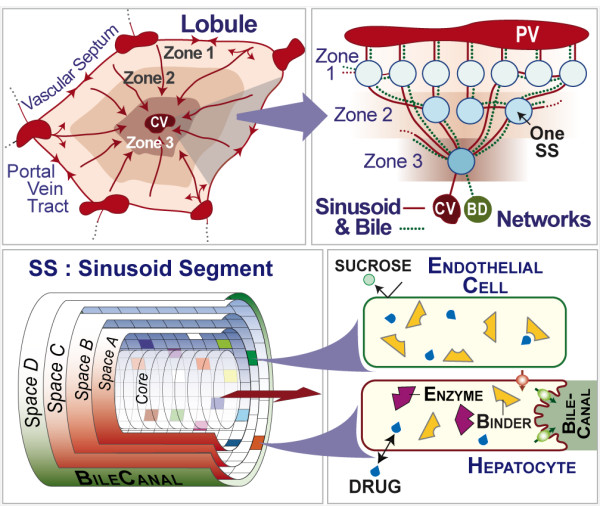
In Silico Livers (ISLs) are works in progress. They are used to challenge multilevel, multi-attribute, mechanistic hypotheses about the hepatic disposition of xenobiotics coupled with hepatic responses. To enhance ISL-to-liver mappings, we added discrete time metabolism, biliary elimination, and bolus dosing features to a previously validated ISL and initiated re-validated experiments that required scaling experiments to use more simulated lobules than previously, more than could be achieved using the local cluster technology. Rather than dramatically increasing the size of our local cluster we undertook the re-validation experiments using the Amazon EC2 cloud platform. So doing required demonstrating the efficacy of scaling a simulation to use more cluster nodes and assessing the scientific equivalence of local cluster validation experiments with those executed using the cloud platform.
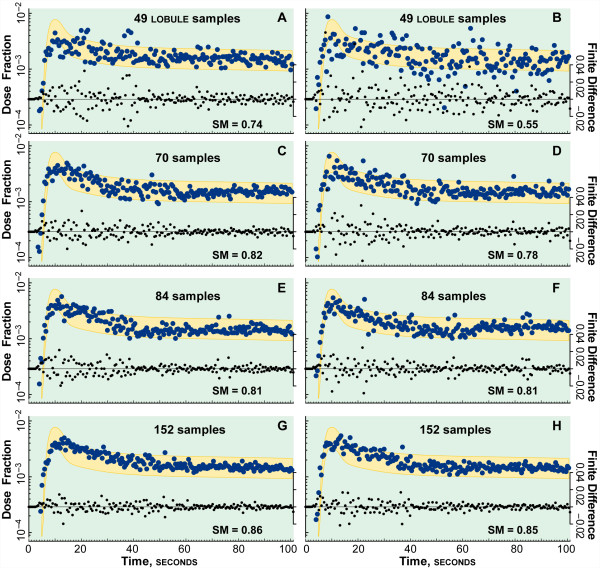
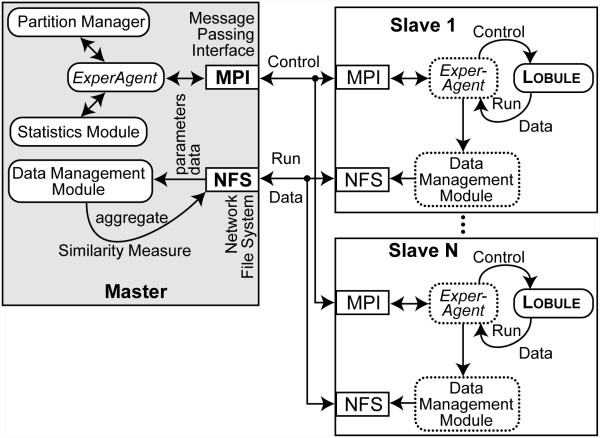
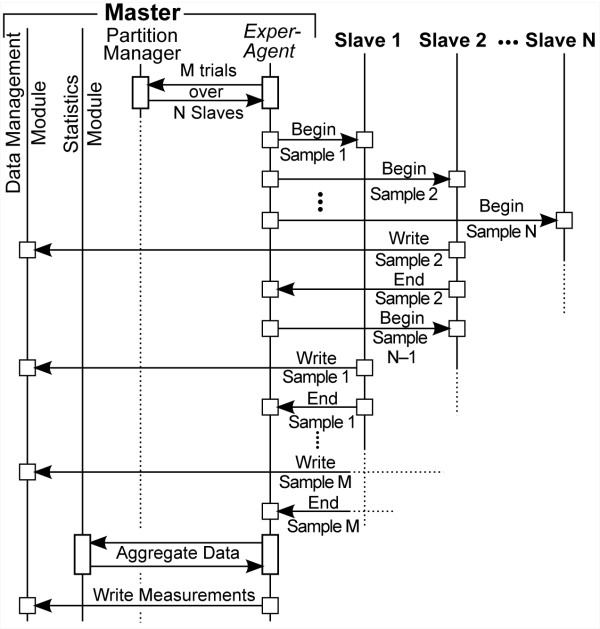
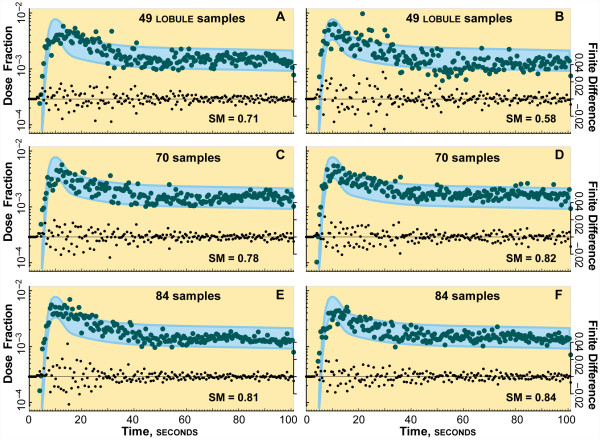
The local cluster technology was duplicated in the Amazon EC2 cloud platform. Synthetic modeling protocols were followed to identify a successful parameterization. Experiment sample sizes (number of simulated lobules) on both platforms were 49, 70, 84, and 152 (cloud only). Experimental indistinguishability was demonstrated for ISL outflow profiles of diltiazem using both platforms for experiments consisting of 84 or more samples. The process was analogous to demonstration of results equivalency from two different wet-labs.
The results provide additional evidence that disposition simulations using ISLs can cover the behavior space of liver experiments in distinct experimental contexts (there is in silico-to-wet-lab phenotype similarity). The scientific value of experimenting with multiscale biomedical models has been limited to research groups with access to computer clusters. The availability of cloud technology coupled with the evidence of scientific equivalency has lowered the barrier and will greatly facilitate model sharing as well as provide straightforward tools for scaling simulations to encompass greater detail with no extra investment in hardware.
虚拟肝脏(ISLs)仍在不断发展完善。它们用于检验关于异生物肝处置及其肝脏反应的多层次、多属性、机制性假说。为了增强虚拟肝脏与真实肝脏的映射关系,我们在一个先前已验证的虚拟肝脏中添加了离散时间代谢、胆汁消除和推注给药功能,并启动了重新验证实验,这些实验需要扩大实验规模,使用比以前更多的模拟小叶,这是使用本地集群技术无法实现的。我们没有大幅增加本地集群的规模,而是使用亚马逊弹性计算云(EC2)平台进行重新验证实验。这样做需要证明扩大模拟规模以使用更多集群节点的有效性,并评估本地集群验证实验与使用云平台执行的实验在科学上的等效性。
亚马逊弹性计算云(EC2)平台复制了本地集群技术。遵循合成建模协议来确定成功的参数设置。两个平台上的实验样本量(模拟小叶数量)分别为49、70、84和152(仅云平台有152)。对于由84个或更多样本组成的实验,使用两个平台均证明了地尔硫䓬的虚拟肝脏流出曲线在实验上无法区分。该过程类似于证明来自两个不同湿实验室的结果等效性。
这些结果提供了更多证据,表明使用虚拟肝脏进行的处置模拟可以涵盖不同实验背景下肝脏实验的行为空间(存在虚拟到湿实验室的表型相似性)。使用多尺度生物医学模型进行实验的科学价值一直局限于能够使用计算机集群的研究团队。云技术的可用性以及科学等效性的证据降低了障碍,将极大地促进模型共享,并提供直接的工具来扩大模拟规模,以包含更多细节,而无需在硬件上进行额外投资。