Division of Sleep Medicine, Harvard Medical School/Brigham and Women's Hospital, Boston, MA 02115, USA.
Lung. 2011 Feb;189(1):37-41. doi: 10.1007/s00408-010-9270-3. Epub 2010 Dec 5.
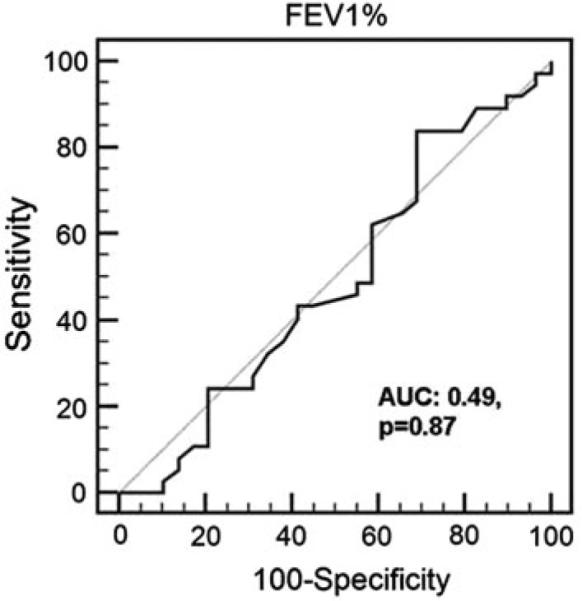
This study sought to determine whether reduced pulmonary function in obstructive airway disease (OAD) is an independent risk factor for obstructive sleep apnea (OSA). This was a prospective observational study conducted at an outpatient pulmonary clinic. Adults with a known diagnosis of COPD/asthma were enrolled as OAD group. Family members without a history of COPD/asthma who accompanied these patients to the clinic were enrolled as a control group. The Berlin Questionnaire (BQ) was used to assess OSA risk in the OAD group and controls. Forced expiratory volume in 1 second (FEV(1) % predicted) was determined from spirometry. The subjects at high risk for OSA were referred for a full overnight polysomnogram (PSG). The prevalence of patients with a high risk of OSA was 55.2% in the OAD group, which was higher than in the controls (7.5%, p < 0.0001). OAD subjects had a higher body mass index (BMI) and larger neck circumference than controls (p < 0.01). There was no difference in FEV(1) % predicted between the OAD patients at high risk and low risk of OSA. On receiver operator curve (ROC) analysis, FEV(1) % predicted was not a significant predictor of high OSA risk. Using logistic regression, FEV(1) % predicted had no association with OSA risk. There was no correlation between FEV(1) % predicted and total apnea-hypopnea index (AHI), oxygen desaturation index, % time spent below oxygen saturation 90%, and mean oxygen saturation on multiple regression analysis. OSA appears to be common in patients with COPD or asthma in an urban outpatient pulmonary clinic. However, the high prevalence of OSA in OAD patients appears to be due to obesity, and reduced pulmonary function is not an independent risk factor for OSA.
这项研究旨在确定阻塞性气道疾病(OAD)中肺功能下降是否是阻塞性睡眠呼吸暂停(OSA)的独立危险因素。这是一项在门诊肺诊所进行的前瞻性观察研究。患有已知 COPD/哮喘诊断的成年人被纳入 OAD 组。没有 COPD/哮喘病史的、陪同这些患者到诊所的家庭成员被纳入对照组。使用柏林问卷(BQ)评估 OAD 组和对照组的 OSA 风险。通过肺量计测定 1 秒用力呼气量(FEV1%预计值)。OSA 风险高的患者被转介进行完整的夜间多导睡眠图(PSG)检查。OAD 组中患有 OSA 高风险的患者患病率为 55.2%,高于对照组(7.5%,p<0.0001)。OAD 患者的体重指数(BMI)和颈围均大于对照组(p<0.01)。在 OSA 风险高低的 OAD 患者之间,FEV1%预计值没有差异。在接受者操作特征曲线(ROC)分析中,FEV1%预计值不是 OSA 高风险的显著预测因子。使用逻辑回归,FEV1%预计值与 OSA 风险没有关联。在多元回归分析中,FEV1%预计值与总呼吸暂停-低通气指数(AHI)、氧减饱和度指数、氧饱和度低于 90%的时间百分比和平均氧饱和度之间没有相关性。在城市门诊肺诊所,COPD 或哮喘患者中 OSA 似乎很常见。然而,OAD 患者中 OSA 的高患病率似乎是由于肥胖引起的,而肺功能下降不是 OSA 的独立危险因素。